


Blog


 Login
Login
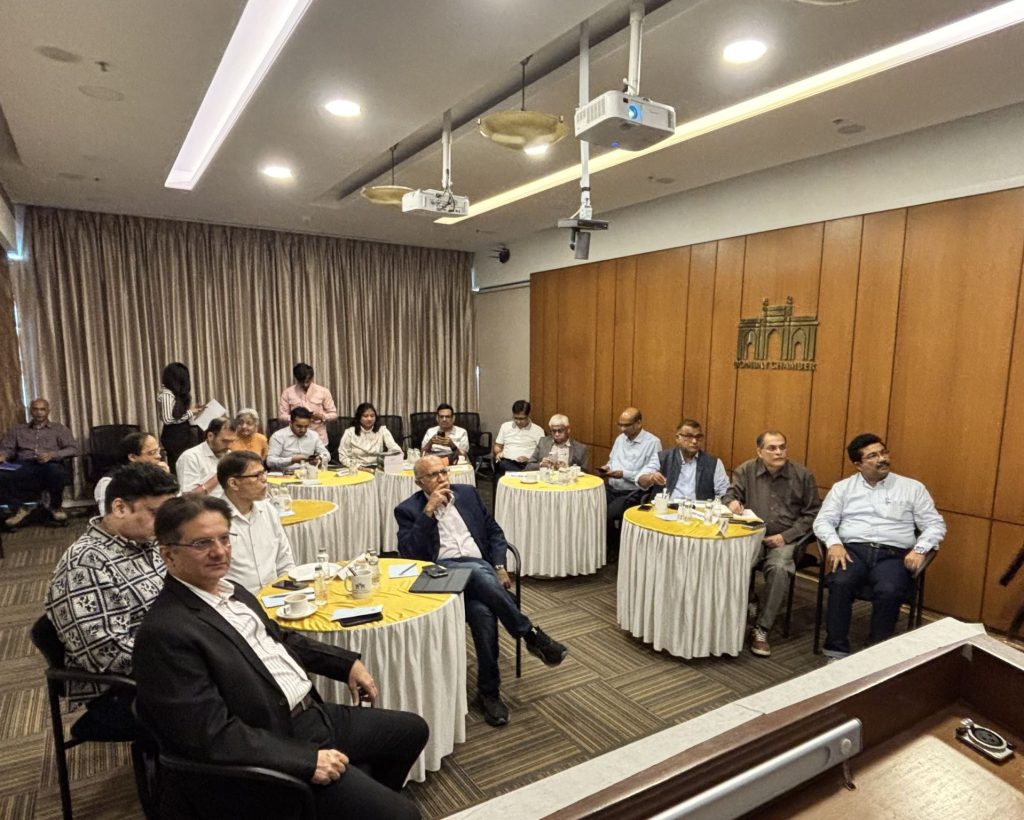
Nirmala Sitharaman Outlines Three ‘Kartavya’ Priorities to Drive India’s Growth, Inclusion and Reform Agenda
In her ninth consecutive Union Budget 2026-27, Finance Minister Nirmala Sitharaman delivered a Budget which placed a large emphasis on infrastructure, with the government raising public capital expenditure to ₹12.2 lakh crore for the upcoming fiscal year—an increase of nearly 9 % from the previous year’s allocation and a record high aimed at strengthening national infrastructure across roads, railways, ports, metro projects and logistics networks.
In addition to the infrastructure thrust, the Budget included measures to support industry, including the launch of a ₹10,000 crore SME Growth Fund to enhance capital access for Micro, Small and Medium Enterprises, a ₹4,000 crore top-up to the Self-Reliant India Fund, and expanded credit and liquidity mechanisms for smaller businesses. Further manufacturing support was outlined through initiatives such as the expanded Electronics Components Manufacturing Scheme with a ₹40,000 crore outlay and continued emphasis on strategic sectors like semiconductors, biopharma, textiles and container manufacturing.
The Budget was anchored around three key “Kartavya” priorities outlined by the Finance Minister—accelerating and sustaining economic growth, fulfilling aspirations and building capacity, and ensuring inclusive access to growth. These priorities were reflected across announcements spanning infrastructure expansion, support for MSMEs and strategic manufacturing sectors, continued reforms to simplify processes and improve efficiency, and people-centric measures aimed at strengthening education, skills and access to essential services.
Reactions from Bombay Chamber Leaders:
Rajiv Anand, President, Bombay Chamber and Managing Director & CEO IndusInd Bank Limited:
“The Union Budget 2026 maintains continuity by focusing on capital expenditure, with a moderate increase in budgetary spending, while keeping the tax code largely unchanged, thereby providing policy stability. Fiscal consolidation anchored in a debt-to-GDP target offers flexibility to pursue countercyclical support, if needed, amid a challenging external environment. A comprehensive review of banking system regulations, development of transport and logistics infrastructure, capital and liquidity support for MSMEs, budgetary support for strategic sectors in manufacturing and services, and initiatives to develop skills will help enhance factor productivity and drive long-term growth.”
Sudhanshu Vats, Sr Vice President, Bombay Chamber and Managing Director, Pidilite Industries Ltd.
The Union Budget 2026–27 reinforces strong confidence in India’s growth trajectory, anchored in manufacturing, infrastructure and consumption. The continued focus on domestic manufacturing across chemicals, electronics and capital goods strengthens supply-chain resilience and supports India’s ambition to be a globally competitive production hub. With public capex at ₹12.2 lakh crore, demand across housing, construction and infrastructure-linked industries will remain robust. It will also dial up tourism and employers . The emphasis on digital infrastructure, Automation & AI-led Customs reforms and trade facilitation will enhance ease of doing business and global integration. Overall, the Budget provides the confidence to invest, innovate and scale alongside India’s long-term economic vision. Onwards to a Viksit Bharat 2047.
Nilesh Shah, Past President, Bombay Chamber and Group President & MD, Kotak Mahindra AMC:
This budget has proposed a capital expenditure of Rs 12.10 lac crore which is more than the net market borrowing of Rs 11.70 lac crore. I pray that a path is laid where one day capital expenditure will be more than the total borrowing including small savings.
Sudhir Kapadia, Past President Bombay Chamber and Senior Advisor, EY
The reform process has continued steadily into 2026, building strongly on the Viksit Bharat 2047 vision. The TCS-related announcements appear globally competitive and send a clear signal of long-term policy intent—possibly the first taxation measure framed with a horizon extending up to 2047. Portfolio investment prospects also look promising. The proposed measures, including support for data centres, are particularly significant given that Indian data centre companies are expected to attract investments of nearly USD 11 billion in the sector.
Key Highlights of the Budget 2026-27
Fiscal and Expenditure Highlights
• Record capital expenditure allocation: ₹12.2 lakh crore for FY 2026–27, up from ₹11.2 lakh crore in the previous year—continuing a strong infrastructure push.
• Defence budget increase: Allocation expanded significantly with around ₹7.8 lakh crore earmarked for defence.
Infrastructure and Connectivity
• Seven new high-speed rail corridors announced connecting major cities such as Mumbai–Pune, Pune–Hyderabad, and Hyderabad–Bengaluru.
• Dedicated freight corridors and rare earth mineral corridors planned in mineral-rich states to support strategic manufacturing and logistics.
• Expansion of 20 national waterways and coastal/service logistics enhancements.
• Introduction of a Seaplane VGF (Viability Gap Funding) Scheme to improve regional connectivity and tourism access.
• Focus on developing Tier II and Tier III temple towns through improved infrastructure and visitor amenities.
Industry, Manufacturing & Investment
• India Semiconductor Mission 2.0 launched with a ₹40,000 crore outlay to boost chip production and tech supply chains.
• New support schemes for Biopharma, textiles, chemicals and container manufacturing to strengthen domestic value chains.
• A ₹10,000 crore SME Growth Fund to deepen access to capital for MSMEs.
Tax Reforms & Compliance
• Continued simplification of the tax system with an updated Income Tax Act coming into effect from 1 April 2026.
• Reduced TCS (Tax Collected at Source) on overseas travel, education, and medical remittances to 2% under the Liberalised Remittance Scheme.
• Additional procedural ease measures, extended return filing timelines and foreign asset disclosure relief for small taxpayers.
• Customs duty on goods imported for personal use reduced from 20% to 10%.
• Revised rules to enhance baggage allowance for travellers and simplify temporary carriage of goods.
• TCS on overseas tour packages rationalised from 5%/20% to a flat 2%.
• TCS under LRS for education and medical purposes reduced from 5% to 2%.
Social Welfare & Human Capital
• Proposals for one girls’ hostel in every district to improve educational access.
• Expansion of healthcare facilities, multiple AYUSH institutes, and training programmes for allied health professionals.
• Focus on tourism, education-to-employment frameworks, and digital media content labs in schools and colleges.
• Medical tourism to be strengthened through 5 regional hubs.
• National Institute of Hospitality to strengthen training and workforce readiness in the hospitality sector.
• Training of 10,000 tourist guides across 20 sites through a 12-week programme (in partnership with IIMs).
• Creation of a National Destination Digital Knowledge Grid to digitally map and strengthen destination planning and promotion.
• Development of 15 archaeological sites to enhance heritage and cultural tourism.
• Development of Buddhist tourism sites across 6 Northeast states.
• Promotion of trekking and hiking through sustainable trail development.
• Global Big Cat Summit 2026 to support wildlife conservation and eco-tourism.
Macroeconomic Targets
• Fiscal deficit targeted at ~4.3% of GDP, indicating continued fiscal discipline alongside expanded public spending.