

 Login
Login
Maharashtra Industrial Relations Rules, 2026 published inviting suggestions
Saturday, October 17, 2026
Ref.: MCM/ADM/11
The Director General
Bombay Chamber of Commerce and Industry
Mackinnon Mackenzie Building
3rd floor, 4, Shoorji Vallabhdas Road
Ballard Estate, Mumbai – 400 001
Please see enclosed notices for invitation for bids from organizations in Mauritius.
Prospective bidders may be requested to regularly visit the website to take cognizance of any addendum and/or clarification(s) issued.
The Consulate would highly appreciate if you could kindly circulate the Notices among the members of your Organization.
Thank you for your understanding and cooperation.
Yours sincerely,
1107, Regent Chambers
11th Floor, Jamnalal Bajaj Marg
208, Nariman Point
Mumbai – 400 021
Tel. : 022 22825421 /22
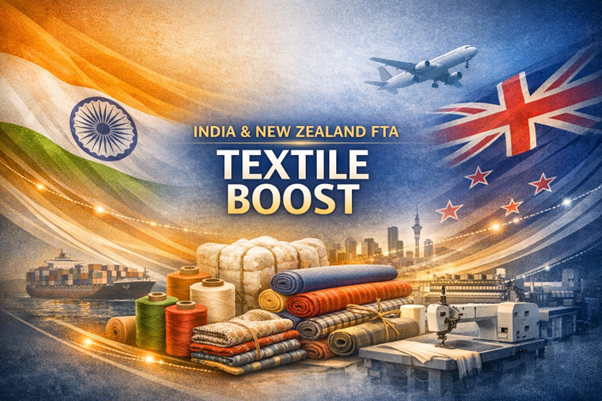 The India New Zealand Free Trade Agreement (FTA) was signed on 27 April, 2026 in New Delhi. The Ministry of Textiles welcomes the landmark trade agreement, reflecting a future ready partnership built on trust , growth and shared prosperity.
The New Zealand market provides an opportunity for India’s exports of textiles, apparel and madeups. New Zealand’s global imports in these three sub categories is $0.33 billion, $1.27 billion and $0.33 billion respectively. With a population of 5.3 million, concentrated around large urban centres and around a $52,000 per capita income, there is immense scope for high value exports.
The apparel sector comprises 65% share of global imports of New Zealand. The key sub sectors of imports under the apparel sector are casual wear (jeans, T-shirts, hoodies, relaxed tops, casual dresses), jackets, formal wear and sports wear. Cotton apparel comprises 45% of these imports followed by MMF at 36%.
Currently, New Zealand has 575 dutiable MFN tariff lines with a 5% duty on some wool, MMF and madeups and a 10% duty on carpets, some MMF and apparel. Hence an FTA would lower the cost of Indian exports.
India’s bilateral exports to New Zealand stands at $0.65 billion with the textiles sector accounting for $0.1billion. India’s exports in the textiles, apparel and made up sector to New Zealand has shown a positive trend over the last decade. Positive growth was shown in all the sub sectors namely apparel, made ups, carpets, fibre, yarn and fabrics. Based on the trends in the sector, some of the potential areas of growth in the sector for Indian exports are apparel (MMF,jute, linen,wool), Madeups (MMF, Jute,linen), Carpets (MMF), fibres (MMF, silk), yarn (MMF, cotton), Fabric (wool,jute,linen), handicraft and handloom.
The FTA also opens up the door to collaborate with textile design houses and fashion technology institutes. There is a need to leverage this FTA by participating in major textile fairs and exhibitions. New Zealand remains an important market and the FTA would enable India to enhance its exports.
Union Minister for Commerce and Industry, Shri Piyush Goyal, chaired a meeting with Export Promotion Councils (EPCs) and industry associations at Bharat Mandapam, New Delhi, on 27th April 2026, to deliberate on strategies for strengthening India’s export ecosystem in the context of evolving global trade dynamics. The meeting was held in continuation of the India–New Zealand FTA signing ceremony in Bharat Mandapam and was attended by representatives of 30 EPCs and apex industry chambers, along with senior officials from the Department of Commerce and the Directorate General of Foreign Trade (DGFT).
Addressing the gathering, Shri Goyal highlighted that India’s total merchandise and services exports reached a record USD 860.09 billion in FY 2025–26, registering a 4.22% year-on-year growth. He noted that sectors such as engineering goods, electronics, pharmaceuticals, chemicals, gems & jewellery and agri-based products have sustained export momentum despite global disruptions.
The Minister emphasised that this milestone should serve as a springboard for achieving USD 2 trillion in exports by 2030 under the Viksit Bharat vision. He urged exporters and industry bodies to fully leverage India’s Free Trade Agreements (FTAs) with developed economies to expand market access, boost exports and create employment opportunities, noting that timely utilisation of these agreements is critical.
During the meeting, the Director General of Foreign Trade made a detailed presentation on export performance, ongoing reforms and a structured framework for achieving measurable export outcomes. The presentation outlined a comprehensive export reform framework covering sectoral export performance, a KPI-based framework for EPCs, promotion of e-commerce exports, Districts as Export Hubs, the proposed Digital Trade Academy, the Government’s response to the West Asia crisis, progress under the Export Promotion Mission, and the ongoing special drive for expediting the Export Obligation Discharge Certificate (EODC). The DGFT stressed that EPCs must act as equal partners with the Government in driving market diversification, bringing more MSMEs into the export ecosystem, greater use of technology, and ensuring that policy measures translate into measurable outcomes at the national level.
Industry representatives raised issues relating to compliance costs, testing requirements, and challenges faced by MSMEs in entering export markets. The Minister assured continued Government support, including facilitation under ongoing schemes and targeted interventions to reduce entry barriers and enhance ease of doing business.
Key bodies participating in the meeting included the Federation of Indian Export Organisations (FIEO); Gem & Jewellery Export Promotion Council (GJEPC); Apparel Export Promotion Council (AEPC); Council for Leather Exports (CLE); Engineering Export Promotion Council of India (EEPC India); Basic Chemicals, Cosmetics & Dyes Export Promotion Council (CHEMEXCIL); Cotton Textiles Export Promotion Council (TEXPROCIL); Manmade and Technical Textiles Export Promotion Council (MATEXIL); other major textile EPCs; Carpet Export Promotion Council (CEPC); Export Promotion Council for Handicrafts (EPCH); agriculture & allied bodies including the Seafood Exporters Association of India (SEAI); Agricultural and Processed Food Products Export Development Authority (APEDA); Shellac & Forest Products Export Promotion Council (SHEFEXCIL); Indian Oilseeds and Produce Export Promotion Council (IOPEPC); Pharmaceuticals Export Promotion Council of India (PHARMEXCIL); National Association of Software and Service Companies (NASSCOM); Federation of Indian Chambers of Commerce & Industry (FICCI); Associated Chambers of Commerce & Industry of India (ASSOCHAM); PHD Chamber of Commerce and Industry (PHDCCI); and several other leading sectoral associations.
Discussions also highlighted progress under the Export Promotion Mission (EPM), the Government’s flagship scheme to support exporters. The Minister encouraged EPCs to take steps to increase the number of active exporters. He also emphasised Government support to exporters for entering new markets and increasing their presence in existing markets to accelerate export growth.
The Minister reaffirmed the Government’s commitment to strengthening a facilitative trade ecosystem through ongoing reforms, targeted support measures and close collaboration with industry, to accelerate export growth and position India as a trusted global supply partner.
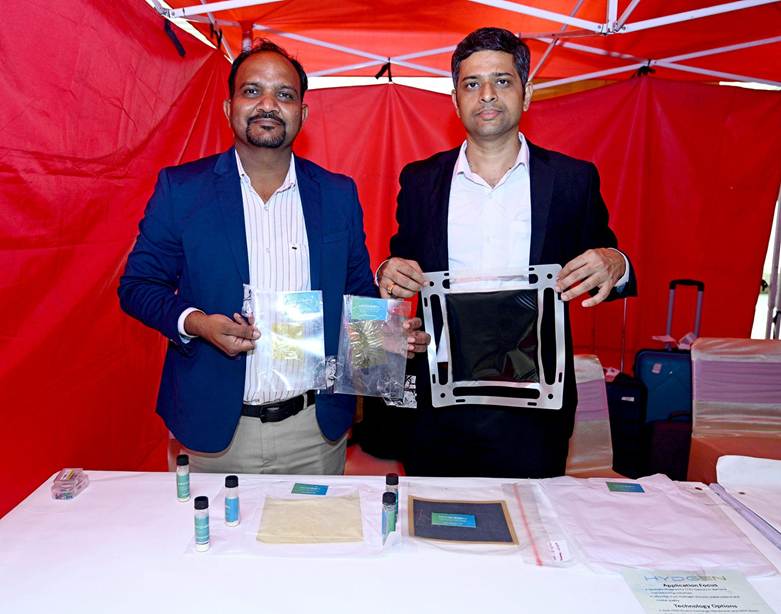
The Ministry of New and Renewable Energy (MNRE) organized a one-day Hydrogen Startup Exhibition. The aim of the exhibition was to promote the vibrant hydrogen startup ecosystem in the country.
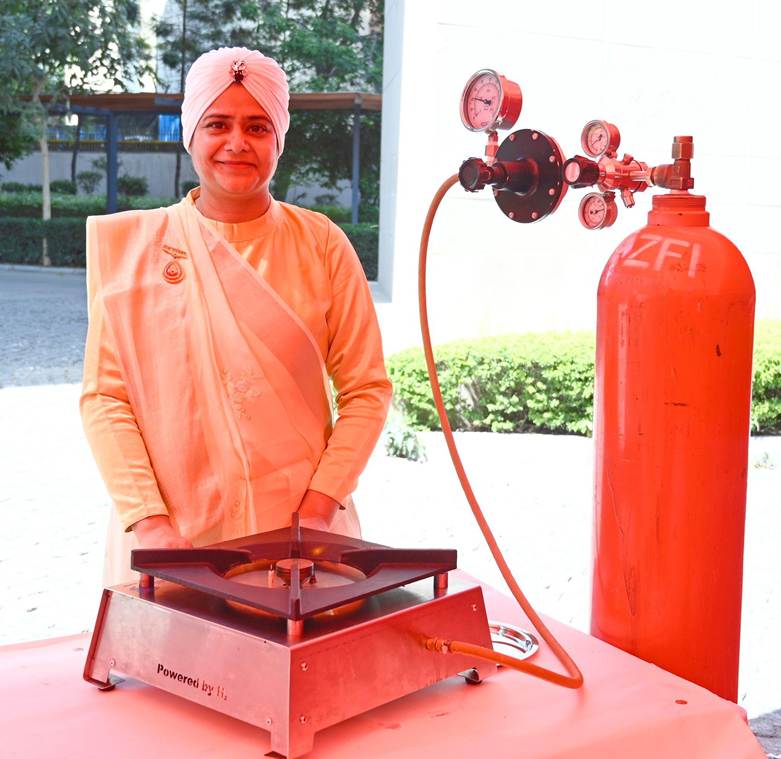
The exhibition brought together 18 promising startups working across various segments of the green hydrogen value chain, including electrolyser technologies, fuel cell applications, biomass-to-hydrogen production, and digital solutions for hydrogen systems. The participating startups demonstrated their technologies and products and interacted with key stakeholders from government, industry, and the research community.
It may be noted that as per Department for Promotion of Industry and Internal Trade (DPIIT), there were 249 startups in the hydrogen area as of September 2025. The participating companies included five electrolyzer startups (electrolyzers and associated stack components), two hydrogen production startups, one fuel cell startup, one hydrogen applications startup, one safety startup (MEMS-based sensor), two drone startups, three hydrogen cooking startups, one artificial intelligence/machine learning startup, and two bio-hydrogen startups.
Principal Scientific Adviser to the Government of India, Prof. Ajay Sood, graced the occasion and interacted with the startup founders. Other dignitaries included MNRE Secretary Shri Santosh Sarangi, Scientific Secretary in the PSA Office Dr. Parvinder Maini, and NGHM Director Shri Abhay Bakre. MNRE had launched the scheme for New and Novel Uses of Hydrogen Production and Applications last year, under which Part B of the scheme earmarked Rs. 100 crores for startup funding (pilot projects), with a maximum grant of Rs. 5 crore per startup.
Following the scheme launch, NISE had issued a call for proposals (CfP) in September 2025. A total of 111 applications were received, out of which 58 were shortlisted for presentation before the Project Appraisal Committee earlier this year. The results of the presentations will be declared in the coming weeks. It may be recalled that MNRE had organized a similar startup expo as part of the R&D Conference last September at Dr. Ambedkar Centre in New Delhi, in which more than 25 startups had participated. This second event was a successor to the first event.
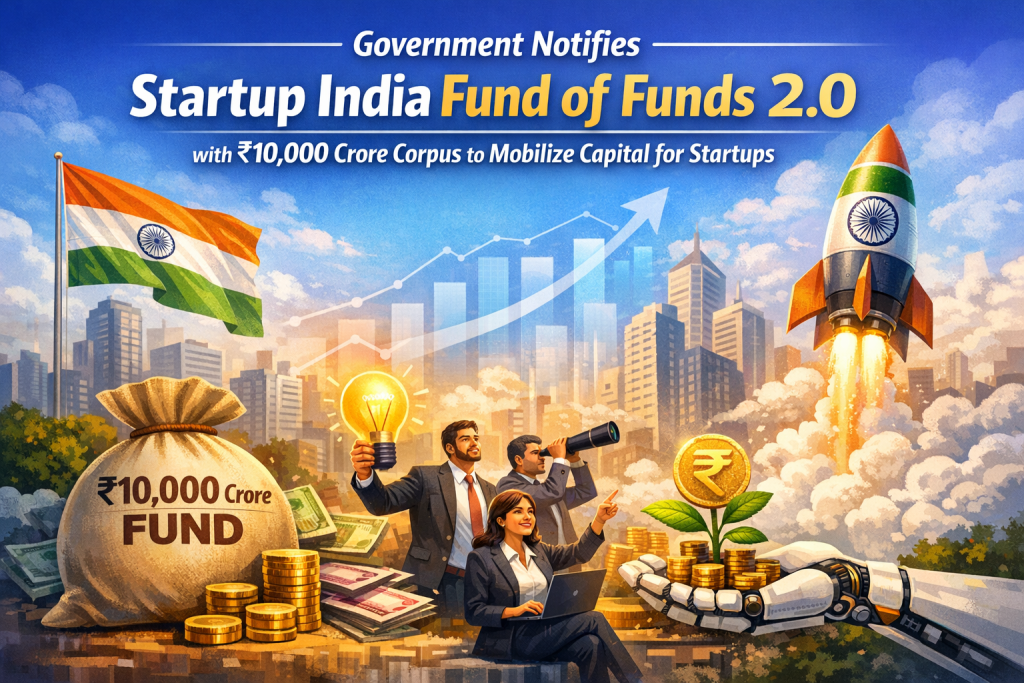
The Government has notified the Startup India Fund of Funds 2.0 (Startup India FoF 2.0) with a total corpus of ₹10,000 crore for the purpose of mobilizing venture and growth capital for the startup ecosystem of the country.
The Startup India FoF 2.0 builds upon the strong performance of the Fund of Funds for Startups (FFS 1.0), which was launched in 2016 under the Startup India Action Plan to address funding gaps and catalyse the domestic capital for startups.
Startup India FoF 2.0 will have a total corpus of ₹10,000 crore for commitments to eligible Alternative Investment Funds (AIFs) spread across the 16th and 17th Finance Commission cycles. Investments under Startup India FoF 2.0 will focus on Alternative Investment Funds supporting priority segments including deep tech startups, early growth stage startups supported by smaller AIFs, technology-driven and innovative manufacturing startups, and sector or stage agnostic startups.
Startup India FoF 2.0 will follow a structured selection process for AIFs involving screening by a Venture Capital Investment Committee (VCIC) comprising of veterans from the startup ecosystem, and the Scheme incorporates robust monitoring and oversight mechanisms, while an Empowered Committee (EC) will also be constituted to monitor implementation and performance of the Scheme, and provisions for co-investment by Government and institutional investors under an umbrella framework have been included with appropriate governance safeguards.
The operational guidelines and the composition of VCIC will be issued by the Department for Promotion of Industry and Internal Trade (DPIIT). Startup India FoF 2.0 is expected to play a critical role in advancing India’s innovation-led growth agenda, and by supporting startups that build globally competitive technologies, products, and solutions, the Scheme will contribute to strengthening India’s economic resilience, boosting manufacturing capabilities, generating high-quality jobs, and positioning India as a global innovation hub.
The Small Industries Development Bank of India (SIDBI) will commence operationalization of the scheme as the Implementation Agency (IA) with effect from the date of notification, and in addition, another domestic Implementation Agency will also be selected to implement the proposed Scheme. The Startup India FoF 2.0 will contribute to the corpus of SEBI-registered Alternative Investment Funds (AIFs) for investing in entities recognised as ‘startups’ by the Central Government.
Aligned with the national vision of Viksit Bharat @ 2047, the Fund represents the Government’s continued commitment to empowering entrepreneurs, fostering innovation, and unlocking the full potential of India’s startup ecosystem.
The notification is available at the following link: https://egazette.gov.in/WriteReadData/2026/271764.pdf