Tuesday, April 14, 2026
Top Stories

The collaboration aims to foster the growth of product startups working in areas such as HVAC technologies, digital solutions, advanced manufacturing processes, and supply chain innovation. It seeks to enable startups to develop scalable and industry-relevant solutions through structured industry engagement.
As part of the initiative, startups will be provided access to mentorship from industry experts, infrastructure support including R&D laboratories and testing facilities, pilot opportunities, and market linkages. The partnership will also facilitate startups in achieving key milestones such as product validation, Proof-of-Concept (PoC) development, and integration into industry value chains.
Speaking on the occasion, Joint Secretary, DPIIT, Shri Sanjiv stated that the collaboration represents an important step towards fostering industry-driven innovation in the manufacturing sector. He noted that such partnerships enable startups to engage with real-world problem statements and scale solutions with tangible outcomes.
Under this collaboration, DPIIT will work with Blue Star Limited to explore the organisation of innovation challenges under the Bharat Startup Grand Challenge, along with targeted hackathons focused on HVAC, digital technologies, and manufacturing domains. Startups will have opportunities to participate in structured PoC programmes, with selected entities being considered for pilot deployment and further engagement.
The collaboration will also enable startups to access testing facilities, R&D infrastructure, and technical support, along with structured mentorship programmes and periodic engagement sessions to align innovations with industry requirements.
The MoU was signed by Deputy Secretary, DPIIT, Shri T. L. K. Singh and Managing Director, Blue Star Limited, Shri B Thiagarajan, in the presence of senior officials from both sides.
India’s trade performance has remained robust and resilient, with exports recording a steady upward trajectory both in the current fiscal year (FY 2025–26, Apr–Jan) and over the longer term (FY 2021–25). Despite persistent global uncertainty, supply chain disruptions, and volatile commodity prices, India’s exports have continued to expand in a broad-based manner. During Apr–Jan of FY 2025–26, total exports of merchandise and services rose by USD 36 billion, registering a growth of 5.26% from USD 679.02 billion in FY 2024–25 (Apr–Jan) to USD 714.73 billion. Over the period 2021–22 to 2024–25, exports achieved a compound annual growth rate of 6.9%, with values increasing sharply from USD 497.90 billion in 2020–21 to USD 828.25 billion in 2024–25. This consistent expansion underscores India’s ability to sustain diversified and resilient export growth, positioning the country as a strong player in global trade even under challenging external conditions.
The Government is consistently working to boost exports and expand the country’s global footprint, combining traditional strengths with emerging technology‑driven sectors. Central to this ambition is the creation of a supportive ecosystem where exporters, particularly MSMEs, can compete confidently in international markets. This effort is reinforced by a dynamic policy framework, strong financial incentives, a growing digital infrastructure, improved trade facilitation, and a determined push to secure deeper market access through next‑generation trade agreements.
The Foreign Trade Policy (FTP) 2023, designed as a flexible and evolving framework to adapt to global shifts, has emerged as a key enabler of India’s export momentum. Built on four core pillars – trade facilitation, export promotion, state‑level partnerships, and digital integration – the FTP is further reinforced by targeted export promotion schemes that collectively enhance India’s competitiveness in global markets.
The RoDTEP scheme plays a central role by neutralizing embedded taxes on exports and enabling Indian goods to remain competitive worldwide. The recently launched Export Promotion Mission (EPM) 2 further reinforces this effort through two targeted pillars: expanding access to affordable trade finance and upgrading quality, logistics, branding, and market‑readiness across the export value chain. The Government has approved the EPM with a budgetary outlay of Rs. 25,060 crores (FY 2025–26 to FY 2030–31). It operates through Niryat Protsahan (focusing on trade finance and credit enhancement) and Niryat Disha (focusing on export logistics, warehousing, and market access), specifically targeting MSME competitiveness.
The Government has recently notified a time-limited “RELIEF” Scheme, an intervention under the Export Promotion Mission, to be implemented through the Export Credit Guarantee Corporation of India (ECGC), is operationalised to address elevated export risks arising from geopolitical disruptions in the Gulf and West Asia maritime corridor.
Together with the Export Credit Guarantee Corporation (ECGC), which provides critical risk‑mitigation support for exports, and schemes like Trade Infrastructure for Export Scheme (TIES) that build export‑linked infrastructure across the country.
Running parallel to these financial and policy instruments is India’s accelerating shift toward technology‑enabled trade governance. A strong digital backbone powered by platforms such as the 24×7 EIC interface, the Trade Intelligence & Analytics platform, the Common Digital Platform for Certificates of Origin, and the Trade e-Connect portal has transformed how exporters access information, approvals, and global markets. These systems enable fully online processing, real‑time compliance updates, digital certification, faster turnaround times, and easier access to global market intelligence. The outcome is a trade ecosystem that is more transparent, data‑driven, efficient, and equitable.
Proactive trade diplomacy complements policy measures and expanding digital infrastructure, reinforcing the country’s efforts to strengthen global market access and enhance export competitiveness. With 19 FTAs and a renewed push since 2021 wherein India has concluded or advanced eight major agreements with key partners. The India-EU FTA, a landmark pact offering access to almost the entire EU tariff universe, marks a significant step in integrating India more deeply into global value chains. The India-EFTA Trade and Economic Partnership Agreement (TEPA) is India’s first FTA to include a dedicated commitment aiming to increase FDI from their investors. Trade agreements with New Zealand, Oman and UK will broaden market access, enhance services mobility, secure long‑term investments, and create predictable regulatory environments for businesses. Meanwhile, ongoing negotiations with Israel, Canada, GCC nations, Chile, and Peru indicate India’s determination to expand high‑value trade corridors across regions.
India’s export strategy reflects a decisive whole‑of‑government approach, moving beyond transactional support to building a resilient, competitive, and future‑ready ecosystem. By combining targeted financial incentives, technology‑enabled trade facilitation, institutional reforms, and proactive market‑access initiatives, the focus is on embedding digital governance, expanding global reach, and strengthening exporter capabilities across sectors and regions. This integrated approach positions India not just as a participant, but as a trusted, technology‑driven partner in global trade.
This information was given by the Minister of State for Ministry of Commerce & Industry, Shri Jitin Prasada, in Lok Sabha today.
Ref.: MCM/ADM/11
The Director General
Bombay Chamber of Commerce and Industry
Mackinnon Mackenzie Building
3rd floor, 4, Shoorji Vallabhdas Road
Ballard Estate, Mumbai – 400 001
Dear Sir/Madam,
Invitation for Bids
Please see enclosed notices for invitation for bids from organizations in Mauritius.
Prospective bidders may be requested to regularly visit the website to take cognizance of any addendum and/or clarification(s) issued.
The Consulate would highly appreciate if you could kindly circulate the Notices among the members of your Organization.
Thank you for your understanding and cooperation.
Yours sincerely,
1107, Regent Chambers
11th Floor, Jamnalal Bajaj Marg
208, Nariman Point
Mumbai – 400 021
Tel. : 022 22825421 /22
Union Minister of Commerce and Industry, Shri Piyush Goyal, said that in the last few years India has entered into nine free trade agreements with 38 developed nations, covering many of the world’s advanced economies. He noted that these agreements provide preferential market access to nearly two-thirds of global trade and emphasised that Indian industry, farmers, MSMEs and artisans must leverage these opportunities through a strong focus on quality.
Addressing the National CSR Announcement for FY 2026–27 and Scholarship Distribution launch by Malabar Charitable Trust in New Delhi today, the Minister noted that these agreements have opened up global markets for Indian goods and services at reduced or zero duty, giving Indian exporters a competitive advantage. He highlighted that sectors including MSMEs, farmers, fishermen, and artisans stand to benefit significantly from this expanded market access, provided there is a continued emphasis on high-quality production and services.
Shri Goyal also commended the commitment of allocating 5% of net profits towards corporate social responsibility (CSR), describing it as a significant step that goes beyond statutory requirements and sets an example for others to follow. He said it is truly remarkable to see the commitment with which corporate social responsibility has been taken up by the group, and expressed confidence that it would serve as a role model for many others.
Shri Goyal observed that the spirit of charity is deeply embedded in the ethos of Indian society, where individuals across all sections instinctively come forward to help those in need. He added that while the CSR framework has contributed to increasing participation, initiatives that go beyond mandated levels reflect a genuine commitment to social responsibility.
Highlighting the significance of the initiative, the Minister noted that such efforts validate the belief that organisations can voluntarily go beyond prescribed norms and contribute meaningfully to society. He also referred to instances where CSR commitments are often announced as future pledges, while emphasising the importance of current and tangible delivery.
Shri Goyal underscored the importance of women-led development, recalling that Bharat Ratna Dr. B.R. Ambedkar had emphasised that communities prosper when women prosper. He highlighted that under the leadership of Prime Minister Shri Narendra Modi, sustained efforts have been made to promote education and empowerment of girls, with a vision that every girl should have the opportunity to contribute to the nation’s development.
Emphasising inclusive development, the Minister stated that every citizen is capable and deserving of opportunity, and that the government is committed to ensuring access to basic necessities such as food, housing, healthcare, education, electricity, water and digital connectivity for all. He noted that such efforts are aimed at enabling every individual to participate in the journey towards a developed India.
He called upon all stakeholders to view citizens as contributors to the vision of Viksit Bharat 2047 and emphasised the importance of unity and collective effort. Referring to the spirit of solidarity witnessed during times of crisis such as the COVID-19 pandemic, he highlighted the need to transcend differences and work together as one nation.
The Minister also noted that despite global challenges, including ongoing conflicts impacting trade and logistics, India remains focused on strengthening its economic engagement.
Shri Goyal highlighted the importance of skilling and capacity building, including language training and quality education, to enhance global opportunities for India’s youth. He noted that initiatives supporting education, nutrition and social welfare contribute significantly to the country’s development journey.
Commending the efforts of all stakeholders involved, the Minister expressed confidence that such initiatives would encourage broader participation in social development and help expand opportunities for those who have not yet had access to them. He extended his best wishes for the success of the initiative and for the 33,000 children who will receive benefits and scholarships under the programme.
Supreme Court urges the Centre to come up with a provision recognizing paternity leave as a social security benefit
CEO’s AI Playbook Unveiled
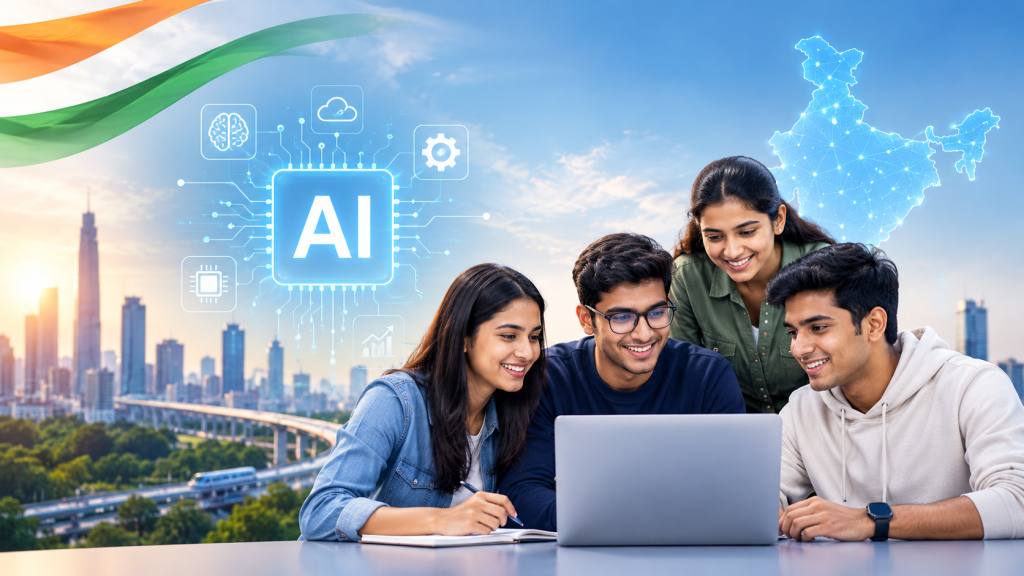
Mumbai, March 13, 2026: As Artificial Intelligence moves from buzzword to boardroom priority, the Bombay Chamber of Commerce & Industry brought together some of India’s foremost business leaders at its CEO AI Conclave 2026 to explore how enterprises must evolve in an AI-driven world.
Opening the conclave, Rajiv Anand, President, Bombay Chamber and MD & CEO, IndusInd Bank, set a clear direction for India Inc.—the time to treat AI as a peripheral initiative is over. “India stands at a defining moment where AI must move beyond experimentation to become a core operating system for enterprises,” he said, urging organisations to think beyond fragmented use cases. “The real opportunity lies not just in adopting AI, but in embedding it contextually into business processes and decision-making frameworks.”
Drawing on India’s digital transformation journey, he pointed to the impact of the country’s digital public infrastructure. “Our digital stack transformed governance and citizen services in ways once considered impossible—AI now has the potential to extend that transformation across industries,” he added.
The panel discussion that followed, moderated by Srikanth RP, Editor, Express Computer, brought together A.S. Lakshminarayanan, MD & CEO, Tata Communications; Girija Subramanian, Chairman-cum-Managing Director, The New India Assurance Co. Ltd.; Dr. Indu Shahani, President & Chancellor, ATLAS SkillTech University; and Sharad Mahendra, Joint Managing Director & CEO, JSW Energy Limited.
The discussion focussed on the need to fundamentally rethink how organisations approach AI. A.S. Lakshminarayanan observed, “Many organisations are still treating AI as a series of projects. The real shift is toward building an AI operating system that fundamentally transforms how businesses function.”
At the same time, the panel acknowledged India’s unique position in this transition. Mahendra pointed to the country’s inherent adaptability as a critical strength, noting, “AI adoption in India is happening at an encouraging pace. There is a natural openness to adapt, and that gives Indian enterprises a strong edge in leveraging emerging technologies.”
The conversation also turned to the transformative implications for India’s vast MSME ecosystem. Subramanian highlighted how AI could help bridge long-standing capability gaps, observing, “AI has the potential to level the playing field. MSMEs, which traditionally lacked access to sophisticated systems and processes, can now operate on par with large corporations.” In this context, AI is seen not just as a driver of efficiency, but as an enabler of inclusion and equitable growth.
Adding a human dimension to the discussion, Dr. Indu Shahani focused on the changing nature of skills and leadership in the AI era. She underscored the importance of openness to learning across hierarchies, stating, “Reverse mentoring is becoming essential in the AI era. Leaders must be open to learning from younger, digitally native talent who are not just preparing for the future—they are ready to create it.” As the discussion progressed, the panel collectively reflected on AI’s broader role in shaping India’s development trajectory. There was a shared recognition that AI could replicate—and even amplify—the impact of earlier digital innovations.

The conclave concluded with a vote of thanks by Sudhanshu Vats, Senior Vice President, Bombay Chamber and Managing Director, Pidilite Industries Ltd., who reflected on the significance of the dialogue and the responsibility to carry it forward. “This conclave reflects the Chamber’s commitment to staying at the forefront of transformative conversations, even as one of India’s oldest institutions,” he said, adding that the insights shared must continue to resonate beyond the room.
Bringing together diverse perspectives and practical insights, the AI Conclave 2026 reinforced a clear message: for India Inc., the future of AI lies not in isolated adoption, but in integrated, enterprise-wide transformation—one that has the potential to redefine competitiveness, inclusion, and growth in the years ahead.
It is a long established fact that a reader will be distracted by the readable content of a page when lookin