
Saturday, October 17, 2026
Blog

 Login
Login
Bombay Chamber hosts HR Conclave on Leadership in the Age of Gen Z
Mumbai: Bombay Chamber of Commerce & Industry recently organised its HR Conclave themed HR Kinetic: Leadership in the Age of Gen Z at Four Seasons Hotel Mumbai.
Welcoming the delegates, Sandeep Khosla, Director General, Bombay Chamber said, “Today’s Conclave focuses on one of the most significant workforce shifts of our time—the rise of Gen Z in the workplace. As the first generation of true digital natives, Gen Z is bringing new expectations around purpose, flexibility, inclusion, and impact. They are not only entering organisations but are also reshaping workplace culture and redefining what leadership means in the modern era. For organisations and leaders, this shift requires a fundamental rethink of how we engage, motivate, and develop talent. Leadership today must be more agile, empathetic, and transparent, while workplaces must evolve to foster collaboration, innovation, and well-being. The theme of this conclave—HR Kinetic—reflects precisely this need for dynamism and adaptability. In an environment marked by rapid technological change, evolving workforce expectations, and new models of work, HR leaders play a pivotal role in shaping organisations that are future-ready and resilient.”
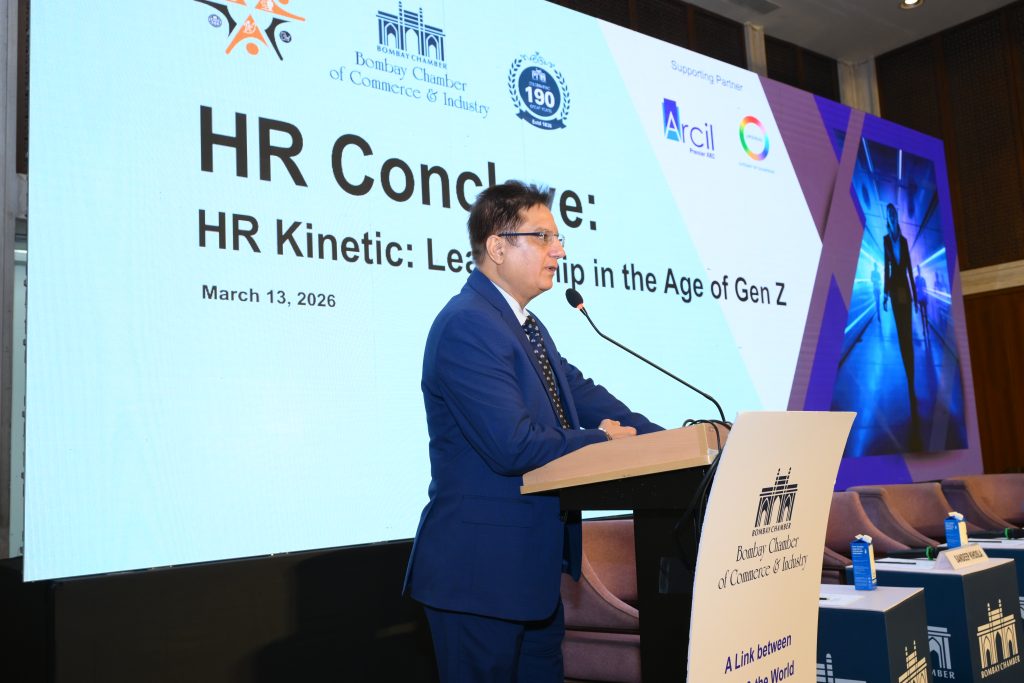
Setting the theme for the Conclave, Ruhie Pande Chairperson, HRM Committee, Bombay Chamber and Group CHRO & CMO, Serentica, Resonia, and Sterlite Electric said, “This is the first time in history that five generations are working together, and they are doing so in a world that is changing faster than any leadership playbook we inherited. the real question for us today is not ‘How do we manage Gen Z?’ It is: How do we lead in a world where Gen Z is setting the pace—and AI is rewriting the rules?”
She observed that the human–machine leadership challenge is where HR must balance efficiency with meaning and fairness. “Where does this leave us—as HR leaders, business leaders, and culture carriers? It tells us three things. First, leadership is shifting from control to context. People don’t need to be told what to do as much as they need to understand why it matters. Second, HR’s role is moving from policy to experience design. Not just benefits and processes—but how work feels on a Monday morning. Third, credibility now comes from learning velocity, not tenure. Gen Z respects leaders who are curious, adaptive, and willing to unlearn. AI can give us data. Gen Z is giving us feedback. The question is whether we are listening—or defending,” she pointed out.
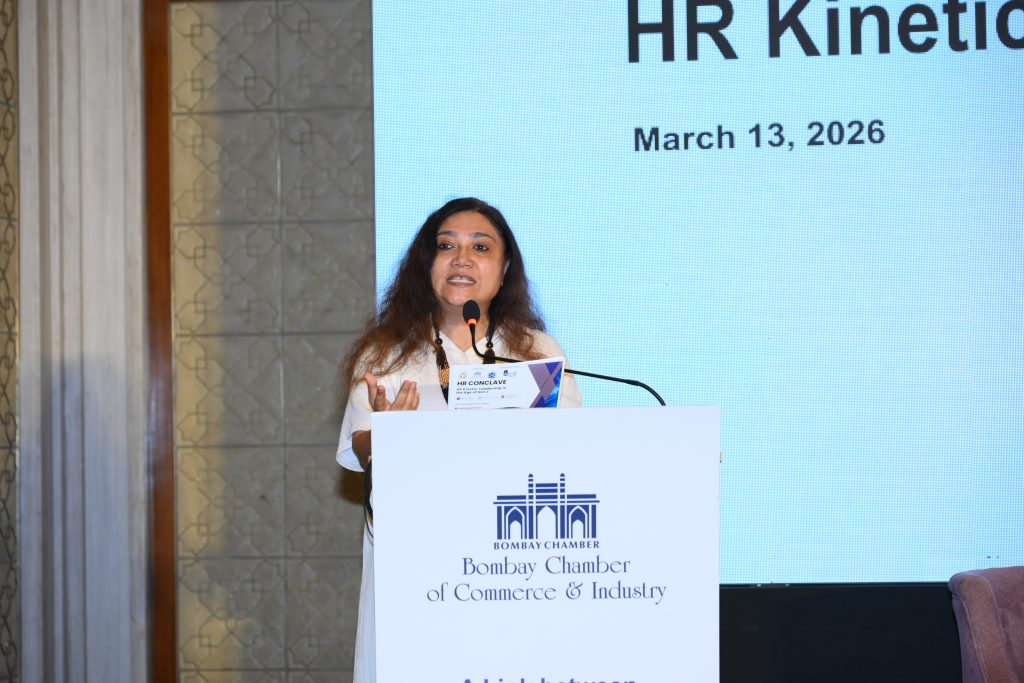
In his keynote address on Redefining Work Culture: How Gen Z is Transforming Well-being, Flexibility, and Authenticity at Work, Dr. Adil Malia, Mentor, HRM Committee, Bombay Chamber and CEO, The Firm stated, “Managing Gen Z (and upcoming generations) is fundamentally different from managing earlier generations; traditional leadership and management styles will not work.
Organisations risk making serious strategic mistakes if they apply old management frameworks to new-generation employees. We should focus on what motivates Gen Z? What do they value at work? How are expectations around leadership, flexibility, and purpose different? What leadership behaviours work best for them?”
To prepare for the Gen Z workforce, Dr Malia said that HR leaders must, “Understand deep generational insights first. Filter and evaluate each organisational system through the lens of Gen Z behaviours and expectations and integrate all systems cohesively rather than implement isolated best practices. Sustainable value creation requires system-wide integration, not random adoption of tools or trends. Cultural and systemic change will not happen automatically. Leaders themselves are responsible—it cannot be delegated, wished for, or spoken into existence. Real change requires deliberate action, effort, and ownership from leadership and leaders must actively drive transformation to make organisations future ready.”
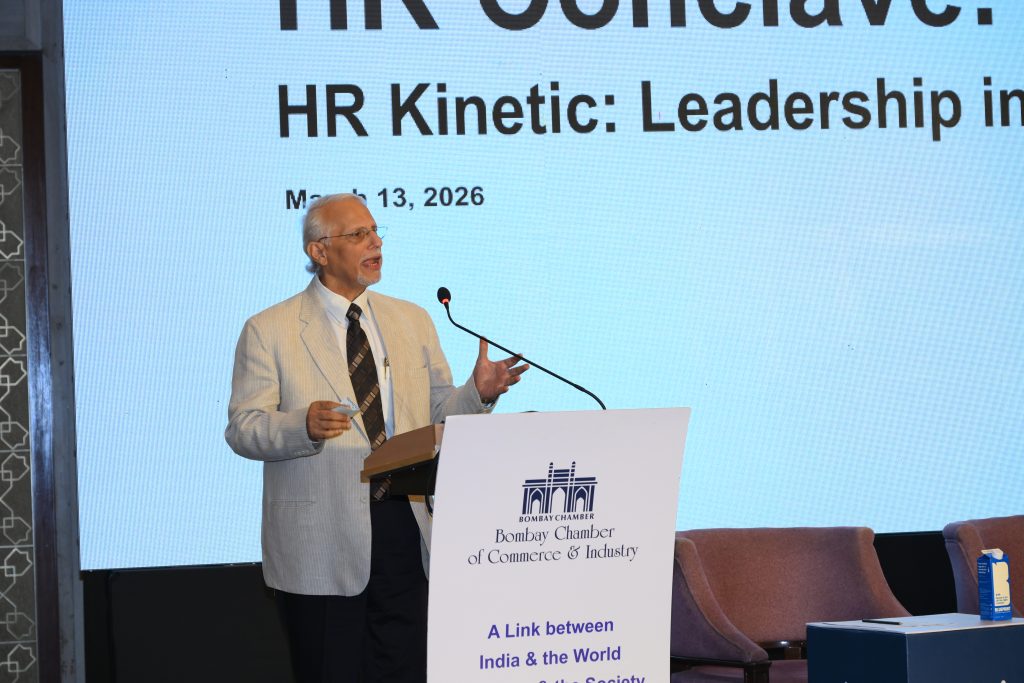
This was followed by a panel discussion on Leading with Authenticity: What Leaders expect from Gen Z & Vice versa. The panel was moderated by Dr. Sanjay Muthal, Member, HRM Committee, Bombay Chamber, and CEO, Argolynx Consulting LLP and the panelists included Shefali Kohli, CHRO – Chemicals, Filament Yarn & Insulators, Aditya Birla Group; Reena Tyagi, Chief People &
Organisation Officer, Generali Central Life Insurance and Amit Chincholikar, Group President – HR, Hinduja Group Ltd. The panel highlighted the core leadership challenge of understanding who Gen Z really are and adapting leadership and supervision styles accordingly. The members observed that what Gen Z truly seek is Authenticity, Trust and Transparency.
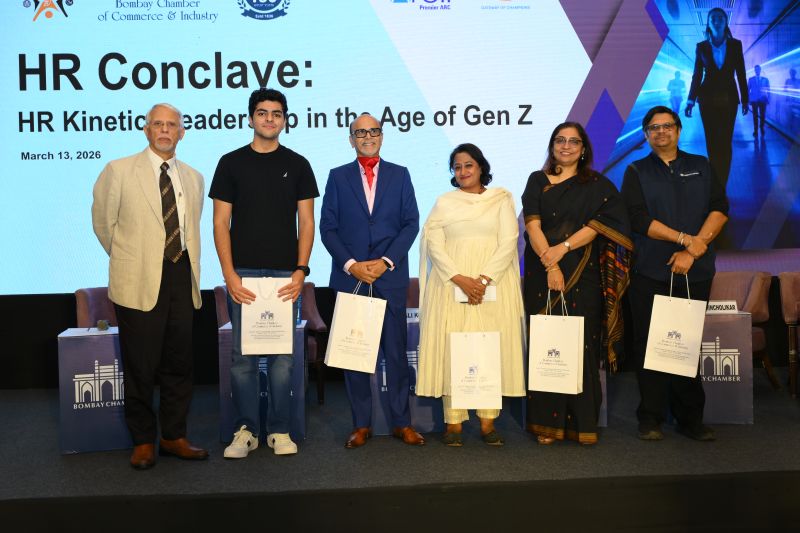
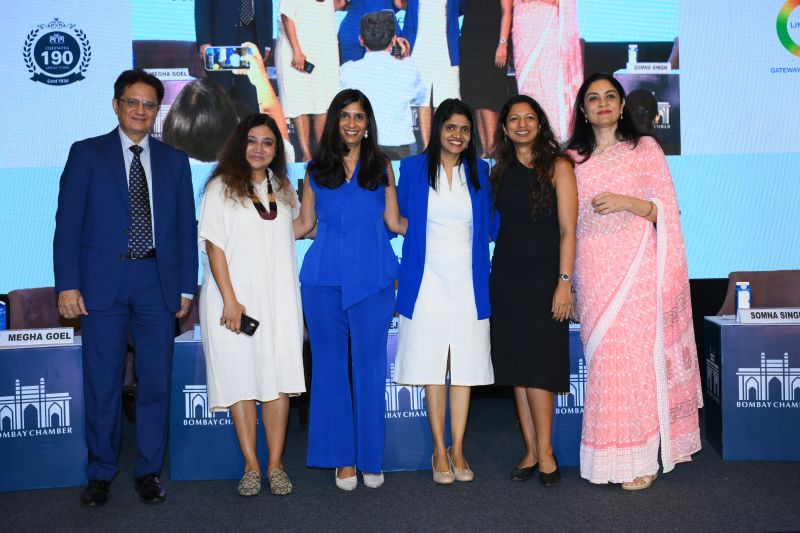
The second panel discussion deliberated on Empowering Gen Z: Technology, Hybrid Work and the Skills for Tomorrow. The moderator was Ruhie Pande and the panelists were Sejal Mody, CHRO, Akasa Air; Sanjivani Sadani, Chief People Officer,
Cipla; Megha Goel, CHRO, Godrej Properties Ltd and Somna Singh, Country HR Head, Bank of America Merrill Lynch. The key takeaways were that Gen Z is a catalyst, not a challenge. That AI must enhance judgement, inclusion and empathy and learning must be relevant, short, and human. The panel concluded that flexibility, purpose, and trust are universal—not generational and that organisations must evolve with Gen Z, not design for Gen Z alone.
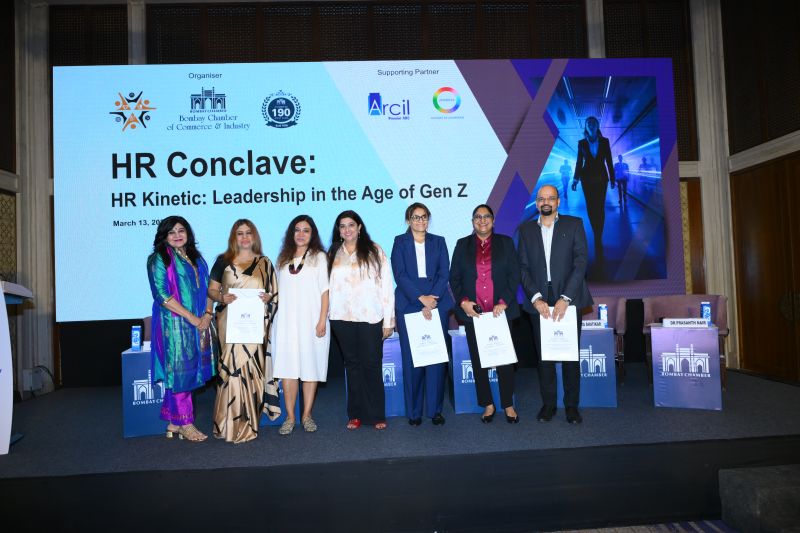
This was followed by The Great HR Debate on AI a Tool for Business Value Creation Or Disruption. The debate was moderated jointly by Dr. Tanaya Mishra, Member, HRM Committee, Bombay Chamber & Global CHRO, In-solution Global Ltd and Lucky Kulkarni, Member, HRM Committee, Bombay Chamber, Group CHRO & Member Management Committee, Jeena & Co.
The panel members were Rita Verma, Chief Talent Officer, Omnicom Media India; Harsha Almad, VP, India Consulting Hub Lead, Wipro; Sareeta Bhatikar, CHRO, Jio-bp and Dr. Prasanth Nair, Member HRM Committee, Bombay Chamber & CHRO, Crompton Greaves Consumer Electricals Ltd.
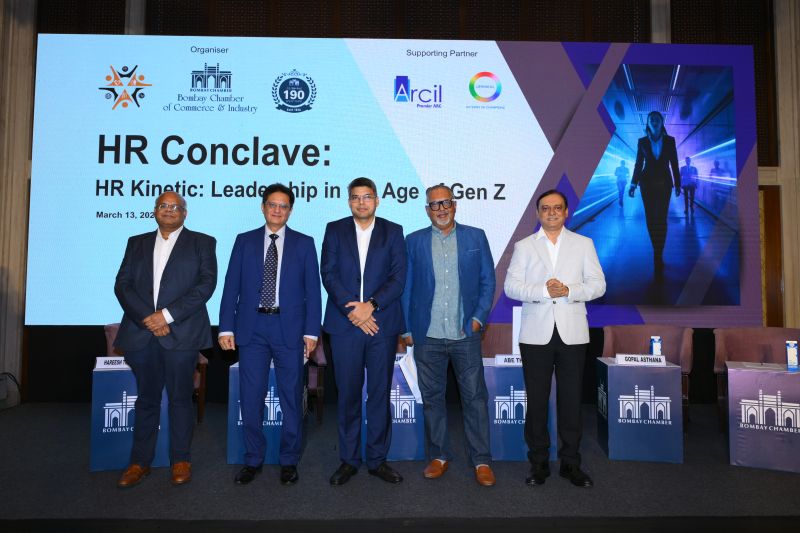
The debate was followed by a CEO session moderated by Hareesh Tibrewala, Founder and CEO, Manabu AI Services and the panel included Pankaj Gupta, MD & CEO, Godrej Finance; Abe Thomas, CEO – Music Broadcast Ltd. and Gopal Asthana, CEO, Tata CLiQ.
From Blocks to Billions: REITs & Asset Tokenisation Conclave 2026 Charts the Future of Real Estate Investing in India
From Blocks to Billions: REITs & Asset Tokenisation Conclave 2026 Charts the Future of Real Estate Investing in India
March 13, 2026; The REITs & Asset Tokenisation Conclave 2026: Blocks to Billions – Advancing India’s Real Estate Future, organised by the Bombay Chamber of Commerce & Industry, brought together regulators, legal experts, real estate professionals, investors, and technology innovators to discuss how digitalisation, tokenisation, and regulatory reforms are reshaping India’s real estate investment ecosystem. The conclave examined the growing role of Real Estate Investment Trusts (REITs), fractional ownership, and blockchain-enabled tokenisation in unlocking liquidity and expanding investor participation in real estate markets.
In his Welcome Address, Sandeep Khosla, Director General, Bombay Chamber of Commerce & Industry, emphasised the Chamber’s role as a platform for constructive dialogue between industry stakeholders and policymakers. He highlighted that as real estate evolves through digital transformation and financial innovation, forums such as this provide an important opportunity to examine regulatory developments, emerging investment structures, and the broader implications of technology-driven financial markets.
Setting the context for the discussion, Shaan Zaveri, Partner, Terazo, delivered the Theme Setting Address, highlighting the convergence of financial innovation and digital infrastructure in reshaping how real estate assets are structured, distributed, and accessed by investors.
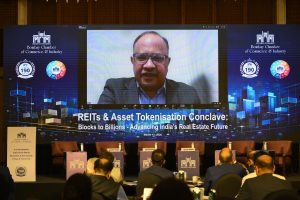
Delivering the Keynote Address, Rajesh Bansal, Former Chief Executive Officer, Reserve Bank Innovation Hub, spoke about the transformative potential of REITs and asset tokenisation in India’s real estate ecosystem. He noted that digitalisation can significantly enhance accessibility in real estate investments while improving transparency and efficiency across the sector. Emphasising that tokenisation represents an inevitable evolution in financial markets, he highlighted the need for a more professional, well-regulated, and investor-friendly real estate environment to support sustainable growth.

The first panel discussion, Regulatory Reforms and Investor Perspectives, examined the evolving regulatory landscape and the structural challenges associated with tokenised real estate assets. The session was moderated by Ajit Krishnan, Tax Partner, EY India, and featured Sudhakar Deshmukh, Director – Complaint Management, MahaRERA; Sandeep Parekh, Managing Partner, Finsec Law Advisors; Devi Shankar, Head – Real Assets & Family Office Investments, CBRE; and Girish Singhi, Founder, Crest Capital.
The discussion highlighted that tokenisation represents a shift toward a more digital real estate marketplace, but its success will depend on reliable digital land records, strong blockchain infrastructure, and supportive regulatory frameworks. Panellists emphasised that global experience suggests the need for a well-developed ecosystem before tokenised assets can scale effectively. They also noted that investors must clearly understand that purchasing tokens represents a financial interest linked to an asset rather than direct ownership of property. Additionally, transparency of assets, governance standards, and gradual regulatory adoption were identified as key factors for building long-term market confidence.
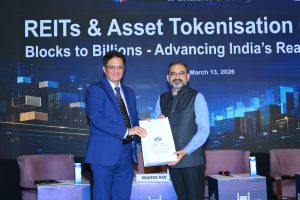
Delivering a Special Address on the Roadmap to Tokenised Assets, Pramod Rao, Former Executive Director, Securities and Exchange Board of India (SEBI), underscored the importance of strong regulatory frameworks in enabling innovation within financial markets. He noted that the responsible adoption of new instruments such as REITs and tokenised assets must be supported by transparency, investor protection, and regulatory oversight to ensure long-term stability and trust in India’s capital markets.

The second panel discussion, Real Estate Funds 2.0: Tokenisation Meets Digital Distribution, explored how technology platforms are transforming the way real estate investments are structured and distributed. The session was moderated by Neil Borate, Editor-in-Chief, The Fynprint, and featured Shiv Parekh, Founder & CEO, hBits; Shaan Zaveri, Partner, Terazo; Gaurav Gadhecha, Partner, Terazo; and Deakin Daney, Chief Business Officer & Head – RealX Whitebox.
The panel highlighted how digital platforms and tokenisation can expand access to real estate investment by lowering entry barriers and enabling fractional ownership structures. Speakers noted that digital distribution models could improve liquidity in traditionally illiquid real estate assets, allowing a broader pool of investors to participate. At the same time, they stressed that regulatory clarity, strong governance frameworks, and transparent investment structures will be critical for building investor confidence and scaling these innovations in India’s real estate market.
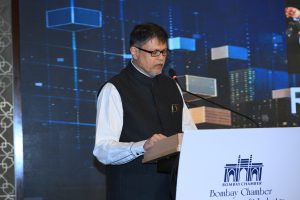
The conclave concluded with a Vote of Thanks delivered by Ashith Kampani, Chair – PE & VC Committee, Bombay Chamber of Commerce & Industry and Chairman, CosmicMandala 15 Group, followed by networking among participants.
The Bombay Chamber of Commerce and Industry, in partnership with Headquarters, Western Naval Command, convened this exclusive Navy–Industry Synergy Conclave
The Bombay Chamber of Commerce and Industry, in partnership with Headquarters, Western Naval Command, convened this exclusive Navy–Industry Synergy Conclave
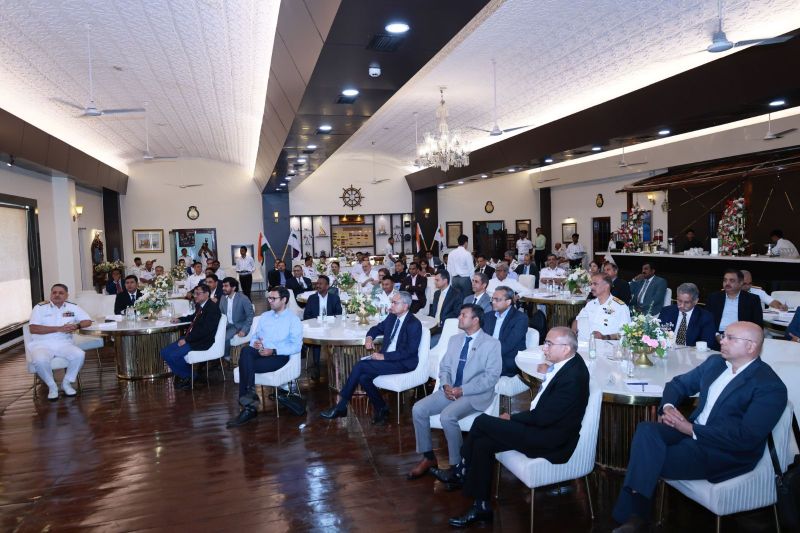
The Bombay Chamber of Commerce and Industry, in partnership with Headquarters, Western Naval Command, convened this exclusive Navy–Industry Synergy Conclave on March 6, 2026.
The conclave brought together senior leadership of the Indian Navy — including Vice Admiral Krishna Swaminathan, Flag Officer Commanding-in-Chief, Western Naval Command, and Vice Admiral Ankur Sharma, Director General Naval Projects Mumbai — along with distinguished officers and select industry leaders for a focused dialogue on strengthening Navy–Industry collaboration.
The discussions centred on co-creating future-ready maritime capabilities, fostering indigenous innovation, strengthening secure supply chains, and building a resilient maritime ecosystem.
Industry leaders also had the rare opportunity to undertake an exclusive visit to the submarine and warship facilities, gaining valuable insights into the operational capabilities of the Indian Navy.
Delhi Shops and Establishments (Amendment) Act, 2026.receives President’s assent
Delhi Shops and Establishments (Amendment) Act, 2026 receives Presidents Assant
Notification attached
By: Raj Singh
No Comments
ICANN85 in Mumbai Highlights Collaboration to Strengthen a Secure and Resilient Internet
ICANN85 in Mumbai Highlights Collaboration to Strengthen a Secure and Resilient Internet
The ICANN85 Community Forum, organized by the Internet Corporation for Assigned Names and Numbers (ICANN) and hosted in collaboration with the National Internet Exchange of India (NIXI) under Ministry of Electronics and IT (MeitY) brought global Internet stakeholders to Mumbai to discuss how to support an open, secure, inclusive, and resilient Internet across the global Internet ecosystem.
The ICANN85 Community Forum is currently taking place in Mumbai. It started on 7th March, 2026 and will continue till 12th March 2026.
A high-level Government and Industry session held today, brought together senior government officials and Internet leaders including the Secretary, Ministry of Electronics and Information Technology (MeitY), Shri S. Krishnan; Chief Secretary, Government of Maharashtra, Shri Rajesh Aggarwal; Joint Secretary, MeitY, Shri Sushil Pal; Chief Executive Officer, NIXI, Dr. Devesh Tyagi; and ICANN Board Chair, Ms. Tripti Sinha; ICANN President and CEO, Mr. Kurtis Lindqvist; and ICANN Vice President for Stakeholder Engagement and Managing Director for the Asia Pacific region, Shri Samiran Gupta.
“The Internet today has become critical infrastructure that supports economies, public services, innovation, and everyday life across the world. As digital adoption continues to grow, it is important that we work together to ensure the Internet remains open, secure, resilient, and inclusive. Platforms like ICANN bring together governments, the private sector, the technical community, and civil society to strengthen the multistakeholder approach to Internet governance. India remains committed to contributing to these global efforts and to building trusted digital infrastructure that supports innovation, cooperation, and meaningful participation from all regions.” said the Secretary, Ministry of Electronics and Information Technology (MeitY), Shri S. Krishnan.
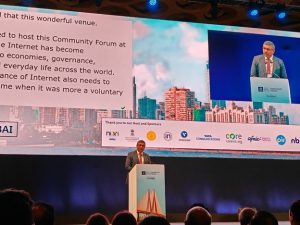
“The Internet today is a critical part of economic growth, governance, and daily life. Platforms like ICANN85 provide an important opportunity for governments, technical experts, and industry stakeholders to come together and discuss how we can keep the Internet open, secure, and accessible for everyone. Such discussions help strengthen cooperation and ensure that the Internet continues to support innovation and development across regions,” said Rajesh Aggarwal, Chief Secretary, Government of Maharashtra.
“The world grows more complex and, at times, more divided — which is precisely why the Internet’s stability and integrity matter more deeply now than ever before. Today, that original call rings louder and truer than ever. It asks us to be steady and disciplined in how we work, transparent and accountable in how we decide, and unwavering in our commitment to an Internet that is secure, stable, and reflective of the diverse humanity it serves,” said Ms. Tripti Sinha, ICANN Board Chair.
“My focus this week is practical. I want us to leave Mumbai with meaningful progress on the work the community has prioritized, and with momentum on the milestones that are coming next,” said Kurtis Lindqvist, ICANN President and CEO. This community works best when we combine deep experience with fresh eyes, and when we bring more people into the work, especially from regions that have not always been in the center of these conversations, he added.
The ICANN85 Community Forum is comprised of more than 200 sessions involving governments, industry leaders, technical experts, and civil society participants from around the world. The sessions focus on key issues related to the secure and stable operation of the Internet, including the evolution of the Domain Name System, cybersecurity practices, and the upcoming expansion of generic top-level domains (gTLDs). Discussions throughout the week will highlight the importance of the multistakeholder model in Internet governance, where the ICANN community collaborates to develop policies, implement solutions, and support the continued operation of a secure, stable, and globally interoperable Internet.
About ICANN
ICANN’s mission is to help ensure a stable, secure, and unified global Internet. To reach another person on the Internet, you need to type an address – a name or a number – into your computer or other device. That address must be unique, so computers know where to find each other. ICANN helps coordinate and support these unique identifiers across the world. ICANN was formed in 1998 as a nonprofit public benefit corporation with a community of participants from all over the world.
About NIXI
The National Internet Exchange of India (NIXI) is a not-for-profit organization set up under the aegis of the Ministry of Electronics and Information Technology (MeitY), Government of India. NIXI plays a critical role in strengthening India’s Internet infrastructure by facilitating efficient exchange of domestic Internet traffic, managing the .IN and .भारत (.Bharat) country-code top-level domains, and promoting adoption of Internet services across the country. Through its initiatives, NIXI supports a secure, resilient, and inclusive Internet ecosystem aligned with India’s digital growth ambitions.
Bids-3
Ref.: MCM/ADM/11
The Director General
Bombay Chamber of Commerce and Industry
Mackinnon Mackenzie Building
3rd floor, 4, Shoorji Vallabhdas Road
Ballard Estate, Mumbai – 400 001
Dear Sir/Madam,
Invitation for Bids
Please see enclosed notices for invitation for bids from organizations in Mauritius.
Prospective bidders may be requested to regularly visit the website to take cognizance of any addendum and/or clarification(s) issued.
The Consulate would highly appreciate if you could kindly circulate the Notices among the members of your Organization.
Thank you for your understanding and cooperation.
Yours sincerely,
D. K. Bucktowar
Consul General
Consulate of the Republic of Mauritius
1107, Regent Chambers
11th Floor, Jamnalal Bajaj Marg
208, Nariman Point
Mumbai – 400 021
Tel. : 022 22825421 /22
Fax No. 022 22845468
Labour Courts under the Industrial Disputes Act, 1947, will have jurisdiction till the Tribunals are constituted under the Industrial Relations Code, 2020.
Labour Courts under the Industrial Disputes Act, 1947, will have jurisdiction till the Tribunals are constituted under the Industrial
Relations Code, 2020.
Judgement attached
Bids-2
Ref.: MCM/ADM/11 26 February 2026
The Director General
Bombay Chamber of Commerce and Industry
Mackinnon Mackenzie Building
3rd floor, 4, Shoorji Vallabhdas Road
Ballard Estate, Mumbai – 400 001
Dear Sir/Madam,
Invitation for Bids
Please see enclosed notices for invitation for bids from organizations in Mauritius.
Prospective bidders may be requested to regularly visit the website to take cognizance of any addendum and/or clarification(s) issued.
The Consulate would highly appreciate if you could kindly circulate the Notices among the members of your Organization.
Thank you for your understanding and cooperation.
Yours sincerely,
D. K. Bucktowar
Consul General
Consulate of the Republic of Mauritius
1107, Regent Chambers
11th Floor, Jamnalal Bajaj Marg
208, Nariman Point
Mumbai – 400 021
Tel. : 022 22825421 /22
Global Harit Nauka Summit Calls for Decisive Action to Make India a Top-Five Shipbuilding Nation by 2047
Global Harit Nauka Summit Calls for Decisive Action to Make India a Top-Five Shipbuilding Nation by 2047
Bombay Chamber, Mumbai: India must move decisively to scale up shipbuilding capacity, deepen financial ecosystems and accelerate the green transition to emerge as a global maritime powerhouse. This was the underlying theme at the Global Harit Nauka Summit: Trust, Collaborate, Impact, organised by the Bombay Chamber of Commerce and Industry on February 24, 2026, at ITC Grand Central Hotel, Mumbai.
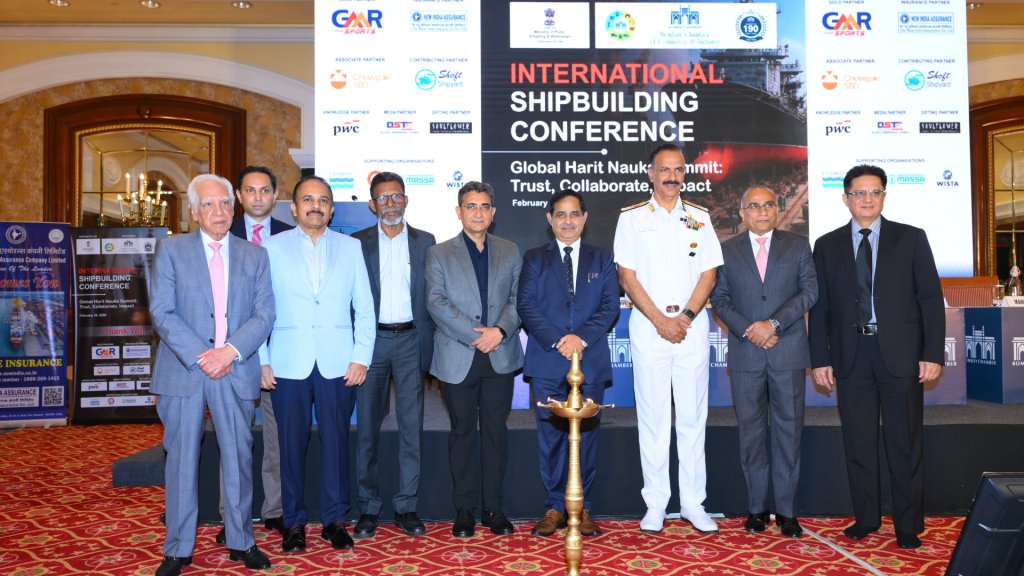
The International Shipbuilding Conference brought together senior government officials, naval leadership, shipyard heads, financiers, insurers and global maritime stakeholders to chart India’s pathway towards becoming a top-five shipbuilding nation by 2047.
In his keynote address on Shaping a Globally Competitive and Sustainable Shipbuilding Ecosystem: India’s Path Forward, Shri Shyam Jagannathan, IAS, Director General, Directorate General of Shipping, Ministry of Ports, Shipping and Waterways, Government of India, outlined the strategic and regulatory roadmap for India’s maritime growth. Noting that India is now a $4.19 trillion economy and the world’s fourth largest, he highlighted that 95% of India’s trade by volume and 70% by value moves by sea, making shipbuilding central to economic security.
Referring to geopolitical disruptions in the Red Sea and Black Sea regions and shifting global trade routes, he stressed the importance of strengthening domestic shipbuilding to secure supply chains and strategic autonomy. Under Maritime India Vision 2030 and Maritime Amrit Kaal Vision 2047, India aims to enter the top 10 shipbuilding nations by 2030 and the top 5 by 2047, scaling annual production significantly while generating large-scale employment.
Shri Jagannathan detailed the government’s four-pillar approach: the Shipbuilding Financial Assistance Scheme, the Shipbuilding Development Scheme, the Maritime Development Fund and comprehensive legal and process reforms, backed by a ₹69,725 crore policy framework. He underlined the impact of the Merchant Shipping Act, 2025 and the Coastal Shipping Act, 2025 in modernising maritime governance, streamlining vessel registration and promoting Indian-flagged tonnage. He also highlighted green vessel incentives, ship recycling reforms and opportunities emerging from GIFT City as a competitive ship leasing and maritime finance hub.
Delivering the special address on “Shipbuilding as a Strategic Driver of India’s Maritime Vision,” Arjun Chowgule, Managing Director, Chowgule Group, emphasised that shipbuilding must be viewed as a strategic enabler of trade security, naval strength and industrial self-reliance, calling for long-term policy visibility and stronger public-private collaboration.
Earlier, Sudhanshu Vats, Sr. Vice President, Bombay Chamber and Managing Director, Pidilite Industries, welcomed delegates and underscored the Chamber’s long standing engagement with the maritime sector.
Setting the theme, Shri Rajiv Jalota, Former IAS, Former Chairman of Mumbai Port Authority and DG Shipping, Government of India, and Conference Chairman, underscored that shipbuilding sits at the intersection of trade competitiveness, energy security, national security, technology leadership and climate responsibility. He outlined three global forces shaping the next shipbuilding cycle — fleet renewal, decarbonisation and geopolitical resilience — and stressed that green shipbuilding must be viewed as a full ecosystem spanning engines, fuel systems, fabrication, digital planning, classification, repair capacity and skilled manpower. He called for stable multi-year policy support, industrial-scale production, innovative financing and demand visibility to achieve the ambition of becoming a top-five shipbuilding nation by 2047.
Manish Sharma, Partner and Leader, Infrastructure, Transport and Logistics, PwC India, presented key recommendations from an industry survey, highlighting supply-side constraints, financing gaps and the need for cluster-based expansion.
The session on Shipbuilding in a Shifting World: India’s Role in the Indo-Pacific was moderated by Mohanlal Pillai, CEO, Mech Marine Engineers. The panel featured Vice Admiral Ankur Sharma, Admiral Superintendent (ASD), Naval Dockyard Mumbai; Arjun Chowgule, Managing Director, Chowgule Group; Vishal Kanwar, Partner, PwC India; and Sapna Dipu, AGM (Forward Design & Contracts), Mazagon Dock Shipbuilders. The discussion examined shipbuilding as a pillar of maritime security, Indo-Pacific trade and naval collaboration, global competition and technology transfer opportunities.
The subsequent session on “Financing Shipyards, Technology, and Infrastructure: Unlocking Supply-Side Growth” was moderated by K. Mukundan, Senior Principal – Strategic Initiatives and Policy Advisory, National Investment and Infrastructure Fund (NIIF). Panelists included Rajeev Nayyer, Advisor, Swan Defence & Heavy Industries; Sachin Kulkarni, Head – Marine Business Sales (South Asia), Wärtsilä India; Naveen Rawat, GM (PF&S SBU), State Bank of India; and Jayati Roy, Deputy General Manager, Aviation, Marine Hull & Marine Cargo Technical Department, The New India Assurance Co. The panel highlighted blended finance structures, PPP models, insurance-backed risk mitigation and green finance tools as essential enablers for capacity expansion.
A special address on Collaborating for a Sustainable Maritime Future was delivered by Daiyu Kurachi, Technical Group, NYK Line, who shared perspectives on Japan’s green shipping initiatives and collaboration opportunities with India.
A key highlight of the afternoon was the panel on Financing Fleet Expansion: Meeting Global & Domestic Shipping Demand, chaired by Capt. B. K. Tyagi, Chairman & Managing Director, Shipping Corporation of India, and moderated by Anil Radhakrishnan, CEO, GMR Enterprises and Director, Bombay Chamber. Panelists included Anil Devli, CEO, Indian National Ship Owners Association; Pallavi Raje, Executive Director – Transportation Finance, Standard Chartered Bank; and Pravin Kirolikar, CEO, Yeoman Marine Services. The discussion explored innovative ship leasing and bareboat charter models, financing mechanisms for LNG, methanol and hydrogen-powered vessels, and the use of cargo-backed long-term contracts as risk mitigation tools, with particular emphasis on the role of GIFT City in ship financing.
Girija Subramanian, Chairman-cum-Managing Director, The New India Assurance Co. Ltd., delivered a special address highlighting the evolving role of marine insurance in supporting fleet modernisation and mitigating emerging risks in a dynamic global shipping environment.
The session on “Building Human Capital for a Competitive Shipbuilding Industry,” chaired by Dr. (Mrs.) Malini V Shankar, IAS (Retd.), Vice Chancellor, Indian Maritime University, was moderated by Capt. Hemant Gupta, Deputy Director, Drewry Maritime Advisors. Panel members included Uday Chaitanya Ganivada, Country Manager – India, Sri Lanka & Bangladesh, DNV; Sahay Raj, Managing Director, Shoft Shipyard and P. K. Mishra, Managing Director, Indian Register of Shipping. The discussion focused on advanced skills, industry–academia partnerships, employment generation and strengthening India’s maritime talent pipeline.
The valedictory session on “Policy to Practice: How State Clusters/Maritime Boards can Anchor India’s Global Shipbuilding Ambitions” featured addresses by Mr. Kalpesh Vithlani, Gujarat Maritime Board; Capt. Dharma Sastha, Andhra Pradesh Maritime Board; Mr. Prabakaran, Associate Vice President, Guidance Tamil Nadu; and Capt. Praveen Khara, Chief Port Officer, Maharashtra Maritime Board.
The summit concluded with a call for coordinated action across policy, finance, technology and skills development to ensure India leverages its shipbuilding capabilities, strategic location and reform momentum to build a resilient, green and globally competitive maritime ecosystem.