
Friday, October 16, 2026
Blog

 Login
Login
By: bcnewusr
No Comments
The Istanbul Financial Center: Catalyzing Global Economic Shifts, Urban Ascendancy, and Collaborative Dynamics with Mumbai

In the evolving narrative of global economic dynamics, the rise of cities as central hubs of finance, innovation, and cultural exchange marks a transformative era. Amidst this urban ascendance, the inauguration of the Istanbul Financial Center (IFC) in April 2023 heralds a significant milestone not only for Türkiye but for the global financial landscape at large. This comprehensive initiative underlines Istanbul’s strategic ambition to bridge East and West, leveraging its unique geographical and historical legacy to foster a new epoch of global economic integration. This unique positioning offers a strategic advantage, providing a 24-hour operational window that overlaps with both Asian and Western financial markets.
What is Istanbul Financial Center?
With an investment of approximately $3.3 billion, the IFC’s infrastructure is designed to accommodate a broad spectrum of financial services and institutions. It brings together public and private sector entities, including banks, asset management companies, and insurance firms, aiming to create an efficient financial services ecosystem. This includes Türkiye’s most prominent financial authorities and offers a comprehensive suite of facilities designed to meet the needs of a global financial hub.
With facilities like 1.3 million square meters of office space, a shopping mall, a congress center, and a smart city model, the IFC aspires to host up to 50,000 employees daily, providing a state-of-the-art work environment.
The overwhelming interest from both domestic and international banks and financial institutions in leasing space within the IFC highlights its appeal and the anticipated economic impact.
Strategic Vision Amidst Urban Ascendance
The vision behind the IFC is multifaceted, aiming to establish Istanbul as a key node in the network of global finance. This vision aligns with the broader trend of urban centers emerging as the epicenters of economic activity and innovation. In this context, Istanbul’s role transcends its national economic significance, positioning it as a strategic player on the international stage. President Recep Tayyip Erdoğan’s emphasis on the IFC creating a new financial ecosystem underscores the center’s potential to catalyze the flow of international capital, attract investment, and drive innovation in sectors such as Islamic finance, fintech and sustainable finance. This not only aligns with global financial shifts towards sustainability and digitalization but also positions Istanbul as a critical junction in the fabric of global economic relations, especially in facilitating trade corridors that span continents.
Istanbul and Global Trade Dynamics
The IFC’s strategic position is particularly pertinent in the context of emerging global trade corridors. Istanbul’s historical role as a crossroads of continents and cultures positions the IFC as a pivotal hub in these developments, facilitating the development of infrastructure, enhancing trade flows, and promoting economic cooperation across regions. This role of the IFC and Istanbul at large exemplifies the city’s evolving narrative from a historical bridge between East and West to a modern linchpin in the global economy
Navigating the Future: Challenges and Opportunities
The journey ahead for the IFC involves overcoming geopolitical challenges and fostering a competitive environment to attract global finance. The center’s strategic facilities and the high demand for space within it signal its potential to become a leading global financial hub. Illustrating how cities like Istanbul are not just adapting to global economic shifts but actively shaping them. As the IFC commences operations, it stands as a beacon of Istanbul’s ambition and potential, reinforcing the city’s role in the tapestry of global finance and trade.
Potential Collaborative Opportunities Between Istanbul and Mumbai
Mumbai holds a pivotal role as India’s financial heart, integral to South Asia’s largest economy and influential both nationally and globally. Home to the Bombay Stock Exchange—India’s largest—and headquarters for numerous major banks and financial institutions, Mumbai is a strategic node in the global financial network. This makes it an excellent partner for emerging financial centers like the Istanbul Finance Center (IFC) to explore collaboration opportunities.
Both Istanbul and Mumbai play significant roles as financial hubs in their respective regions, presenting potential for fruitful collaborations. Here are some possibilities:
Fintech Collaborations: Istanbul and Mumbai could develop joint projects to enhance their fintech ecosystems. This could involve mentoring fintech startups, organizing hackathons and innovation competitions, and sharing knowledge and experience in fintech regulations.
Education and Research Partnerships: Universities in Istanbul and Mumbai could establish exchange programs for students and faculty, undertake joint research projects, and organize conferences. Such programs would provide students with an international perspective on finance and business education.
Sustainable Finance and Green Investments: The cities could collaborate on green bonds and investments in sustainable projects. Both cities could promote green financing mechanisms and create joint funds for sustainable development goals.
Regulatory Collaborations and Best Practices Sharing: Istanbul and Mumbai could exchange experiences and knowledge on financial regulations and policies, enhancing regulatory alignment and transparency. This would facilitate the integration of both financial centers into the global financial system.
Cultural and Economic Forums: The cities could host regular forums and summits on financial and economic topics to strengthen their collaboration. These events would provide significant networking opportunities for business leaders and policymakers, increasing investment opportunities.
Investing in Infrastructure Projects: Mumbai is continuously improving its infrastructure, and investing in these projects presents significant opportunities for Turkish construction and engineering firms. Such projects can take place in key areas like transportation, energy, and housing within the city.
Such collaborations, which are mutually beneficial, could bolster the global financial prominence of both cities and contribute significantly to their regional development.
As cities continue to rise as epicenters of economic and financial activity, Istanbul and Mumbai, through initiatives like the IFC, are set to play a central role in shaping the future of the global economy.
Cüneyt Yavuzcan
Consul General of Türkiye in Mumbai
By: bcnewusr
No Comments
India is truly a stock-pickers paradise due to the plethora of options it presents : Navneet Munot
In conversation with the Bombay Chamber, Navneet Munot, MD & CEO of HDFC Asset Management Company, shares insights into the economic landscape of India for 2024 amidst global dynamics.
What is your outlook on the Indian economy in 2024, considering global dynamics? What key factors do you think will drive or hinder growth?
Over the past couple of years, India has been far more resilient compared to other economies. The macro-economic stability – growth, inflation, external sector, political – along with long term structural factors like favourable demography, financialisation of savings, shift in global supply chain, policy environment, rising services exports makes India primed for sustained growth in years to come. Risk to this outlook include any spikes in commodity prices due to geopolitical tensions, leading to inflation momentum reacceleration.
How do you assess the current business environment in India and what factors do you anticipate influencing investment decisions in 2024? Any specific sectors of interest or concern?
From a macro-economic standpoint, India is one of the few economies which looks well poised in the years to come owing to various structural tailwinds. With good growth potential ahead in India’s Amrtikaal, opportunities for alpha generation exist across the entire equity market spectrum, with bottom-up stock selection holding the key. In a way, India is truly a stock-pickers paradise due to the plethora of options it presents.
How do you see government policies shaping the business landscape in 2024? Are there particular policy measures crucial for fostering a favourable environment for businesses?
Potent combination of focus on manufacturing, infrastructure development (physical, social, digital), ease of doing business and simplification of regulation could pave the path for India to outshine peers in the next few years. More importantly, the emphasis on inclusive and sustainable growth could make India’s growth story unique compared to the likes of China and other Emerging Markets (EMs).
Quote for social media:
“With good growth potential ahead in India’s Amrtikaal, opportunities for alpha generation exist across the entire equity market spectrum, with bottom-up stock selection holding the key.”
By: bcnewusr
No Comments
Combined Index of Eight Core Industries (ICI) increases by 5.2 per cent
Combined Index of Eight Core Industries (ICI) increases by 5.2 per cent

The combined Index of Eight Core Industries (ICI) increased by 5.2 per cent (provisional) in March, 2024 as compared to the Index in March, 2023. The production of Cement, Coal, Electricity, Natural Gas, Steel and Crude Oil recorded positive growth in March 2024. The details of annual and monthly indices and growth rates are provided at Annex I and Annex II respectively.
The ICI measures the combined and individual performance of production of eight core industries viz. Cement, Coal, Crude Oil, Electricity, Fertilizers, Natural Gas, Refinery Products and Steel. The Eight Core Industries comprise 40.27 percent of the weight of items included in the Index of Industrial Production (IIP).
The final growth rate of Index of Eight Core Industries for December 2023 is revised to 5.0per cent. The cumulative growth rate of ICI during 2023-24 reported 7.5 per cent (provisional) as compared to the corresponding period of last year.
The summary of the Index of Eight Core Industries is given below:
Cement – Cement production (weight: 5.37 per cent) increased by 10.6 per cent in March, 2024 over March, 2023. Its cumulative index increased by 9.1 per cent during 2023-24 over corresponding period of the previous year.
Coal – Coal production (weight: 10.33 per cent) increased by 8.7 per cent in March, 2024 over March, 2023. Its cumulative index increased by 11.7 per cent during 2023-24 over corresponding period of the previous year.
Crude Oil – Crude Oil production (weight: 8.98 per cent) increased by 2.0 per cent in March, 2024 over March, 2023. Its cumulative index increased by 0.6 per cent during 2023-24 over corresponding period of the previous year.
Electricity – Electricity generation (weight: 19.85 per cent) increased by 8.0 per cent in March, 2024 over March, 2023. Its cumulative index increased by 7.0 per cent during 2023-24 over corresponding period of the previous year.
Fertilizers – Fertilizer production (weight: 2.63 per cent) declined by 1.3 per cent in March 2024 over March, 2023. Its cumulative index increased by 3.7 per cent during 2023-24 over corresponding period of the previous year.
Natural Gas – Natural Gas production (weight: 6.88 per cent) increased by 6.3 per cent in March, 2024 over March, 2023. Its cumulative index increased by 6.1 per cent during 2023-24 over corresponding period of the previous year.
Petroleum Refinery Products – Petroleum Refinery production (weight: 28.04 per cent) declined by 0.3 per cent in March, 2024 over March, 2023. Its cumulative index increased by 3.4 per cent during 2023-24 over corresponding period of the previous year.
Steel – Steel production (weight: 17.92 per cent) increased by 5.5 per cent in March, 2024 over March, 2023. Its cumulative index increased by 12.3 per cent during 2023-24 over corresponding period of the previous year.
Note 1: Data for January, 2024, February, 2024 and March, 2024are provisional. Index numbers of Core Industries are revised/finalized as per updated data from source agencies.
Note 2: Since April 2014, Electricity generation data from Renewable sources are also included.
Note 3: The industry-wise weights indicated above are individual industry weights derived from IIP and blown up on pro rata basis to a combined weight of ICI equal to 100.
Note 4: Since March 2019, a new steel product called Hot Rolled Pickled and Oiled (HRPO) under the item ‘Cold Rolled (CR) coils’ within the production of finished steel has also been included.
Note 5: Release of the index for April, 2024 will be on Friday31st May, 2024.
Annex I
Performance of Eight Core Industries
Yearly Index & Growth Rate
Base Year: 2011-12=100
Index
| Sector | Coal | Crude Oil | Natural Gas | Refinery Products | Fertilizers | Steel | Cement | Electricity | Overall Index |
| Weight | 10.33 | 8.98 | 6.88 | 28.04 | 2.63 | 17.92 | 5.37 | 19.85 | 100.00 |
| 2012-13 | 103.2 | 99.4 | 85.6 | 107.2 | 96.7 | 107.9 | 107.5 | 104.0 | 103.8 |
| 2013-14 | 104.2 | 99.2 | 74.5 | 108.6 | 98.1 | 115.8 | 111.5 | 110.3 | 106.5 |
| 2014-15 | 112.6 | 98.4 | 70.5 | 108.8 | 99.4 | 121.7 | 118.1 | 126.6 | 111.7 |
| 2015-16 | 118.0 | 97.0 | 67.2 | 114.1 | 106.4 | 120.2 | 123.5 | 133.8 | 115.1 |
| 2016-17 | 121.8 | 94.5 | 66.5 | 119.7 | 106.6 | 133.1 | 122.0 | 141.6 | 120.5 |
| 2017-18 | 124.9 | 93.7 | 68.4 | 125.2 | 106.6 | 140.5 | 129.7 | 149.2 | 125.7 |
| 2018-19 | 134.1 | 89.8 | 69.0 | 129.1 | 107.0 | 147.7 | 147.0 | 156.9 | 131.2 |
| 2019-20 | 133.6 | 84.5 | 65.1 | 129.4 | 109.8 | 152.6 | 145.7 | 158.4 | 131.6 |
| 2020-21 | 131.1 | 80.1 | 59.8 | 114.9 | 111.6 | 139.4 | 130.0 | 157.6 | 123.2 |
| 2021-22 | 142.3 | 77.9 | 71.3 | 125.1 | 112.4 | 163.0 | 156.9 | 170.1 | 136.1 |
| 2022-23 | 163.5 | 76.6 | 72.4 | 131.2 | 125.1 | 178.1 | 170.6 | 185.2 | 146.7 |
| 2023-24* | 182.6 | 77.1 | 76.8 | 135.6 | 129.8 | 200.0 | 186.2 | 198.2 | 157.7 |
*Provisional
Growth Rates (on Y-o-Y basis in per cent)
| Sector | Coal | Crude Oil | Natural Gas | Refinery Products | Fertilizers | Steel | Cement | Electricity | Overall Growth |
| Weight | 10.33 | 8.98 | 6.88 | 28.04 | 2.63 | 17.92 | 5.37 | 19.85 | 100.00 |
| 2012-13 | 3.2 | -0.6 | -14.4 | 7.2 | -3.3 | 7.9 | 7.5 | 4.0 | 3.8 |
| 2013-14 | 1.0 | -0.2 | -12.9 | 1.4 | 1.5 | 7.3 | 3.7 | 6.1 | 2.6 |
| 2014-15 | 8.0 | -0.9 | -5.3 | 0.2 | 1.3 | 5.1 | 5.9 | 14.8 | 4.9 |
| 2015-16 | 4.8 | -1.4 | -4.7 | 4.9 | 7.0 | -1.3 | 4.6 | 5.7 | 3.0 |
| 2016-17 | 3.2 | -2.5 | -1.0 | 4.9 | 0.2 | 10.7 | -1.2 | 5.8 | 4.8 |
| 2017-18 | 2.6 | -0.9 | 2.9 | 4.6 | 0.03 | 5.6 | 6.3 | 5.3 | 4.3 |
| 2018-19 | 7.4 | -4.1 | 0.8 | 3.1 | 0.3 | 5.1 | 13.3 | 5.2 | 4.4 |
| 2019-20 | -0.4 | -5.9 | -5.6 | 0.2 | 2.7 | 3.4 | -0.9 | 0.9 | 0.4 |
| 2020-21 | -1.9 | -5.2 | -8.2 | -11.2 | 1.7 | -8.7 | -10.8 | -0.5 | -6.4 |
| 2021-22 | 8.5 | -2.6 | 19.2 | 8.9 | 0.7 | 16.9 | 20.8 | 8.0 | 10.4 |
| 2022-23 | 14.8 | -1.7 | 1.6 | 4.8 | 11.3 | 9.3 | 8.7 | 8.9 | 7.8 |
| 2023-24* | 11.7 | 0.6 | 6.1 | 3.4 | 3.7 | 12.3 | 9.1 | 7.0 | 7.5 |
*Provisional.
Y-o-Y is calculated over the corresponding financial year of previous year
Annex II
Performance of Eight Core Industries
Monthly Index & Growth Rate
Base Year: 2011-12=100
Index
| Sector | Coal | Crude Oil | Natural Gas | Refinery Products | Fertilizers | Steel | Cement | Electricity | Overall Index |
| Weight | 10.33 | 8.98 | 6.88 | 28.04 | 2.63 | 17.92 | 5.37 | 19.85 | 100.00 |
| Mar-23 | 235.5 | 77.3 | 74.6 | 144.7 | 118.1 | 204.4 | 198.4 | 188.0 | 164.7 |
| Apr-23 | 161.2 | 75.0 | 68.9 | 132.7 | 118.7 | 191.2 | 192.0 | 192.3 | 151.2 |
| May-23 | 167.6 | 78.8 | 73.2 | 141.1 | 138.2 | 192.5 | 191.8 | 201.6 | 157.4 |
| Jun-23 | 162.4 | 76.4 | 73.4 | 136.2 | 130.8 | 191.9 | 195.0 | 205.2 | 155.9 |
| Jul-23 | 152.6 | 78.9 | 79.0 | 134.4 | 131.8 | 191.7 | 166.1 | 204.0 | 153.2 |
| Aug-23 | 150.3 | 78.4 | 80.3 | 135.4 | 133.3 | 198.4 | 182.0 | 220.5 | 158.6 |
| Sep-23 | 147.9 | 74.9 | 76.8 | 126.8 | 132.3 | 198.4 | 166.2 | 205.9 | 151.7 |
| Oct-23 | 172.6 | 78.4 | 80.3 | 128.8 | 136.4 | 201.4 | 181.5 | 203.8 | 156.4 |
| Nov-23 | 185.7 | 75.5 | 77.2 | 134.5 | 133.5 | 192.6 | 156.5 | 176.3 | 150.4 |
| Dec-23 | 204.3 | 77.4 | 79.5 | 145.0 | 137.5 | 206.7 | 191.9 | 181.6 | 161.2 |
| Jan-24* | 218.9 | 78.8 | 79.3 | 135.8 | 135.0 | 216.8 | 195.1 | 197.1 | 165.3 |
| Feb-24* | 212.1 | 73.5 | 74.5 | 132.5 | 113.3 | 202.2 | 196.5 | 187.1 | 157.7 |
| Mar-24* | 256.0 | 78.9 | 79.3 | 144.3 | 116.6 | 215.7 | 219.4 | 203.0 | 173.3 |
*Provisional
Growth Rates (on Y-o-Y basis in per cent)
| Sector | Coal | Crude Oil | Natural Gas | Refinery Products | Fertilizers | Steel | Cement | Electricity | Overall Growth |
| Weight | 10.33 | 8.98 | 6.88 | 28.04 | 2.63 | 17.92 | 5.37 | 19.85 | 100.00 |
| Mar-23 | 11.7 | -2.8 | 2.7 | 1.5 | 9.7 | 12.1 | -0.2 | -1.6 | 4.2 |
| Apr-23 | 9.1 | -3.5 | -2.9 | -1.5 | 23.5 | 16.6 | 12.4 | -1.1 | 4.6 |
| May-23 | 7.2 | -1.9 | -0.3 | 2.8 | 9.7 | 12.0 | 15.9 | 0.8 | 5.2 |
| Jun-23 | 9.8 | -0.6 | 3.5 | 4.6 | 3.4 | 21.3 | 9.9 | 4.2 | 8.4 |
| Jul-23 | 14.9 | 2.1 | 8.9 | 3.6 | 3.3 | 14.9 | 6.9 | 8.0 | 8.5 |
| Aug-23 | 17.9 | 2.1 | 9.9 | 9.5 | 1.8 | 16.3 | 19.7 | 15.3 | 13.4 |
| Sep-23 | 16.0 | -0.4 | 6.6 | 5.5 | 4.2 | 14.8 | 4.7 | 9.9 | 9.4 |
| Oct-23 | 18.4 | 1.3 | 9.9 | 4.2 | 5.3 | 13.6 | 17.0 | 20.3 | 12.7 |
| Nov-23 | 10.9 | -0.4 | 7.6 | 12.4 | 3.4 | 9.8 | -4.8 | 5.7 | 7.9 |
| Dec-23 | 10.8 | -1.0 | 6.6 | 4.0 | 5.8 | 8.3 | 3.8 | 1.2 | 5.0 |
| Jan-24 | 10.2 | 0.7 | 5.5 | -4.3 | -0.6 | 8.7 | 5.7 | 5.7 | 4.1 |
| Feb-24 | 11.6 | 7.9 | 11.3 | 2.6 | -9.5 | 9.1 | 9.1 | 7.5 | 7.1 |
| Mar-24 | 8.7 | 2.0 | 6.3 | -0.3 | -1.3 | 5.5 | 10.6 | 8.0 | 5.2 |
*Provisional.
Y-o-Y is calculated over the corresponding financial year of previous year
A Collective Focus to Achieve Net-Zero by 2070: PE&VC Conclave on “Financing India’s Green Future”

A Collective Focus to Achieve Net-Zero by 2070: PE&VC Conclave on “Financing India’s Green Future”
The Bombay Chamber, under the aegis of the PE&VC Committee, successfully convened a highly insightful Conclave on the
topic, “Financing India’s Green Future.” The event, which took place in a hybrid mode, brought together industry leaders, experts,
and thought pioneers to explore sustainable and responsible approaches to financing projects with significant environmental
benefits. The Conclave addressed the pressing need for substantial investment and financing to support India’s ambitious goal of
achieving net-zero emissions by 2070.
India, as one of the world’s largest emitters of greenhouse gases, is poised to make a transformative shift toward a cleaner,
greener economy. According to a recent Reserve Bank report, India’s green financing requirement is projected to be at least 2.5
percent of its GDP annually until 2030. This commitment entails substantial investment in renewable energy and a significant
reduction in the energy intensity of GDP, approximately 5 percent annually.
Sandeep Khosla, Director General of Bombay Chamber of Commerce & Industry, welcomed the audience and emphasised the
pivotal role that green finance will play in India’s journey toward achieving net-zero emissions by 2070.
Setting the tone for the Conclave, Akalpit Gupte, Managing Director & Head Compliance at Deutsche Bank India, highlighted the
need to mobilise funds and steer policy directives toward green initiatives. He emphasised the importance of accountability and
the efficient utilisation of funds in green projects. Gupte also stressed the necessity of active regulations and industry
participation in India’s sustainability efforts.
Delivering his Keynote Address, Shri Pramod Rao, Executive Director of SEBI, acknowledged the rapid changes happening in
India, with the Government and RBI leading the way. He emphasised the importance of diverse funding sources for India’s
corporate sector and the need to provide purpose-driven financing for sustainable initiatives. He discussed SEBI’s role in
enhancing green finance through revised definitions, third-party verification processes, and enhanced disclosure mechanisms,
such as mandating Business Responsibility and Sustainability Reporting (BRSR) BRSR Core Framework for assurance and ESG
disclosures for top 1000 companies.
Giving his presentation, Amit Kumar, Partner-Climate and Energy Leader at Grant Thornton Bharat, discussed India’s long and
short-term clean energy goals, emerging investment opportunities in clean energy sectors, and key green financing initiatives.
The first panel discussion, moderated by Saurabh Kamdar, Associate Partner at KPMG India, featured industry experts Govind
Sankaranarayanan, Co-Founder & COO, Ecofy, Raman Kalra, Vice President & Senior Partner, Communications Sector Leader
& Sustainability Consulting Leader, IBM , Padmanabh (Paddy) Sinha, Executive Director & CIO-Private Equity at National
Investment and Infrastructure Fund (NIIF) and Siddharth Mayur, Founder, Managing Director & CEO, H2E Power Systems
Private Ltd. & MD, HEXIS AG, discussing funding for India’s sustainability transition, renewable energy, mobility, infrastructure,
and supply chain development. The panel explored niche and targeted green finance products, technology’s role in
decarbonisation, and digital acceleration of the transition.
A presentation on GIFT IFSCA’s evolution and its role in financing India’s Green Future was delivered by Pavan Shah, General
Manager, IFSCA.
The second panel discussion, moderated by Prerana Langa, CEO of Aga Khan Agency for Habitat India, focused on navigating
the evolving regulatory landscape in green financing. Panellists, including Shailesh Haribhakti, Jigar Shah, Manu Maudgal, and
Dr. Rambabu Paravastu, discussed carbon pricing regulations, sustainability actions, data quality improvement, and the real
world impact of sustainability initiatives. .
The Conclave concluded with a Vote of Thanks by Ashith Kampani, Chairperson of the PE&VC Committee at Bombay Chamber,
who expressed gratitude to the speakers, participants, and the Chamber for their invaluable contributions to the event.
The Bombay Chamber’s “Financing India’s Green Future” Conclave served as a platform for in-depth discussions, knowledge
sharing, and collaborative efforts to support India’s journey towards a sustainable and environmentally responsible future
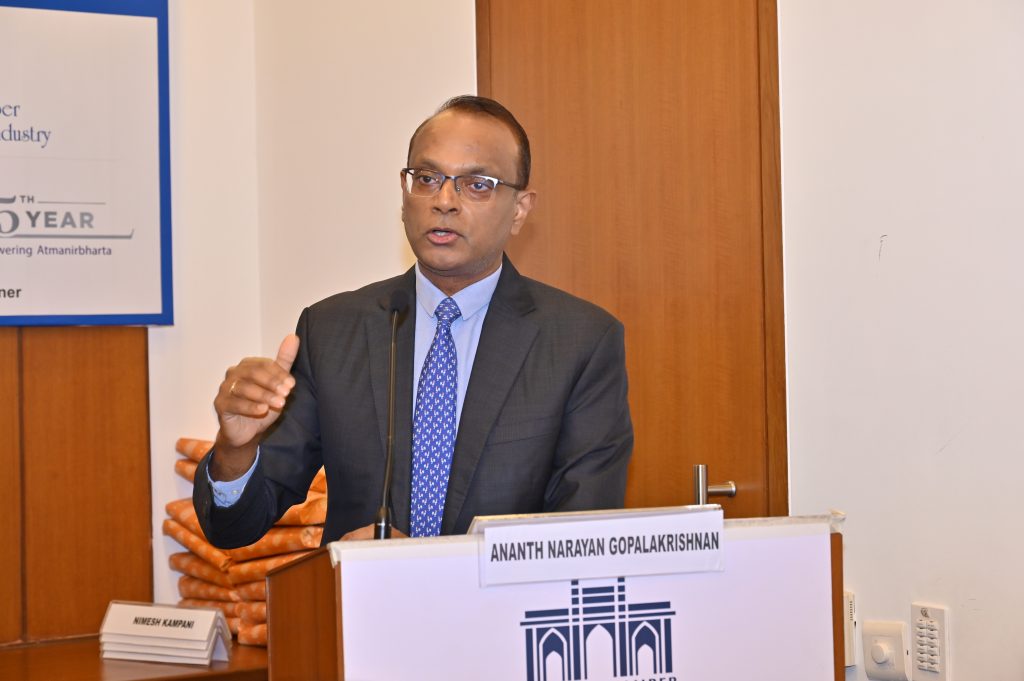
In his keynote address, Shri. Ananth Narayan Gopalkrishnan, Whole-time Member, SEBI shed light on the private equity space and SEBI’s outlook towards Alternative Investment Funds (AIFs). Shri. Gopalkrishnan highlighted the impressive growth of the private equity sector over the past few years. He mentioned that AIF investment commitments reached 8.3 Lakh crores as of March 2023, showing a compounded annual growth rate of 38%. Actual money invested in AIFs demonstrated a compounded annual growth rate of 40% over the last five years, totaling 3.4 Lakh crores.
Addressing the funding landscape, Shri. Gopalkrishnan noted that commitment in the AIF space has been rising by 2 lakh crores over the past two years, with 60% of the commitment coming from domestic participants and 40% from foreign investors. The number of AIFs has also increased to 1100, showcasing a 50% annual compounded growth rate and reflecting a thriving ecosystem. He emphasised that this early-stage capital contributes to wealth creation, investments, job creation, and GDP growth.
Shri. Gopalkrishnan underscored the three pillars of SEBI’s mandate: investor protection, market development, and market regulation. He emphasised that trust forms the foundation of the entire system, and SEBI’s role is to minimise errors and build trust within the capital formation process. He highlighted the substantial growth in equity investments made by regional funds, which rose from less than 4 lakh crores to over 24.5 Lakh crores. Shri. Gopalkrishnan also emphasised three key areas on SEBI’s radar: valuation, potential regulatory arbitrage, and misselling. He reassured companies that SEBI is open to receiving details of any wrongdoing in the market and encouraged them to build trust and credibility in the ecosystem. He acknowledged India’s immense potential for growth, highlighting its entrepreneurial spirit and strong work culture.
The conclave featured two insightful panels addressing crucial aspects of the private market. The first panel of the day, moderated by Nimesh Kampani, Founding Partner, 108 Capital saw Madhu Lunawat, – CIO, India Inflection Opportunities Fund, Satyam Kumar, CEO & Co-Founder, LoanTap Financial Technologies, Ashish Fafadia, Partner, Blume Venture Advisors, and Ritwick Ghoshal, Managing Partner & CEO, Bay Capital Investment Advisors give their insight into the topic Business Opportunities, Challenges & the Future: Driving Private Investments. The panel explored the current situation of the private market in India amidst the funding winter, examined the available exit options for companies, assessed the challenges and opportunities in raising debt or equity swiftly, discussed cost of equity vs cost of debt and envisioned ways to create a systematic platform for private markets.
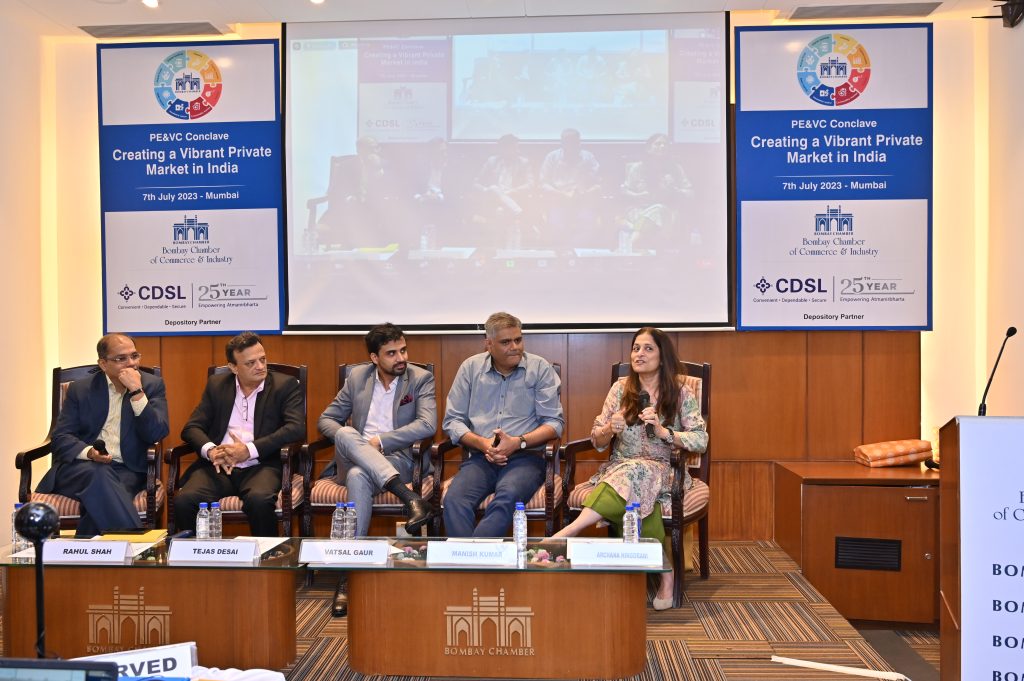
The second panel, on Creating a Conducive Tax and Regulatory Environment, moderated by Rahul Shah, Executive Vice President, Indian Venture Capital Association (IVCA) saw panelists Dr Archana Hingorani, Managing Partner, Siana Capital, Tejas Desai, Partner, Ernst & Young LLP (EY India), Vatsal Gaur, Partner, King Stubb & Kasiva, Advocates & Attorneys and Manish Kumar, Co-founder GREX & RealX share their expertise on the subject. The panel covered aspects including AIF regulations, the GIFT city and the need for enabling infrastructure, onshoring of offshore fund structures, Angel Tax and the global competitiveness of the Indian PE&VC ecosystem.
The Conclave concluded with a vote of thanks delivered by Ashith Kampani, Chair, PE&VC Committee, and Chairman, CosmicMandala15 Securities.
By: bcnewusr
No Comments
CBDT signs record number of 125 Advance Pricing Agreements (APAs) in FY 2023-24
Record 125 Advance Pricing Agreements Signed by CBDT in FY 2023-24

The Central Board of Direct Taxes (CBDT) has entered into a record 125 Advance Pricing Agreements (APAs) in FY 2023-24 with Indian taxpayers. This includes 86 Unilateral APAs (UAPAs) and 39 Bilateral APAs (BAPAs). This marks the highest ever APA signings in any financial year since the launch of the APA programme. The number of APAs signed in FY 2023-24 also represents a 31% increase compared to the 95 APAs signed during the preceding financial year. With this, the total number of APAs since inception of the APA programme has gone up to 641, comprising 506 UAPAs and 135 BAPAs.
During FY 2023-24 CBDT also signed the maximum number of BAPAs in any financial year till date. The BAPAs were signed as a consequence of entering into Mutual Agreements with India’s treaty partners namely Australia, Canada, Denmark, Japan, Singapore, the UK and the US.
The APA Scheme endeavours to provide certainty to taxpayers in the domain of transfer pricing by specifying the methods of pricing and determining the arm’s length price of international transactions in advance for a maximum of five future years. Further, the taxpayer has the option to rollback the APA for four preceding years, as a result of which, tax certainty is provided for nine years. The signing of bilateral APAs additionally provides the taxpayers with protection from any anticipated or actual double taxation.
The APA programme has contributed significantly to the Government of India’s mission of promoting ease of doing business, especially for Multi National Enterprises () which have a large number of cross-border transactions within their group entities.
By: bcnewusr
No Comments
International Symposium on Health Governance in a Political Landscape
International Symposium on Health Governance in a Political Landscape
Centre for Trade and Investment Law (CTIL), Indian Institute of Foreign Trade established by Ministry of Commerce and Industry, Government of India, in collaboration with Centre for Justice, Law and Society (CJLS) at Jindal Global Law School (JGLS), recently organised the International Symposium on Health Governance in a Political Landscape: Interplay of Health Law, Society and Political Economy.
Dr. V.K. Paul, Member, NITI Aayog delivered the inaugural address highlighting the importance of access to medicine and right to health and shared his experiences for policy implementation during the COVID-19 pandemic. Dr. Paul emphasised the need for inspiring leadership in policymaking, particularly health policy, by citing the example of India’s leadership as a vaccine supplier to the developing countries during the COVID-19 pandemic. Dr. Paul also discussed how the deficiencies of India’s Epidemic Diseases Act, 1897 were addressed by invoking the Disaster Management Act, 2005 for implementing the health-related emergency measures during the COVID-19 pandemic. Prof. C. Raj Kumar, Vice Chancellor, O.P. Jindal Global University & Dean, JGLS delivered opening remarks along with the welcome address by Prof. James J. Nedumpara, Head & Professor, CTIL and Prof. Dipika Jain, Professor, JGLS & Director, CJLS respectively.
Hon’ble Mr. Justice Ravindra Bhat, Former Judge, Supreme Court of India chaired the plenary session 1 on the theme “Economic Policies, TRIPS and Healthcare: Building Bridges for Access”. Mr. Justice Bhat highlighted the importance of public interest as a ground for granting injunction in pharmaceutical patent disputes. Mr. Justice Bhat focussed on access to health and its intersection with the Intellectual property Right laws in broader parlance and interlinkages between health, trade, and access to medicines which balance economic and public rights. The panelists emphasised the need for innovative policy solutions and greater collaboration between governments, pharmaceutical companies, and international organizations to promote affordable access to medicines for all.
The second plenary session on the theme “Ink & Insight: Living the Scholarly Life Through Thought, Research & Publication” focused on the role of research and publication in shaping public health policy, particularly evidence-based policymaking. The panelists highlighted the influence of economic interests and conflicts of interest in health policy formulation and stressed on the importance of transparency in policymaking.
Dr. Sharmila Mary Joseph, Principal Secretary of Kerala’s Local Self-Government and Women & Child Development Department, delivered a special address that emphasised local bodies’ crucial role in addressing healthcare challenges and utilizing development funds effectively. Subsequently, thematic sessions explored diverse aspects of health governance, including intellectual property rights (IPRs), medicine accessibility, research ethics, and technology’s impact on health outcomes.
The first day of symposium concluded with a special address by Prof. Chantal Thomas, Vice Dean and Radice Family Professor of Law, Cornell Law School, United States of America highlighted India’s significant role in healthcare, emphasising its moral leadership during Covid-19 and in bringing out the Doha 2001 declaration. She called for an analytical shift in legal and political discourse, advocating for dynamic trade models that consider gender and promoting participatory politics in international trade law.
The thematic sessions on Day 2 featured esteemed speakers and participants delving into critical health governance issues, particularly in TWAIL and Health Equity, abortion rights, reproductive justice, and TRIPS and regional integration in health. Both days’ thematic sessions saw discussions among eminent academicians such as Prof. (Dr.) B.S. Chimni, Distinguished Professor of International Law, JGU; Professor (Dr.) S. G. Sreejith, Professor & Executive Dean, Jindal Global Law School & Executive Director, Centre for International Legal Studies, JGU; Prof. James J. Nedumpara, Head & Professor, CTIL; Dr. Sylvia Karpagam, Public Health Doctor and Researcher, Bengaluru; Prof. Leila Choukroune, Professor of International Economic Law & Director of the University of Portsmouth Thematic Initiative in Democratic Citizenship; Prof. Shailja Singh, Associate Professor, CTIL; Prof. Shiny Pradeep, Assistant Professor, CTIL; and the participants.
The symposium ended with a special address by Dr. Anup Wadhawan, former Commerce Secretary, Government of India and a distinguished lecture by Prof. Lorand Bartels on “International Economic Law and Right to Health”. Dr. Anup Wadhawan emphasised the complexities of ensuring access to medicines, urging conscious policy choices like reforming the IPR regime for public health goals. Prof. Bartels emphasized that health is reiterated a fundamental human right within international law. He also cited the Chilean alcohol tax case to underscore challenges in policy implementation. Prof. Ashita Dawer, Associate Professor of Economics, Jindal Global Law School, JGU delivered the concluding remarks. This session was moderated by Ms. Ronjini Ray, Consultant (Legal) Assistant Professor, CTIL.
The Symposium offered scholars and early-stage academicians, both domestic and international, a platform to present their research articles to expert commentators. Following feedback from the commentators, scholars will refine their articles for publication in a Special Issue of Jindal Global Law Review. Prof. James J. Nedumpara, Head & Professor, CTIL delivered the concluding observations of the Symposium.
 15 Nov 2023
Public Holidays in the State of Maharashtra for 2024
Maharashtra Government notifies public holidays for 2024 under the Negotiable Instruments Act
Copy of Notification attached
03 Nov 2023
Strong governance is crucial for mutual fund industry growth: Shri Amarjeet Singh

The penetration of mutual funds in India and its growth has been remarkable. We have come a long way, but we still have huge potential, said Shri Amarjeet Singh, whole time member SEBI at the recent Mutual Fund Conclave organised by Bombay Chamber of Commerce & Industry, India’s oldest chamber of commerce and industry. At the same time he cautioned, that governance of AMCs is very important.
“Once Indian investors come in, they repose certain amount of interest or faith in the market and if that faith is disturbed, then they withdraw from that particular segment of the market and it’s very difficult to get them back. It is responsibility of all the stakeholders, including regulators, industry and investors to make sure that this trust and faith which is required is not disturbed and that is why we need good governance,” he said.
He further added that digitisation and the spread of information on social media has ensured that it does not take much time for negative news to spiral and reputations to be adversely affected. “Past experience has shown that once trust in the markets is lost, it takes a long time to rebuilt it. Since mutual funds have a very small ticket size, could be as low as INR 100 to 500, it is even more critical to maintain the trust and faith of investors. So, ensuring strong corporate governance practices and transparency within the mutual fund industry is crucial for future growth,” he stated.
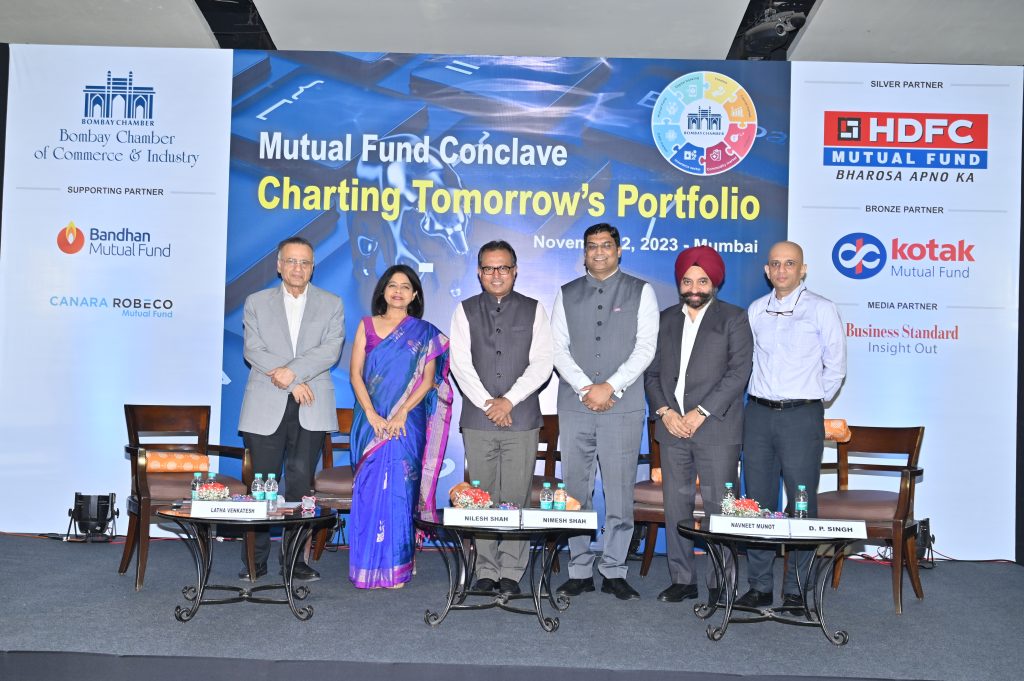
Nilesh Shah, past President, Bombay Chamber and Group President and MD, Kotak Mahindra AMC set the theme for the event. The Conclave saw two insightful panel discussions. The first was on the topic Mutual Fund Maturity in India: Future Trends and Investor Preferences. The panelists were Nilesh Shah; Navneet Munot, MD & CEO, HDFC AMC; Nimesh Shah, MD & CEO, ICICI Prudential AMC Ltd and D. P. Singh, DMD & Jt CEO, SBI Mutual Fund. The session was moderated by Latha Venkatesh, Executive Editor, CNBC TV18.
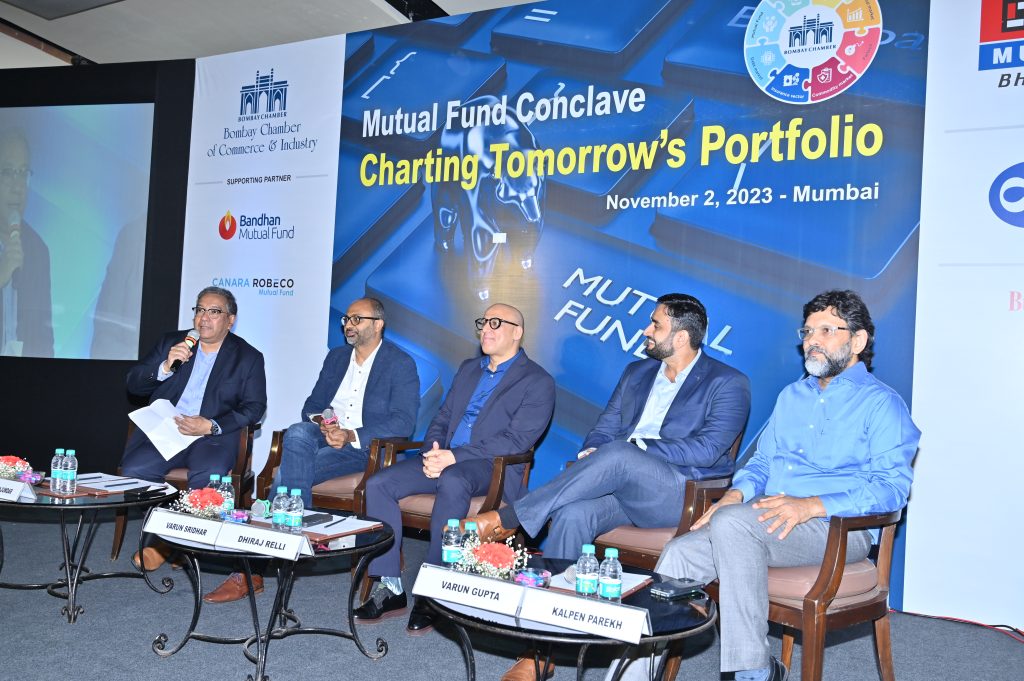
The second panel discussion was on The Shifting Regulatory and Business Terrain. The panelists were Varun Sridhar, CEO, Paytm Money Ltd; Dhiraj Relli, MD & CEO, HDFC Securities Limited; Varun Gupta, CEO, Groww Mutual Fund; Kalpen Parekh, MD & CEO, DSP Mutual Fund. The moderator was Sourav Majumdar, Editor, Business Today.
The Vote of Thanks was presented by Rajiv Anand, board member, Bombay Chamber and Deputy Managing Director, Axis Bank.
Business leaders call for transformative policies at COP28 to accelerate decarbonisation
More than 100 senior executives from the Alliance of CEO Climate Leaders, the world’s largest CEO-led community committed to net zero emissions, signed an open letter recently ahead of the COP28 climate conference, calling on leaders from the public and private sectors to accelerate net-zero actions to reduce carbon emissions for the benefit of society, public health and the global economy.
The latest IPCC report has confirmed that the world is on course to breach the critical barrier of 1.5°C warming within the next two decades, setting a path to cascading climate tipping points and irreversible damage to the Earth’s planetary systems. Limiting the average global temperature increase to 1.5°C would require 50% emissions reductions by 2030 – amounting to annual emission reductions greater than what was achieved during the COVID-19 pandemic.
India poised to be world’s third largest economy by 2030: S&P Global Market Intelligence
According to the latest report from S&P Global Market Intelligence, India is poised to become the world’s third-largest economy, surpassing Japan by 2030. The report anticipates that India’s GDP will double, reaching $7.3 trillion, up from $3.5 trillion in 2022. This rapid economic growth will lead to India overtaking Japan as the second-largest economy in the Asia-Pacific region. Currently, Japan holds the third position globally, following the United States and China.
The substantial increase in foreign direct investment into India over the past decade reflects the promising long-term growth prospects of the Indian economy. This growth is driven by a youthful demographic profile and rapidly rising urban household incomes. By 2022, India’s GDP had already exceeded that of the United Kingdom and France. The report also predicts that by 2030, India’s GDP will surpass Germany’s.
Notably, Japan is expected to slip to the fourth position in the world economy rankings based on US dollar valuation, as Germany takes over the third spot. The International Monetary Fund’s projections support this change.
India stands out as an outperformer in the emerging market landscape, with the private sector experiencing the second-fastest sales growth in over 13 years, contributing to overall economic expansion. While Russia reported robust growth, mainland China’s expansion slowed, and Brazil faced economic contraction during the survey period, as highlighted by S&P.
The report also underscores the global economic slowdown, which reached its lowest point in eight months by the end of the third quarter. Furthermore, the first contraction in global new orders and a significant decrease in work backlogs suggest potential weaknesses in the coming months.