Industrial Disputes Act, Industrial Employment Standing Orders Act and Trade Unions Act stand repealed from 21.11.25
Notification attached.
Top Stories
Industrial Disputes Act, Industrial Employment Standing Orders Act and Trade Unions Act stand repealed from 21.11.25
Notification attached.
Central Government notifies wage limit for coverage of Supervisors as ‘Worker’ under the Labour Codes.
Notification attached
Nirmala Sitharaman Outlines Three ‘Kartavya’ Priorities to Drive India’s Growth, Inclusion and Reform Agenda
In her ninth consecutive Union Budget 2026-27, Finance Minister Nirmala Sitharaman delivered a Budget which placed a large emphasis on infrastructure, with the government raising public capital expenditure to ₹12.2 lakh crore for the upcoming fiscal year—an increase of nearly 9 % from the previous year’s allocation and a record high aimed at strengthening national infrastructure across roads, railways, ports, metro projects and logistics networks.
In addition to the infrastructure thrust, the Budget included measures to support industry, including the launch of a ₹10,000 crore SME Growth Fund to enhance capital access for Micro, Small and Medium Enterprises, a ₹4,000 crore top-up to the Self-Reliant India Fund, and expanded credit and liquidity mechanisms for smaller businesses. Further manufacturing support was outlined through initiatives such as the expanded Electronics Components Manufacturing Scheme with a ₹40,000 crore outlay and continued emphasis on strategic sectors like semiconductors, biopharma, textiles and container manufacturing.
The Budget was anchored around three key “Kartavya” priorities outlined by the Finance Minister—accelerating and sustaining economic growth, fulfilling aspirations and building capacity, and ensuring inclusive access to growth. These priorities were reflected across announcements spanning infrastructure expansion, support for MSMEs and strategic manufacturing sectors, continued reforms to simplify processes and improve efficiency, and people-centric measures aimed at strengthening education, skills and access to essential services.
Reactions from Bombay Chamber Leaders:
Rajiv Anand, President, Bombay Chamber and Managing Director & CEO IndusInd Bank Limited:
“The Union Budget 2026 maintains continuity by focusing on capital expenditure, with a moderate increase in budgetary spending, while keeping the tax code largely unchanged, thereby providing policy stability. Fiscal consolidation anchored in a debt-to-GDP target offers flexibility to pursue countercyclical support, if needed, amid a challenging external environment. A comprehensive review of banking system regulations, development of transport and logistics infrastructure, capital and liquidity support for MSMEs, budgetary support for strategic sectors in manufacturing and services, and initiatives to develop skills will help enhance factor productivity and drive long-term growth.”
Sudhanshu Vats, Sr Vice President, Bombay Chamber and Managing Director, Pidilite Industries Ltd.
The Union Budget 2026–27 reinforces strong confidence in India’s growth trajectory, anchored in manufacturing, infrastructure and consumption. The continued focus on domestic manufacturing across chemicals, electronics and capital goods strengthens supply-chain resilience and supports India’s ambition to be a globally competitive production hub. With public capex at ₹12.2 lakh crore, demand across housing, construction and infrastructure-linked industries will remain robust. It will also dial up tourism and employers . The emphasis on digital infrastructure, Automation & AI-led Customs reforms and trade facilitation will enhance ease of doing business and global integration. Overall, the Budget provides the confidence to invest, innovate and scale alongside India’s long-term economic vision. Onwards to a Viksit Bharat 2047.
Nilesh Shah, Past President, Bombay Chamber and Group President & MD, Kotak Mahindra AMC:
This budget has proposed a capital expenditure of Rs 12.10 lac crore which is more than the net market borrowing of Rs 11.70 lac crore. I pray that a path is laid where one day capital expenditure will be more than the total borrowing including small savings.
Sudhir Kapadia, Past President Bombay Chamber and Senior Advisor, EY
The reform process has continued steadily into 2026, building strongly on the Viksit Bharat 2047 vision. The TCS-related announcements appear globally competitive and send a clear signal of long-term policy intent—possibly the first taxation measure framed with a horizon extending up to 2047. Portfolio investment prospects also look promising. The proposed measures, including support for data centres, are particularly significant given that Indian data centre companies are expected to attract investments of nearly USD 11 billion in the sector.
Key Highlights of the Budget 2026-27
Fiscal and Expenditure Highlights
• Record capital expenditure allocation: ₹12.2 lakh crore for FY 2026–27, up from ₹11.2 lakh crore in the previous year—continuing a strong infrastructure push.
• Defence budget increase: Allocation expanded significantly with around ₹7.8 lakh crore earmarked for defence.
Infrastructure and Connectivity
• Seven new high-speed rail corridors announced connecting major cities such as Mumbai–Pune, Pune–Hyderabad, and Hyderabad–Bengaluru.
• Dedicated freight corridors and rare earth mineral corridors planned in mineral-rich states to support strategic manufacturing and logistics.
• Expansion of 20 national waterways and coastal/service logistics enhancements.
• Introduction of a Seaplane VGF (Viability Gap Funding) Scheme to improve regional connectivity and tourism access.
• Focus on developing Tier II and Tier III temple towns through improved infrastructure and visitor amenities.
Industry, Manufacturing & Investment
• India Semiconductor Mission 2.0 launched with a ₹40,000 crore outlay to boost chip production and tech supply chains.
• New support schemes for Biopharma, textiles, chemicals and container manufacturing to strengthen domestic value chains.
• A ₹10,000 crore SME Growth Fund to deepen access to capital for MSMEs.
Tax Reforms & Compliance
• Continued simplification of the tax system with an updated Income Tax Act coming into effect from 1 April 2026.
• Reduced TCS (Tax Collected at Source) on overseas travel, education, and medical remittances to 2% under the Liberalised Remittance Scheme.
• Additional procedural ease measures, extended return filing timelines and foreign asset disclosure relief for small taxpayers.
• Customs duty on goods imported for personal use reduced from 20% to 10%.
• Revised rules to enhance baggage allowance for travellers and simplify temporary carriage of goods.
• TCS on overseas tour packages rationalised from 5%/20% to a flat 2%.
• TCS under LRS for education and medical purposes reduced from 5% to 2%.
Social Welfare & Human Capital
• Proposals for one girls’ hostel in every district to improve educational access.
• Expansion of healthcare facilities, multiple AYUSH institutes, and training programmes for allied health professionals.
• Focus on tourism, education-to-employment frameworks, and digital media content labs in schools and colleges.
• Medical tourism to be strengthened through 5 regional hubs.
• National Institute of Hospitality to strengthen training and workforce readiness in the hospitality sector.
• Training of 10,000 tourist guides across 20 sites through a 12-week programme (in partnership with IIMs).
• Creation of a National Destination Digital Knowledge Grid to digitally map and strengthen destination planning and promotion.
• Development of 15 archaeological sites to enhance heritage and cultural tourism.
• Development of Buddhist tourism sites across 6 Northeast states.
• Promotion of trekking and hiking through sustainable trail development.
• Global Big Cat Summit 2026 to support wildlife conservation and eco-tourism.
Macroeconomic Targets
• Fiscal deficit targeted at ~4.3% of GDP, indicating continued fiscal discipline alongside expanded public spending.
When an employer intends to employ regular workers in place of contract labour, then the employer must give first preference to the erstwhile contract workers.
Supreme Court
Ref.: MCM/ADM/11 23 January 2026
The Director General
Bombay Chamber of Commerce and Industry
Mackinnon Mackenzie Building
3rd floor, 4, Shoorji Vallabhdas Road
Ballard Estate, Mumbai – 400 001
Dear Sir/Madam,
Invitation for Bids
Please see enclosed notices for invitation for bids from organizations in Mauritius.
Prospective bidders may be requested to regularly visit the website to take cognizance of any addendum and/or clarification(s) issued.
The Consulate would highly appreciate if you could kindly circulate the Notices among the members of your Organization.
Thank you for your understanding and cooperation.
Yours sincerely,
D. K. Bucktowar
Consul General
Consulate of the Republic of Mauritius
1107, Regent Chambers11th Floor, Jamnalal Bajaj Marg
208, Nariman Point, Mumbai – 400 021
Tel. : 022 22825421 /22, Fax No. 022 22845468
Hon’ble Prime Minister Shri Narendra Modi and European Commission President H.E Ms. Ursula von der Leyen, today jointly announced the conclusion of the India–European Union Free Trade Agreement (India–EU FTA) at the 16th India–EU Summit, held during the visit of the European leaders to India. This announcement marks a historic milestone in India–EU economic relations and trade engagement with key global partners.
The conclusion of this FTA positions India and the European Union as trusted partners committed to open markets, predictability, and inclusive growth. The FTA comes after intense negotiations since the re-launch of negotiations in 2022. The announcement of the FTA today marks the culmination of years of sustained dialogue and cooperation, between India and the EU, demonstrating the political will and shared vision to deliver a balanced, modern, and rules-based economic and trade partnership.
The European Union is India’s one of the largest trading partner, with bilateral trade in goods and services growing steadily over the years. In 2024–25, India’s bilateral trade in goods with the EU stood at INR 11.5 Lakh Crore (USD 136.54 billion) with exports worth INR 6.4 Lakh Crore (USD 75.85 billion) and imports amounting to INR 5.1 Lakh Crore (USD 60.68 billion). India-EU trade in services reached INR 7.2 Lakh Crore (USD 83.10 billion) in 2024.
India and EU are 4th and 2nd largest economies, comprising 25% of Global GDP and account for one third of global trade. Integration of the two large diverse and complementary economies will create unprecedented trade and investment opportunities.
Union Minister for Commerce and Industry, Shri Piyush Goyal, lauded the strategic vision and steadfast leadership of Hon’ble Prime Minister Shri Narendra Modi. He stated:
“The conclusion of the India–European Union Free Trade Agreement represents a defining achievement in India’s economic engagement and global outlook. This supports India’s approach to secure trusted, mutually beneficial and balanced partnerships.
Beyond a conventional trade deal, it represents a comprehensive partnership with strategic dimensions and is one of the most consequential FTA. India has secured unprecedented market access for more than 99% of Indian exports by trade value to the EU that also bolsters the ‘Make in India’ initiative. Beyond goods, it unlocks high-value commitments in services complemented by a comprehensive mobility framework enabling seamless movement of skilled Indian professionals. India, powered by a young and dynamic workforce and one of the fastest-growing major economies, stands poised to leverage this FTA to create jobs, spur innovation, unlock opportunities across sectors, and enhance its competitiveness on the global stage.”
The India-EU trade pact covers conventional areas such as trade in goods, services, trade remedies, rules of origin, customs and trade facilitation, as well as emerging areas such as SMEs and digital trade, amongst others. The India–EU FTA gives a decisive boost to its labour-intensive sectors such as textiles, apparel, leather, footwear, marine products, gems and jewellery, handicrafts, engineering goods, and automobiles bringing down tariffs up to 10% on almost 33 bn USD of exports to zero on entry into force of the Agreement. Beyond enhancing competitiveness, it empowers workers, artisans, women, youth, and MSMEs, while integrating Indian businesses more deeply into global value chains and reinforcing India’s role as a key player and supplier in global trade.
On automobiles, calibrated and carefully crafted quota based auto liberalisation package will not only allow EU auto makers to introduce their models in India in higher price bands but also open the possibilities for Make in India and exports from India in future. Indian consumers to benefit from high tech products and greater competition. The reciprocal market access in EU market will also open up opportunities for India made automobiles to access EU market. India’s agricultural and processed food sectors are poised for a transformative boost under the India–EU FTA, creating a level playing field for Indian farmers and agrarian enterprises. Key commodities such as tea, coffee, spices, fresh fruits and vegetables, and processed foods will gain enhanced competitiveness, strengthening rural livelihoods, promoting inclusive growth, and reinforcing India’s position as a trusted global supplier. India has prudently safeguarded sensitive sectors, including dairy, cereals, poultry, soymeal, certain fruits and vegetables, balancing export growth with domestic priorities.
Beyond tariff liberalisation, the FTA provides measures to tackle non-tariff barriers through strengthened regulatory cooperation, greater transparency, and streamlined customs, Sanitary and Phytosanitary (SPS) procedures, and Technical Barriers to Trade disciplines. Through CBAM provisions, commitments have been secured including a forward-looking most-favoured nation assurance extending flexibilities if any granted to third countries under the regulation, enhanced technical cooperation on recognition of carbon prices, recognition of verifiers, as well as financial assistance and targeted support to reduce greenhouse gas emissions and comply with emerging carbon requirements.
Services being dominant and faster-growing part of both economies will trade more in future. Certainty of market access, non-discriminatory treatment, focus on digitally delivered services, ease of mobility will provide boost to India’s services exports. The FTA secures expanded and commercially significant commitments from the EU across key sectors of Indian strength, including IT and IT-enabled services, professional services, education, financial services, tourism, construction, and other business sectors.
India’s predictable access to EU’s 144 subsectors (which includes IT/ITeS, Professional Services, Other Business Services and Education Services) will provide boost to Indian service providers and enable them to provide competitive world class Indian services to EU’s consumers while EU’s access to 102 subsectors offered by India will bring in high tech services, investment into India from EU resulting in a mutually beneficial arrangement.
On mobility, the India-EU FTA provides a facilitative and predictable framework for business mobility covering short-term, temporary and business travel in both directions. These enable professionals to travel between the two economies to provide services under different scenarios. EU and India is providing mobility commitments to each other for Intra-Corporate Transferees (ICT) and Business Visitors, along with entry and working rights for dependents and family members of ICTs. The EU has also offered commitments in 37 sectors/sub-sectors for Contractual Service Suppliers (CSS) and 17 sectors/sub-sectors for Independent Professionals (IP), many of which are sectors of interest to India, including Professional Services, Computer and related Services, Research and Development Services, and Education Services.
India also secured a framework to constructively engage on Social Security Agreements over a five-year horizon, together with framework supporting student mobility and post-study work opportunities. Additionally, India has also secured access for practitioners of Indian Traditional Medicine to work under home title in EU Member States where traditional medical practices are not regulated.
In financial services, the FTA promotes cooperation to advance innovation and secure cross-border electronic payments, while providing India with enhanced market access across several major EU member states. These provisions are expected to deepen financial integration and support the growth of financial services trade. These commitments not only unlock high-value employment opportunities but also reinforce India’s position as a global hub for talent, innovation, and sustainable economic growth.
The FTA reinforces intellectual property protections provided under TRIPS relating to copyright, trademarks, designs, trade secrets, plant varieties, enforcement of IPRs, affirms Doha Declaration and recognises the importance of digital libraries, specifically the Traditional Knowledge Digital Library (TKDL) project initiated by India. The FTA is expected to facilitate cooperation in critical areas like Artificial Intelligence, clean technologies, and semiconductors, supporting India’s technological advancement.
The FTA is expected to substantially scale up trade, enhance export competitiveness, and integrate Indian businesses more deeply into the European and global value chains. The India–EU FTA marks a new chapter in bilateral economic engagement, strengthening trade, and strategic cooperation between India and the 27-member EU bloc. Cognizant of multifarious objectives placed on trade, dynamic nature of trade, fast evolving technologies and increasing regulatory complexities, the Agreement embeds multiple review, consultation and response mechanisms to deal with new, sudden challenges which emerge in future. The Agreement relies on strong stewardship and trust to deliver gains for both sides.
EU becomes India’s 22nd FTA partner. The Government since 2014 has signed trade deals with Mauritius, UAE, UK, EFTA, Oman and Australia, and announced trade deal with New Zealand. In 2025, India signed trade deal with Oman and UK and announced conclusion of trade deal with NZ. The India-EU trade deal, along with India’s FTA with the UK and the EFTA effectively opens up the entire European market for Indian businesses, exporters and entrepreneurs.
Beyond boosting commerce, it reinforces shared values, fosters innovation, and creates opportunities across sectors and stakeholders from MSMEs, women and skilled professionals to farmers and exporters. Aligned with India’s vision of “Viksit Bharat 2047,” the FTA positions India as a dynamic, trusted, and forward-looking partner on the global stage, setting the foundation for inclusive, resilient, and future-ready growth for both regions.
Source: Press Information Bureau, Government of India.
As India strengthens its global trade partnerships, the Chamber continues to convene industry leaders and policymakers to deliberate on opportunities in shipbuilding and maritime innovation. These themes will be explored at the upcoming International Conference on Shipbuilding Global Harit Nauka Summit: Trust, Collaborate, Impact
January 21, 2026
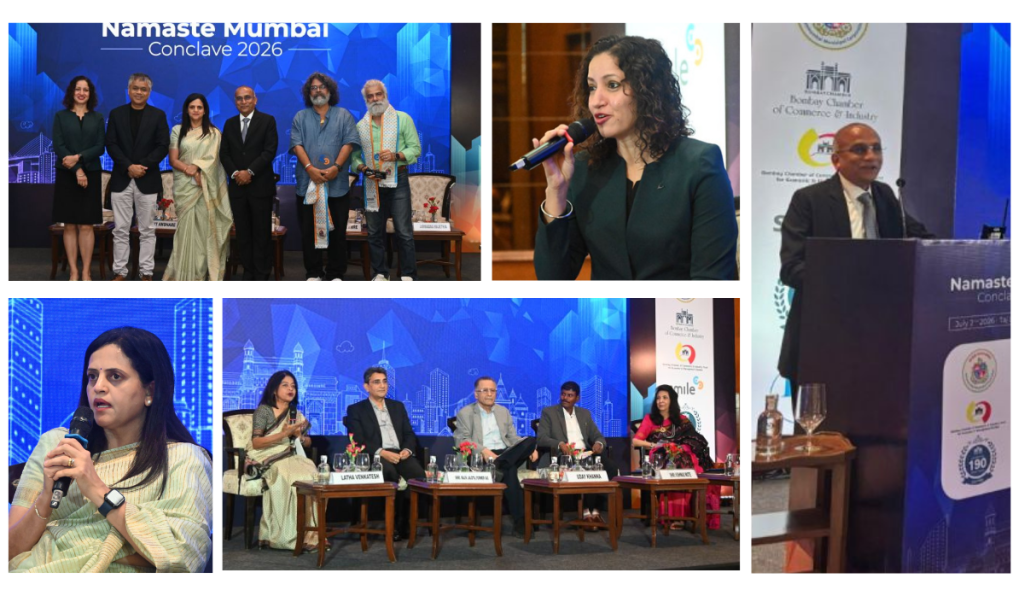
The Banking Conclave 3.0: Future of Banking, organised by the Bombay Chamber of Commerce & Industry, brought together senior bankers, policymakers, fintech leaders, and financial services experts to deliberate on how India’s banking system must evolve to remain resilient, inclusive, and future-ready. Held at the ITC Grand Central Hotel, Mumbai, the conclave examined the structural, technological, and regulatory shifts shaping the next decade of banking.
In his Welcome Address, Sandeep Khosla, Director General, Bombay Chamber of Commerce & Industry, highlighted the Chamber’s long-standing role as a neutral facilitator and an effective bridge between industry and government, fostering constructive dialogue on policy, regulation, and economic priorities. He noted that as the banking and financial services sector navigates rapid technological change, consolidation, and evolving regulatory expectations, such platforms play a critical role in aligning industry perspectives with public policy objectives. Emphasising the Chamber’s commitment to convening thought leadership and enabling informed discourse, he underscored the importance of collaborative engagement to ensure that India’s banking system remains resilient, inclusive, and future-ready.
Delivering the Keynote Address, Rajiv Anand, President, Bombay Chamber and Managing Director & CEO, IndusInd Bank, offered a compelling perspective on the structural transformation underway in global and Indian banking. He observed that the industry is moving beyond a phase where incremental improvements, isolated digital initiatives, or marginal efficiency gains are sufficient to remain relevant. Instead, banking is being reshaped by deeper shifts in how value is created, how trust is earned, and how institutions engage with society.
Anand noted that while banks have traditionally been defined by balance sheets, capital adequacy, branch networks, and regulatory classifications, these dimensions alone are no longer adequate in a world reorganised by technology, data, and changing customer expectations. He emphasised that India’s unique advantage lies in its digital public infrastructure, which has fundamentally altered how citizens participate in the economy. Platforms such as Aadhaar, UPI, Account Aggregator, and the JAM trinity (Jan Dhan–Aadhaar–Mobile) have not merely digitised financial services, but have embedded finance into everyday life, lowered transaction friction, expanded access, and strengthened trust at population scale.
Highlighting India as one of the few countries to have built such infrastructure deliberately and at scale in a short period of time, Anand stressed that technology alone does not transform societies—it only enables transformation. He called upon banks to view themselves not merely as providers of financial products, but as stewards of economic participation, supporting mobility, productivity, and long-term growth. He pointed to the rapid formalisation of enterprises, the digitisation of financial behaviour, the rise of first-generation entrepreneurs, and a young, mobile-first population as defining features of India’s next growth phase.
At the same time, Anand acknowledged that despite progress, credit penetration remains modest, large segments of MSMEs remain underserved, and many households remain vulnerable to income shocks and uncertainty. He underscored the need to rethink how capital is allocated, how risk is assessed, and how customer journeys are designed. He cautioned that merely replicating old banking models on new digital platforms will not deliver meaningful transformation.
He further noted that banking institutions have historically been organised around products—deposits, loans, insurance, and investments—whereas customers experience finance through life goals such as building livelihoods, growing businesses, educating children, caring for families, and preparing for the future. Anand stressed that banks that continue to prioritise internal product structures over customer outcomes risk losing relevance in an increasingly aspiration-driven economy.
Addressing the role of emerging technologies, Anand observed that artificial intelligence represents a fundamental shift—not simply in automation, but in how decisions are made, patterns are detected, risks are assessed, and systems are managed. He emphasised that the future of banking will belong to institutions that combine technological capability with ethical foundations, regulatory responsibility, and a long-term partnership approach to customers.
The first panel discussion, “Changing Face of Banking,” examined how technology, data analytics, and new-age players are redefining the banking landscape. Moderated by Yashraj Erande, India Leader – Financial Services and Global Leader – Fintech, Boston Consulting Group, the panel featured Rajiv Anand, Anirban Mukherjee, CEO, PayU, and Sachin Seth, Regional Managing Director, India and South Asia, CRIF. The discussion focused on the convergence of banks and fintechs, the growing role of alternative data in credit assessment, and the shift towards embedded finance and platform-based banking models.
A key highlight of the conclave was the Fireside Discussion on “The Bank of 2030,” featuring Shri Rajeshwar Rao, Former Deputy Governor, Reserve Bank of India, in conversation with Latha Venkatesh, Executive Editor, CNBC-TV18. The discussion focused on how banks must navigate a rapidly evolving financial ecosystem marked by digital disruption, changing liability structures, the growing role of non-bank players, and increasing interlinkages across the financial system. Shri Rao emphasised the need to balance innovation with stability, underscoring the importance of sound governance, robust risk management, adequate capital and liquidity, and a regulatory framework that remains flexible while safeguarding systemic trust. The conversation offered a forward-looking regulatory perspective on consolidation, competition, and resilience in a technology-driven banking landscape.
The second panel, “Consolidation and Regulation in Banking,” moderated by Abizer Diwanji, Founder, NeoStrat Advisors LLP, featured Prashant Kumar, MD & CEO, YES BANK, Neeraj Makin, Senior Executive Vice President & Group Head – Strategy, Analytics & Venture Capital, Emirates NBD, and Anshul Agarwal, Managing Director and Head – Financial Institutions Group (FIG), Avendus Capital. The panel examined consolidation as a strategic response to scale, competitiveness, and regulatory demands, while underscoring the importance of governance, capital strength, and institutional integration.
The conclave concluded with a Vote of Thanks by Sandeep Khosla, followed by networking. Banking Conclave 3.0 reaffirmed the Bombay Chamber’s role as a convenor of meaningful dialogue between industry and policymakers, and offered a forward-looking perspective on how Indian banking must evolve to serve a dynamic, diverse, and rapidly transforming economy.
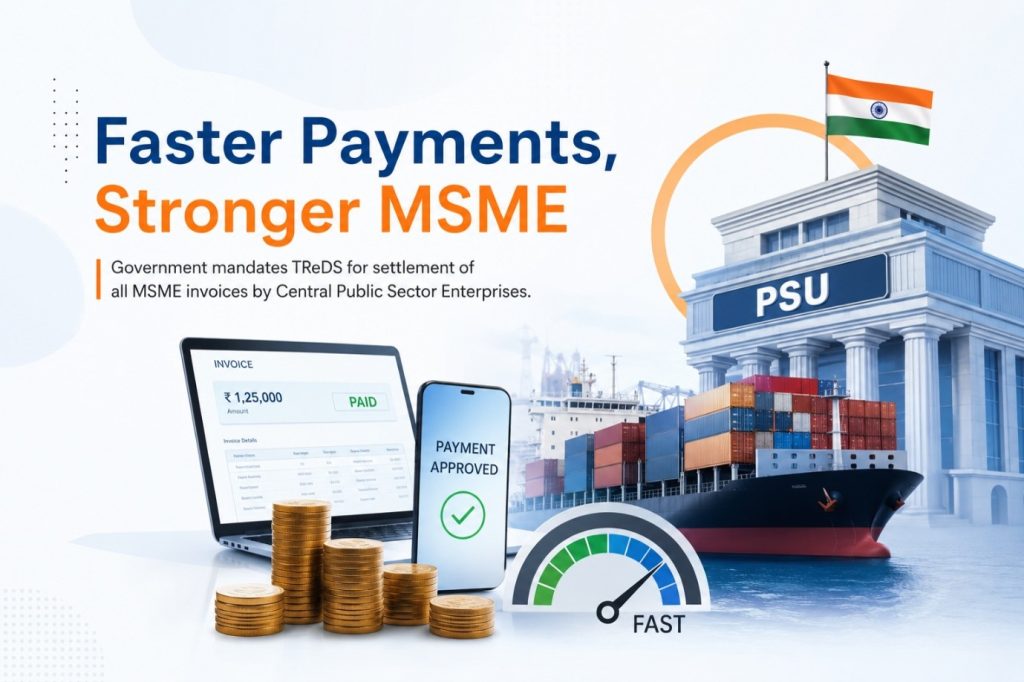
Bombay Chamber recently organised a MSME Conclave that explored innovative financing, trade finance, factoring, and working capital solutions designed to fuel MSME growth in the smart finance era.
In his welcome address, Rajiv Anand, President, Bombay Chamber & MD & CEO, IndusInd Bank said, “This conclave brings together enterprise leaders, policymakers, financial institutions, and global trade stakeholders to deliberate on the key enablers of MSME advancement. I am confident this conclave will empower MSMEs with the knowledge, resources, and support needed to address challenges in growth, talent management, financing, and internationalisation, enabling them to drive sustainable development and contribute meaningfully to the nation’s economy.”
.
Setting the theme for the conclave, R Srinivasan, Co-Chairperson – MSME Forum, Bombay Chamber & Director, AIRA Consulting, said that at a time when global supply chains are being realigned and digital transformation is reshaping business models, Indian MSMEs are at a critical inflection point. “With access to smart, scalable, and innovative financing solutions, MSMEs have a unique opportunity to enhance competitiveness and integrate more deeply into global value chains,” he added.
In his keynote address, Rajesh Kumar, Deputy Managing Director (Retail – Agri & SME), State Bank of India, stated, “Inclusion of all MSMEs must be intentional. There should be awareness drives for digital offerings from the government, data privacy and ethical use of technology. Technology should not replace human capital; it should co-operate with the existing working
structure.”
This was followed by a Fireside Chat on The Implications of the New Labour Codes on MSMEs covering practical insights into their implications for MSMEs, including compliance, workforce management, and operational efficiency. R. Srinivasan moderated the session with Lancy D’Souza, Advocate & Legal Advisor, Bombay Chamber as the speaker.
The next session was on Country Spotlight: Trade Corridors for Indian MSMEs, where Honourable Consul Generals and Trade Commissioners of Argentina, Finland, Flanders and Alberta Canada shared first-hand perspectives on global business and trade opportunities including sourcing, technology partnerships, market access and export facilitation. H.E. Erik af Hällström, Consul General, Consulate General of Finland, Mumbai; Keith Bradley, Chief Operating Officer Invest Alberta and the Government of Alberta, Canada; Eva Verstraelen, Trade & Investment Commissioner for Flanders (FIT) in Mumbai and Maria Silvina Costa, Head of Economic and Trade Section, Consulate General & Trade Centre of the Argentine Republic in Mumbai made the presentations.
A panel discussion on “Powering India’s Growth Cycle through MSME IPOs,” aimed to familiarise enterprises with the IPO process and highlight how public markets can support long-term expansion. The panelists were Riddhesh Shah, Deputy Vice President, BSE SME & Startups, BSE; Kamal Dharewa, Founder, Ashwath Capital | Capital Markets & SME IPO Expert; Subham Chatterjee, Associate Partner, ALMT Legal and Ajaya Sharma, Senior Vice President- Capital Market Communication Group, Adfactors PR. The panel was moderated by Ajay Thakur, CEO & Managing Partner, TGI SME Capital Advisors LLP.
Punjab publishes draft Industrial Relations (Punjab) Rules, 2026
Notification attached.
Punjab publishes draft Code on Wages (Punjab) rules, 2026.
Notification attached.
It is a long established fact that a reader will be distracted by the readable content of a page when lookin