
Friday, October 9, 2026
Blog

 Login
Login
APEDA and Government of Tripura Organise International Organic Buyer-Seller Meet to Expand Global Market Linkages

The Agricultural and Processed Food Products Export Development Authority (APEDA), under the Ministry of Commerce & Industry, Government of India, in collaboration with the Tripura State Organic Farming Development Agency (TSOFDA) and the Department of Agriculture and Farmers Welfare, Government of Tripura. organised an International Organic Buyer-Seller Meet in Agartala, Tripura, to provide a direct platform for the state’s organic producers, Farmer Producer Organisations (FPOs), exporters and international buyers to explore new business opportunities and establish long-term market linkages.
Around 200 participants participated in the programme, including more than 20 international buyers from countries such as Australia, New Zealand, Germany, Italy, Greece and Argentina, 27 exporters, 96 farmers representing 22 FPOs/FPCs, and officials from various Government departments. The diverse participation provided a platform for direct interaction among farmers, producer organisations, exporters, Government stakeholders and international buyers, facilitating discussions on sourcing opportunities, market requirements and potential business linkages.
The event featured 12 vibrantly curated stalls showcasing the diverse range of organic and naturally produced products that Tripura has to offer, including Queen Pineapple, GI-tagged Kalikhasa Rice, Organic Ginger and Turmeric, Black Sesame, Jackfruits, Scented Lemon and other fresh and exotic organic products. The stalls provided international buyers with an opportunity to explore Tripura’s unique agricultural offerings through product displays, direct interactions with producers and discussions on potential sourcing and business opportunities.
The International Organic Buyer-Seller Meet provided a platform for meaningful commercial engagement between Tripura’s organic producers and international buyers while promoting the state’s organic identity in global markets. The initiative is expected to generate new business linkages, encourage long-term sourcing partnerships and contribute to improved market access and income opportunities for farmers.
The event was graced by Agriculture Minister, Government of Tripura Shri Ratan Lal Nath. IAS, Secretary, Agriculture & Horticulture, Government of Tripura, Shri Apurba Roy, Executive Director, IFOAM Organics Asia and senior officers from APEDA, Ms Jennifer Chang, also attended the programme and shared their perspectives on strengthening the organic sector and expanding market opportunities for organic producers.
Agriculture Minister Shri Ratan Lal Nath, appreciated the efforts to promote Tripura’s organic products in international markets and highlighted the importance of strengthening market linkages for organic farmers and producer groups. He said, “Tripura’s farmers are producing quality organic products with strong potential in domestic and international markets. Connecting our farmers and FPOs directly with international buyers can create new opportunities for better market access and income generation. The Government of Tripura will continue to support initiatives that strengthen organic farming and enable our farmers to benefit from emerging global opportunities.”
The event also featured the felicitation of organic farmers by the Agriculture Minister in recognition of their contribution to the state’s organic agriculture movement and their role in building sustainable agricultural value chains.
APEDA continues to work closely with State Governments, FPOs, exporters and other stakeholders to strengthen India’s organic export ecosystem through certification support, capacity building, infrastructure development, market promotion and international buyer linkages. The initiatives in Tripura form part of these continued efforts to expand the global footprint of India’s organic products and create sustainable opportunities for farmers across the North Eastern Region.
Bombay Chamber Hosts India–Sri Lanka Trade & Investment Dialogue, Highlights New Growth Opportunities
Bombay Chamber Hosts India–Sri Lanka Trade & Investment Dialogue, Highlights New Growth Opportunities
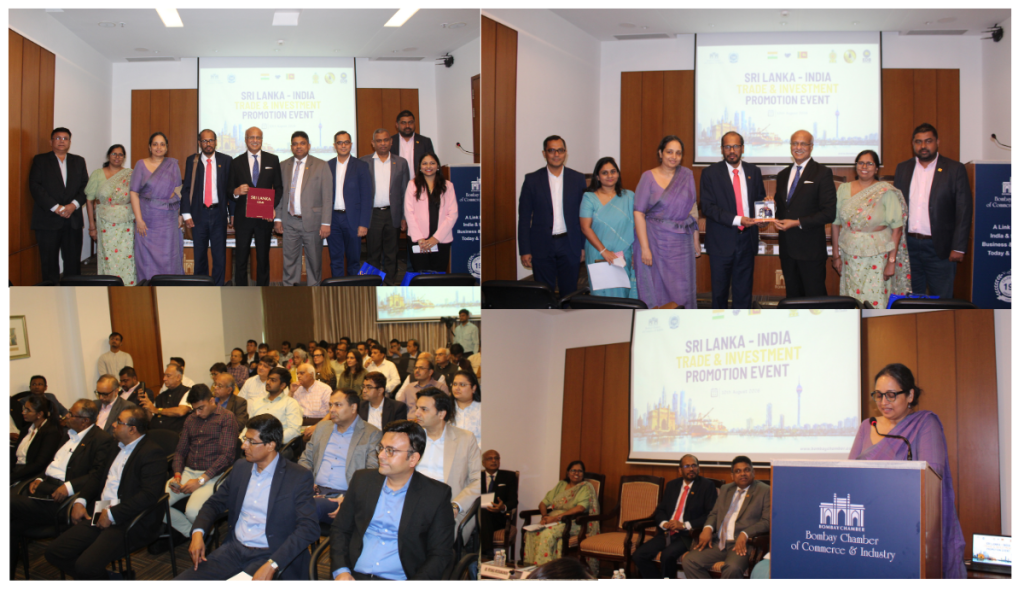
Mumbai, August 10, 2026: The Bombay Chamber of Commerce and Industry, in association with the Consulate General of Sri Lanka in Mumbai and the Sri Lanka Export Development Board (EDB), hosted the Sri Lanka–India Trade & Investment Promotion Event in Mumbai today, bringing together senior Sri Lankan officials, exporters, industry representatives and Indian business leaders to explore new opportunities for trade, investment, sourcing and business partnerships.
The event reaffirmed the strong economic relationship between the two neighbouring countries, with discussions focusing on emerging opportunities across manufacturing, technology, services, food processing, green technology and the gem and jewellery sector.
Welcoming the Sri Lankan delegation, Viraj Kulkarni, Chairman, International Trade and Commerce Committee, Bombay Chamber, highlighted the Chamber’s role in facilitating international business partnerships. He said, “At Bombay Chamber, we believe in collaborations and we believe in partnerships.” He noted that the Chamber’s extensive international engagement provides businesses with platforms to build connections and explore new markets.
Priyanga Wickramasinghe , Consul General of Sri Lanka in Mumbai, said the event was an important step towards converting the longstanding India–Sri Lanka relationship into new commercial opportunities. “Today’s gathering is not just about celebrating a shared history, it is about looking forward and turning mutual intent into tangible high value commercial partnerships,” she said. She highlighted Sri Lanka’s National Export Development Plan 2026–2030, which seeks to transform the country into a knowledge-intensive, high-value and sustainability-driven regional export and logistics hub, with Indian enterprises playing an important role in this vision.
She also highlighted the significant potential for collaboration in the gem and jewellery sector, where Sri Lanka’s globally recognised coloured gemstones complement India’s strengths in jewellery manufacturing, processing, design and global distribution. Wickramasinghe invited Indian businesses to participate in Sri Lanka Expo 2027, scheduled from 14–17 January 2027 in Colombo, which will bring together leading Sri Lankan exporters, international buyers and investors.
Mangala Wijesinghe, Chairman, Sri Lanka Export Development Board, outlined Sri Lanka’s ambitions to expand its export footprint and deepen economic engagement with India. “As close neighbours, we believe there is a tremendous potential to further strengthen our trade and investment partnership, particularly in sectors where both our countries possess unique strengths,” he said.
According to Wijesinghe, Sri Lanka’s new National Export Development Plan targets more than US$36 billion in export revenue by 2030, with an emphasis on product and market diversification. He also highlighted the opportunity for Indian companies to use Sri Lanka as an export and investment hub, leveraging its strategic location, skills and access to international markets.
The discussions identified several sectors with strong potential for Indian businesses, including apparel and textiles, tea and beverages, spices, rubber and coconut-based products, fisheries, shipbuilding, electrical and electronics, ICT, tourism, education and professional services. The EDB also highlighted existing Indian exports to Sri Lanka, including petroleum products, pharmaceuticals, machinery, vehicles and agricultural equipment, pointing to significant scope for further expansion of two-way trade.
A key focus of the event was Sri Lanka’s gem and jewellery industry. Prof. S. P. Chaminda, Chairman and CEO, National Gem and Jewellery Authority of Sri Lanka, outlined the Authority’s role across mining, value addition and exports and highlighted the potential for closer collaboration with India’s jewellery industry. Sri Lankan gem exporters also presented opportunities for Indian jewellery manufacturers, designers and retailers, including potential partnerships, joint ventures and the development of value-added jewellery for global markets.
The Sri Lankan delegation showcased the country’s expertise in natural coloured gemstones, particularly sapphires, rubies, cat’s eye and star sapphires, along with its focus on certification and international quality standards. The delegation also invited Indian businesses to participate in Facets Sri Lanka 2027, the country’s premier gem and jewellery exhibition, scheduled for January 2027.
The Sri Lankan delegation further extended an invitation to Indian businesses to participate in Sri Lanka Expo 2027, being organised after a 15-year gap. The exhibition will feature Sri Lankan exporters, international buyers and investors, B2B meetings, thematic pavilions and an investor forum. Registered buyers and investors will also receive facilitation including accommodation and transportation support.
The event concluded with an interactive Q&A and B2B networking session, enabling Indian businesses to engage directly with Sri Lankan exporters and explore opportunities for collaboration across trade, investment, manufacturing, services and gems and jewellery.
India Achieves Landmark 300 GW Non-Fossil Fuel Power Capacity
India Achieves Landmark 300 GW Non-Fossil Fuel Power Capacity

In a major milestone for the nation’s clean energy transition and climate action targets, India has crossed 300 GW of non-fossil fuel-based installed electricity generation capacity as on 31st July, 2026; over 60% of the 500 GW capacity targeted to be achieved by 2030.
Breakdown of Non-Fossil Fuel Capacity (as on 31.07.2026):
- Solar Power: 164.59 GW
- Wind Power: 58.14 GW
- Hydro Power (Large & Small): 57.24 GW
- Bio-power: 11.75 GW
- Nuclear Power: 8.78 GW
- Total Non-Fossil Capacity: 300.50 GW
The share of non-fossil fuel electricity capacity in the country’s total electricity generation capacity (which is around 552 GW at present), has reached over 54%.
Backed through the key policy enablers provided by the Government for this transformation, this monumental achievement highlights India’s rapid progress towards building an Aatmanirbhar energy ecosystem and securing the target of 500 GW non-fossil capacity by 2030.
The growth in clean energy generation has been anchored by stellar contributions across sectors. Solar energy remains the key growth engine with around 165 GW at present from just 2.8 GW in 2014. Concurrently, the wind energy sector has also seen strong momentum reaching to over 58 GW from 21 GW in 2014.
During 2025-26, a record capacity of 55.29 GW non-fossil fuel based electricity capacity was installed in the country with key contributions from 44.6 GW solar power and 6 GW wind power.
The rapid progress in renewable energy capacity is also reflected in renewable energy generation in the country which has increased from 190.96 billion units in 2014-15 to 477.79 BU in 2025-26.
To support this rapid expansion and ensure supply chain independence, India has transformed its domestic manufacturing capabilities. Driven by the Production Linked Incentive (PLI) scheme focusing on the nation’s solar installations with high-efficiency, indigenously produced modules, the enlisted capacity under the Approved List of Models and Manufacturers (ALMM) for Solar PV Modules has crossed the historic 200 GW milestone, rising from just 2.3 GW in 2014.
Clean energy transition is no longer just a climate commitment—it is central to shaping India’s industrial competitiveness, energy independence, and economic resilience.
The Ministry of New and Renewable Energy is also driving deep industrial decarbonization, positioning India to become a global hub for the production, usage, and export of Green Hydrogen and its derivatives, through the implementation of the National Green Hydrogen Mission.
Bombay Chamber’s AI for Viksit Bharat Summit 2026 convenes industry leaders to chart India’s AI-driven future
Bombay Chamber’s AI for Viksit Bharat Summit 2026 convenes industry leaders to chart India’s AI-driven future
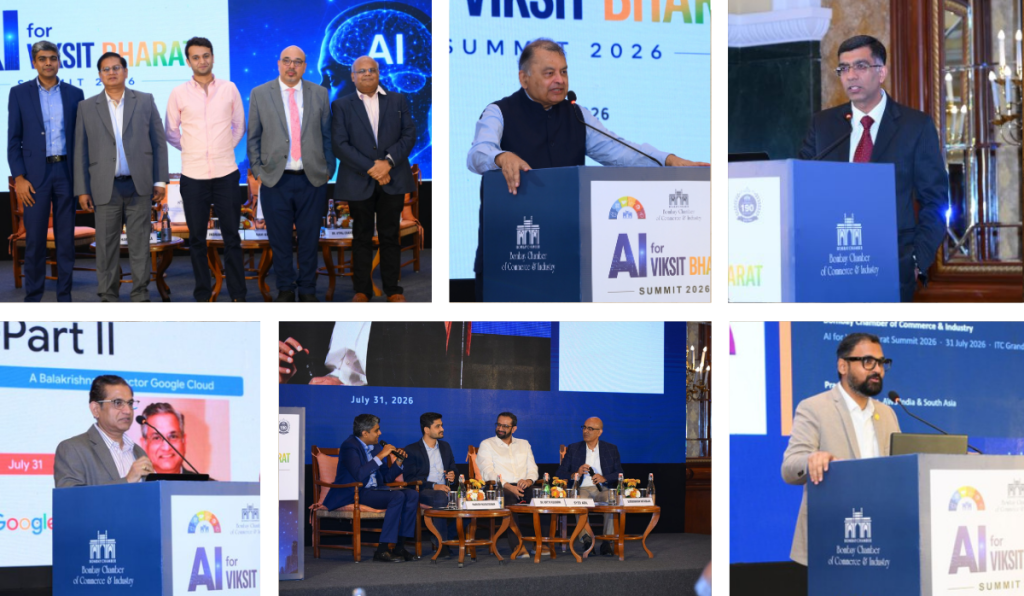
Mumbai, July 31, 2026: The Bombay Chamber of Commerce & Industry hosted the AI for Viksit Bharat Summit 2026 in Mumbai, bringing together leading voices from industry, technology, academia and the startup ecosystem to deliberate on how artificial intelligence can accelerate India’s journey towards becoming a developed nation. The summit served as a platform to explore AI’s transformative impact across sectors, its implications for the future of work, and India’s opportunity to emerge as a global AI innovation hub.
The summit commenced with a welcome address and theme-setting by Harish Narayanan, Chairman, Digitalisation Committee, Bombay Chamber and CMO & CDO, HDFC AMC, who underscored the need for responsible AI adoption, stronger public-private collaboration, and innovation-led growth to realise the vision of Viksit Bharat. He also spoke about the need to go beyond just jargon and leverage AI to scale up businesses. “Theoretical AI is not of any use to anybody. How do we take it from artificial intelligence to applied intelligence? If I don’t catch up on technology trends and innovations, every week there is a new model that is coming up. Every new week there are new technologies.”
Delivering the keynote address, Harish Mehta, Founder & Executive Chairman, Onward Technologies and Co-founder, NASSCOM, spoke about India’s AI-powered future, emphasising that the country’s progress will be driven not by a handful of leaders, but by the collective aspirations and innovations of millions of Indians. Describing every citizen as a “firefly” capable of illuminating India’s future, he remarked, “India will shine through millions and millions of fireflies over 782 districts of India… India should shine through millions of fireflies.” He added that the vision of Viksit Bharat rests on empowering every individual to excel in their respective fields, noting, “When you say Viksit Bharat, these millions of fireflies are each one of you.”
Mehta further reflected on India’s remarkable evolution from a closed economy to a global technology powerhouse through the collective effort of countless innovators and entrepreneurs. He stressed that sustained growth depends on building strong ecosystems rather than isolated success,”If you do not focus on the ecosystem, your growth would be highly limited.”
Highlighting artificial intelligence as the next great enabler of national transformation, he said that AI has the potential to empower every Indian to participate in the country’s development journey. “AI will enable every one of us to contribute… billion Indians. Once they are enabled, they would create the Viksit Bharat that we are looking forward to.”
The first panel discussion, “AI Transforming Bharat’s Core Sectors,” examined how AI is reshaping financial services, digital infrastructure, media and enterprise transformation. Moderated by Srikanth RP, Editor, Express Computer, the session featured Dhiraj Relli, Director, Bombay Chamber and MD & CEO, HDFC Securities Ltd; Avinash Joshi, Executive Managing Director, India, NTT DATA; and Abe Thomas, CEO, Radio City. The panel discussed practical applications of AI, the importance of trusted digital ecosystems, and the need to balance innovation with responsible governance.
The summit also witnessed the launch of Express Computer, reinforcing the publication’s commitment to advancing conversations around India’s digital transformation.
The second panel, “AI, Jobs & Future Skills,” explored the changing nature of work in an AI-enabled economy. Moderated by Hareesh Tibrewala, CEO, Anhad Consultancy Services, the discussion brought together Indraneel Gawde, Chief Business Officer, Schbang; Ravi Eppaturi, Vice President – Technology Strategy, Ashtech Infotech India Pvt. Ltd.; and Dr. Utpal Chakraborty, Founder and Chief Scientist, GAHNA. The panellists emphasised that while AI will redefine existing roles, it will also create new opportunities, making continuous learning, reskilling and digital literacy central to India’s future workforce.
The summit featured dedicated technology sessions from Amazon Web Services (AWS) and Google, showcasing how organisations can accelerate AI adoption through scalable cloud infrastructure, advanced AI capabilities and practical enterprise use cases.
The concluding fireside discussion, “Can Bharat Become an AI Innovation Hub?”, moderated by Harish Narayanan, brought together Dr. Aditya Kulkarni, Founder & CEO, CareNx Innovations Private Limited; Syed Adil, India Head, Replit; and Subramanian Natarajan, Head – AI & Cloud Practice and Chief Technology & Innovation Officer, L&T Vyoma. The discussion explored India’s strengths in talent, entrepreneurship and digital public infrastructure, while identifying policy support, research investment and stronger industry-academia collaboration as critical enablers for establishing India as a global AI powerhouse.
The summit concluded with a vote of thanks delivered by Hareesh Tibrewala, CEO Anhad Consultancy Services.
By: Raj Singh
No Comments
Shri Piyush Goyal Invites Indian and Uzbek Businesses to Co-invest and Co-manufacture; Calls for Doubling Bilateral Trade at India-Uzbekistan Business Forum
Shri Piyush Goyal Invites Indian and Uzbek Businesses to Co-invest and Co-manufacture; Calls for Doubling Bilateral Trade at India-Uzbekistan Business Forum

Union Minister of Commerce and Industry Shri Piyush Goyal today invited businesses from India and Uzbekistan to co-invest, co-manufacture and co-innovate, while calling for concerted efforts to double bilateral trade between the two countries over the next three years. Addressing the India-Uzbekistan Business Forum in New Delhi, the Minister said the strategic partnership between the two countries, founded on mutual trust, respect and a shared vision for prosperity, offers tremendous opportunities for expanding trade, investment and economic cooperation.
Welcoming the delegation, Shri Goyal said India and Uzbekistan are bound not only by a rich shared history and deep cultural connect, but also by immense business potential that remains largely untapped. He observed that while bilateral trade has crossed approximately USD 1.5 billion, it represents only a fraction of what the two economies can achieve together. The Minister said India offers Uzbekistan not only a large and growing market but also a reliable partner, a skilled and youthful workforce and a platform for innovation-led growth. Referring to the recently concluded Bilateral Investment Treaty between India and Uzbekistan, he said the agreement would enhance investor confidence and encourage businesses from both countries to invest in each other’s economies and build long-term partnerships.
Shri Goyal identified several sectors with strong complementarities that offer significant scope for bilateral collaboration. He said Uzbekistan presents substantial opportunities for Indian investment in the mining sector. He also highlighted the potential for cooperation in textiles, noting Uzbekistan’s strength in cotton production and India’s leadership in the textile industry, with opportunities to jointly expand into garment manufacturing, design and global markets. In the pharmaceutical and healthcare sectors, the Minister said India, recognised as the pharmacy of the world, can support Uzbekistan’s healthcare modernisation through affordable medicines, medical devices, diagnostics, telemedicine, training of doctors and paramedics, and quality healthcare services. He also proposed reviving cooperation in traditional systems of medicine such as Ayurveda, Yoga and Unani, which had historical links with the Uzbek region.
On agriculture and food processing, Shri Goyal said cooperation in food processing, packaging, cold chains and agri-tech could help build global value chains that benefit farmers in both countries while serving international markets through complementary strengths.The Minister also underlined India’s readiness to collaborate with Uzbekistan in information technology and the digital economy. He said India would be happy to work with Uzbekistan in developing Digital Public Infrastructure and strengthening cooperation in areas such as fintech, agri-tech and medtech. He further noted that engineering components, advanced manufacturing, automotive components and automobiles also offer promising avenues for future collaboration.
The Minister noted that Prime Minister Shri Narendra Modi and the President of Uzbekistan H.E. Mr. Shavkat Mirziyoyev have imparted new dynamism to bilateral relations by bringing the people of the two countries closer together and providing a clear political direction for the partnership. He emphasised that the full potential of the relationship can be realised only when businesses from both sides deepen engagement, expand economic ties, increase investments and create more employment opportunities.
Emphasising that trade must lead the bilateral relationship, Shri Goyal urged businesses to seize the opportunity to build enduring commercial partnerships. He called for eliminating trade barriers, promoting mutual recognition of standards, approvals, testing and certification processes, integrating customs systems through greater digitalisation, and creating more efficient trade routes to facilitate commerce. He said both governments are working towards a more structured, time-bound and outcome-oriented economic partnership and stressed that regulators and standard-setting authorities should also strengthen cooperation to facilitate businesses on both sides.
Addressing industry leaders, the Minister said, “This is your moment. Co-invest, co-manufacture and co-innovate. Build partnerships that are everlasting and which give companies on both sides scale, resilience and prosperity for the two economies and the people of Uzbekistan and India.” The Minister concluded by welcoming the visiting delegation and reaffirming India’s commitment to deepening the India-Uzbekistan economic partnership through stronger trade, investment and business collaboration.
Amazon, Godrej, win big at Bombay Chamber Inclusion Awards 2026
Amazon, Godrej, win big at Bombay Chamber Inclusion Awards 2026
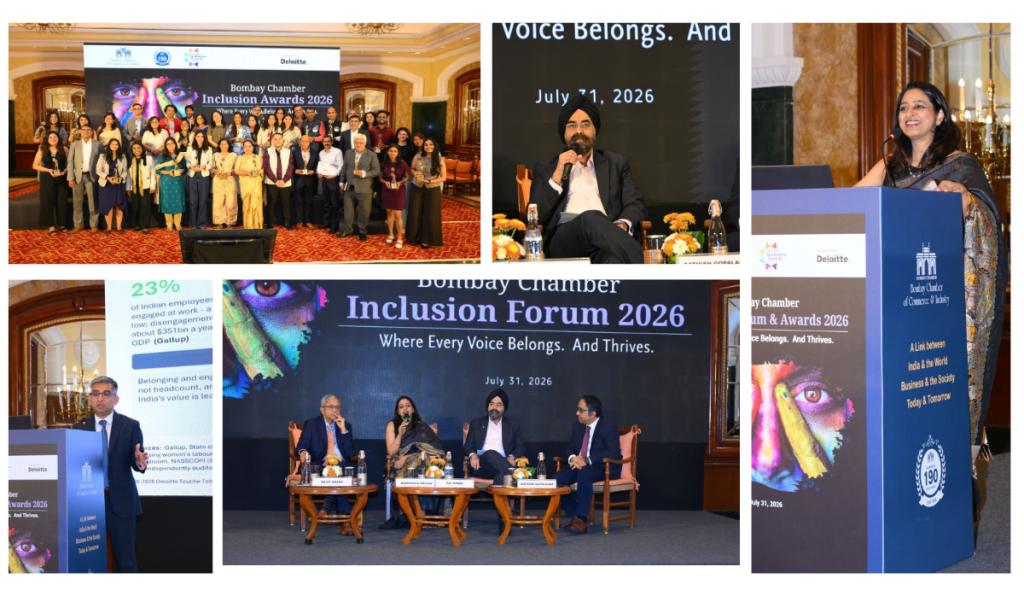
Mumbai, July 31
The 190-year-old Bombay Chamber of Commerce & Industry announced the winners of the fourth edition of the Bombay Chamber Inclusion Awards 2026 at a glittering Nite last evening at ITC Grand Central Parel Mumbai, With Deloitte as its Knowledge Partner for the Awards, the Chamber reinforced its continued commitment to fostering a culture of diversity, equity, and inclusion within corporate India.
Amazon Seller Services Ltd, Godrej Consumer Products Ltd and Godrej Properties Ltd won the Marquee Best of the Best Award. Other leading organisations who won included Tech Mahindra, Axis Bank, Deutsche Bank Group, India, The New India Assurance Company Limited, Oil India ltd, HDFC Life Insurance Company Limited, CG Power and Industrial Solutions Limited, The Indian Hotels Company Limited. In the MSME sector Harkesh Rubber LLP, The Vits Kamats Group, HAB Pharmaceuticals & Research Ltd and Ubisoft India Entertainment Pvt. Ltd. This year the Awards were segmented sectorwise – Tech, Media & Telecom; BFSI; Consumer & Life Sciences; Energy, Resources & Industrials; and MSME.
In his Welcome Address at the Awards, Rajiv Anand, immediate past President, Bombay Chamber, and MD & CEO, IndusInd Bank Ltd said, “When the Bombay Chamber instituted these Awards four years ago, we did so with a clear conviction: that inclusion is not an act of charity, nor a compliance requirement — it is a strategic imperative for building stronger businesses, resilient institutions, and a more equitable society. Today, as we gather for the fourth edition, it is heartening to see how this vision has grown into a vibrant community of changemakers who are proving that inclusive organisations are also more resilient, innovative and future-ready.”
The Awards Nite saw two powerhouse panel discussions. The Inclusion Dialogue was led by Meenakshi Priyam, Chair, DEI Committee, Bombay Chamber & SVP and Head of HR, Auto, Mahindra & Mahindra Ltd had Rajiv Anand; P.D. Singh, CEO – India & South Asia, Standard Chartered Bank and Sathish Gopalaiah, President, Consulting Business, Deloitte South Asia as the panelists. Singh, who was on the Jury panel for the Awards pointed out that, “The most inspiring part of this journey was seeing organisations move beyond good intentions to measurable business impact. Inclusion today is not a social initiative—it is a business priority.” Gopalaiah, who was also on the Jury panel, observed, “Organisations are moving beyond accommodating diversity to integrating inclusion into innovation, culture and competitive advantage. That is where the real transformation begins.”
The second panel brought together two extraordinary people who through their work, have challenged perceptions and broken barriers. Zainab Patel is an independent DEIB consultant, social entrepreneur, and plays a visible role in India’s transgender rights movement. Alina Alam, winner of the National Award for the Empowerment of Persons with Disabilities and a four time TedX speaker, is the founder CEO of Mitti Cafe, the world’s largest chain of cafes (including one at the Mumbai International Airport), managed by physical, intellectual & psychiatric disabilities. The conversation touched on challenging norms in DEI, the importance of sustained inclusion beyond individual leaders, and addressing disability in perceptions.
Welcoming delegates to the Bombay Chamber Inclusion Forum 2026 which was held prior to the Awards, Meenakshi Priyam, Chair, DEI Committee, Bombay Chamber & SVP and Head of HR, Auto, Mahindra & Mahindra Ltd. said, “Belonging is at the heart of inclusion. It is that feeling of longing to be in a place because it allows you to be your authentic self. When people truly belong, they are empowered to contribute, grow, and succeed. The Bombay Chamber Inclusion Awards celebrate organisations that have moved beyond measuring representation to creating workplaces where every individual feels valued, heard, and empowered to contribute. May our community of inclusion continue to grow—bringing together leaders, organisations, and changemakers committed to building workplaces where everyone can belong, express themselves, and thrive.”
The Inclusion Forum also celebrated the successful completion of the third edition of the Bombay Chamber Mentoring for Enrichment (ME) Program—another milestone in the Chamber’s commitment to developing and empowering women professionals and allies through mentorship. This year, the ME program brought together 36 mentor-mentee pairs, each embarking on a journey of learning, collaboration, and professional growth. They were felicitated at the Forum.
By: Raj Singh
No Comments
India and Rwanda Hold First Joint Trade Committee Meeting to Deepen Bilateral Trade and Investment Cooperation
India and Rwanda Hold First Joint Trade Committee Meeting to Deepen Bilateral Trade and Investment Cooperation
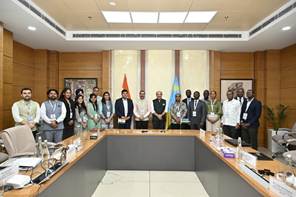
The First Session of the India–Rwanda Joint Trade Committee (JTC) was held in New Delhi on 30 and 31 July 2026. The Indian delegation was led by Joint Secretary, Department of Commerce, Shri Amit Kumar, while the Rwandan delegation was led by Director General, Asia, Pacific and Middle East Affairs, Ministry of Foreign Affairs and International Cooperation, Republic of Rwanda, Mr. Virgile Rwanyagatare.
Delivering the inaugural address, Additional Secretary, Department of Commerce, Shri Yashvir Singh, said the inaugural Session establishes a permanent, structured and periodic apex mechanism to review bilateral commerce, diversify the trade basket, expand two-way investment and address logistical impediments. Both sides reviewed the current state of bilateral trade in goods and services. India’s principal exports to Rwanda include drug formulations and biologicals, two- and three-wheelers, industrial and electrical machinery, oil meals, and iron and steel products, while Rwanda’s exports to India comprise lead, spices, essential oils, copper, precious and semi-precious stones, processed agricultural products and minerals. Both sides agreed to make concerted efforts to diversify the bilateral trade basket, facilitate business-to-business engagement and address market access issues.
India highlighted the potential to expand exports of heavy engineering goods, pharmaceuticals and medical devices, refined petroleum products, textiles, marine products, plastics, sports goods and toys, gems and jewellery, and scientific instruments. It was noted that India remains Rwanda’s largest source of pharmaceutical imports, accounting for about 24.5 per cent of the country’s pharmaceutical imports. Rwanda identified chillies, macadamia, French beans, avocados, essential oils, tea, coffee, other horticultural products, minerals and precious stones as priority exports to India. The two sides also discussed cooperation on harmonisation of standards, including capacity building between the Bureau of Indian Standards and the Rwanda Standards Board. On investment, Rwanda noted that India is its second largest foreign investor as of 2025 and highlighted opportunities in mining, agro-processing, affordable housing, information and communication technology, manufacturing, healthcare, tourism and financial services. Both sides designated Invest India and the Rwanda Development Board as investment focal points under the JTC framework and agreed to exchange calendars of trade fairs, business forums and Buyer-Seller Meets. Rwanda also highlighted its strategic location as a gateway to the East African Community (EAC), the Common Market for Eastern and Southern Africa (COMESA) and the African Continental Free Trade Area (AfCFTA), offering Indian businesses access to a wider regional market.
The two sides identified several priority areas for sectoral cooperation. In critical minerals, India expressed interest in strengthening collaboration on Rwanda’s tin, tungsten and tantalum resources, including institutional cooperation between the Geological Survey of India and the Rwanda Mines, Petroleum and Gas Board. In pharmaceuticals and healthcare, both sides noted that the Memorandum of Understanding between the health authorities of the two countries is at an advanced stage of finalisation for signature. India also proposed recognition of the Indian Pharmacopoeia and expanded cooperation in traditional medicine.
The discussions also covered cooperation in agriculture and agro-processing, including market access for avocados; textiles and leather; green mobility; digital public infrastructure; fintech and cybersecurity; and renewable energy. India offered continued capacity building support through the Indian Technical and Economic Cooperation (ITEC) Programme, the Study in India initiative and the Skill India Mission, including support for strengthening Rwanda’s Technical and Vocational Education and Training ecosystem. The discussions were held in a cordial and constructive atmosphere. Commerce Secretary Shri Rajesh Agrawal congratulated both delegations on advancing the bilateral commercial partnership and emphasised the need for close monitoring and time-bound implementation of the outcomes recorded in the Agreed Minutes.
The Agreed Minutes were signed in New Delhi on 31 July 2026. Both sides agreed to hold the Second Session of the India–Rwanda Joint Trade Committee in Rwanda after one year on a mutually convenient date through diplomatic channels.
Faster Payments, Stronger MSME: Government Mandates TReDS for Settlement of All MSME Invoices by Central Public Sector Enterprises
Faster Payments, Stronger MSME: Government Mandates TReDS for Settlement of All MSME Invoices by Central Public Sector Enterprises
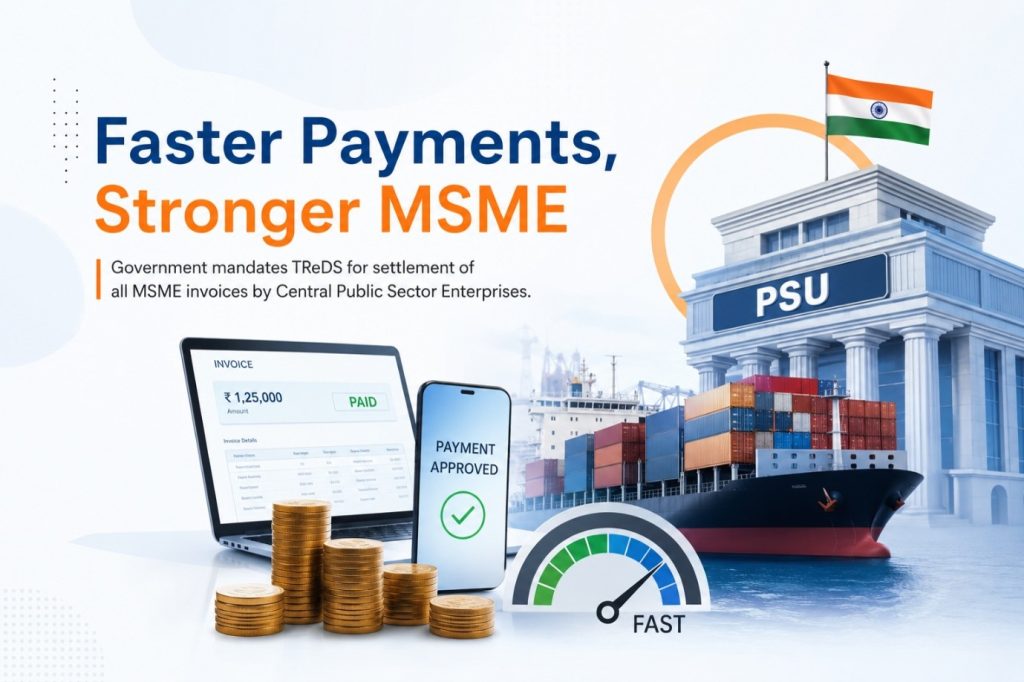
Mandatory settlement through TReDS: All operating Central Public Sector Enterprises (CPSEs) must route the settlement of invoices for goods and services procured from MSMEs through TReDS platforms authorised by the Reserve Bank of India (RBI).
Transparency and accountability: Central Public Sector Enterprises (CPSEs) shall disclose details of MSME invoices routed and settled through TReDS as specified by the RBI and obtain a statutory auditor’s certificate of TReDS registration and compliance during their annual audit.
A benchmark for corporate India: The mandate positions Central Public Sector Enterprises (CPSEs) as role models for timely payment discipline for large corporate buyers across the country.
In a decisive step to end the long wait for payments faced by Micro, Small and Medium Enterprises (MSME), the Ministry of MSME, Government of India, has notified the mandatory use of the Trade Receivables Discounting System (TReDS) by all operating Central Public Sector Enterprises (CPSEs) for the settlement of transactions with their MSME suppliers. The Notification, issued on 30 June 2026, gives effect to a key announcement of the Union Budget 2026–27.
MSMEs are the backbone of the Indian economy, with over 8.70 crore enterprises registered on the Udyam Registration Portal and Udyam Assist Platform providing employment to more than 38 crore persons. Yet delayed payments remain one of the sector’s most persistent challenges, locking up working capital and constraining growth. By making TReDS the settlement route for all CPSE purchases from MSME, public sector procurement will now work actively for the small supplier: procurement by CPSEs gets captured on TReDS, and timely payment to MSME will be ensured through invoice financing from banks and financial institutions.
What This Means for MSMEs
With every CPSE invoice flowing through TReDS, MSME suppliers have the option to convert approved invoices into cash well before the due date. Financing on TReDS is collateral-free and without recourse to the seller, with banks and NBFCs bidding competitively to discount invoices, giving MSMEs working capital within a short span of time at competitive rates of interest.
About TReDS
TReDS is an RBI-regulated electronic platform, operational since 2017, for financing and discounting the trade receivables of MSMEs due from corporate buyers, Government Departments and Public Sector Undertakings, through competitive bidding by multiple financiers. Five platforms are currently operational: RXIL, M1xchange, Invoicemart, C2treds and DTX. The platform has grown from strength to strength, with invoice discounting increasing from ₹40,000 crore in FY 2021-22 to ₹3.47 lakh crore in FY 2025-26.
The TReDS Reform Journey
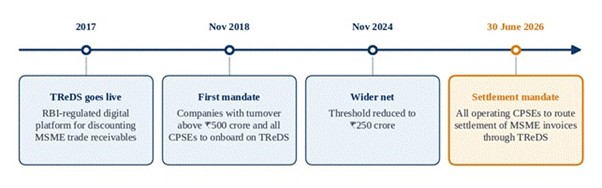
The Notification was issued on 30 June 2026. Full details are available in the Gazette of India at https://egazette.gov.in.
Department of Commerce Organises Chintan Shivir on Strengthening India’s Electronics Manufacturing and Export Competitiveness
Department of Commerce Organises Chintan Shivir on Strengthening India’s Electronics Manufacturing and Export Competitiveness
The Department of Commerce, Ministry of Commerce & Industry, in collaboration with the Mobile and Electronic Devices Export Promotion Council (MEDEPC), the Electronics and Computer Software Export Promotion Council (ESC), and the Telecom Equipment and Services Export Promotion Council (TEPC), organised a Chintan Shivir at Bharat Mandapam, New Delhi, bringing together senior government officials, industry leaders, policy experts and other key stakeholders to deliberate on India’s evolving electronics manufacturing landscape and strategies to strengthen the country’s global competitiveness.
Secretary, Department of Commerce, Shri Rajesh Agrawal, said that the global electronics industry is increasingly driven by global value chains, and India’s policy framework must provide the predictability and stability required for these value chains to expand their presence in the country. He observed that policy approaches for production aimed at the domestic market may differ from those needed to promote export-oriented manufacturing. He added that the Chintan Shivir had been convened to facilitate constructive dialogue and develop tangible, balanced and actionable policy recommendations that are equitable for all stakeholders while strengthening India’s position as a globally competitive electronics manufacturing and export hub.
The Chintan Shivir featured presentations on India’s roadmap to achieving USD 150 billion in electronics exports by 2030 and on strengthening the country’s semiconductor and electronics components ecosystem. The presentations highlighted sector-specific export opportunities across smartphones, servers, specialty electronics and components, while outlining the role of global value chains (GVCs), supply chain resilience and targeted policy interventions in positioning India as a globally competitive electronics manufacturing and export hub. The sessions laid the foundation for detailed deliberations on policy priorities required to accelerate long-term growth and enhance export competitiveness.
A key highlight of the Chintan Shivir was the Open House Discussion, during which industry stakeholders engaged directly with senior officials of the Department of Commerce on policy measures to enhance India’s competitiveness in the global electronics sector. Participants emphasised the importance of integrating MSMEs into global value chains, which account for nearly 90 per cent of global electronics trade, to enable them to scale as suppliers to large manufacturers. Deliberations also focused on harmonisation of HS Codes and closer coordination with Customs authorities to minimise product misclassification and facilitate smoother exports. The discussions identified several priority areas for policy interventions to strengthen India’s export competitiveness.
The Chintan Shivir was presided over by Secretary, Department of Commerce, Shri Rajesh Agrawal. It was attended by Special Secretary, Department of Commerce, Shri Suchindra Misra; Director General, Directorate General of Foreign Trade (DGFT), Shri Lav Agarwal; Joint Secretary, Department of Commerce, Shri Manish Chadha; and Joint Secretary, Department of Commerce, Shri Vimal Anand. Senior representatives from the Government of India, State Governments, industry and Export Promotion Councils also participated. The forum provided an important platform for deliberations on opportunities and challenges facing India’s electronics sector as it seeks to deepen its integration with global value chains and accelerate export-led growth.
Special Secretary, Department of Commerce, Shri Suchindra Misra, said that sustaining India’s export momentum in electronics would require not only competitive manufacturing but also focused marketing efforts to build the visibility and acceptance of Indian products in strategic overseas markets. He noted that as the Indian Institute of Foreign Trade develops training programmes for exporters, industry feedback would be invaluable in refining the curriculum to strengthen understanding of trade agreements, market access opportunities and evolving demand patterns across global markets.
The Chintan Shivir witnessed active participation from leading industry stakeholders across the electronics value chain, including Apple, Samsung, Amber Enterprises, Dixon Technologies, Micromax, Tata Electronics, Syrma SGS Technology, Bora Exim, Aequs, Foxconn, boAt, and several other manufacturers, exporters and industry associations. Their participation enriched the discussions by bringing diverse perspectives on manufacturing, exports, trade facilitation and investment.
The Chintan Shivir concluded with a shared commitment among all stakeholders to continue structured consultations and translate the recommendations emerging from the discussions into actionable policy initiatives aimed at further strengthening India’s electronics manufacturing ecosystem and enhancing its export competitiveness.
“Cities are built not only through concrete, but through culture:” Municipal Commissioner Ashwini Bhide at Bombay Chamber-BMC Namaste Mumbai Conclave
“Cities are built not only through concrete, but through culture:” Municipal Commissioner Ashwini Bhide at Bombay Chamber-BMC Namaste Mumbai Conclave
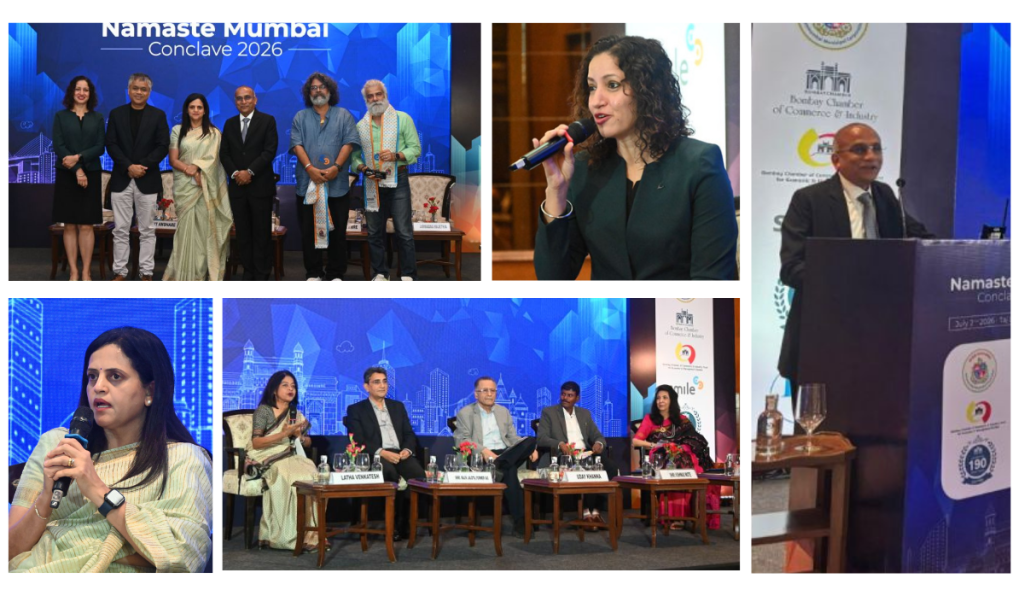
Mumbai, July 2, 2026: In a first-of-its-kind initiative celebrating Mumbai’s creative spirit and innovation ecosystem, the Bombay Chamber of Commerce & Industry, in collaboration with the Brihanmumbai Municipal Corporation (BMC), hosted the Namaste Mumbai Conclave 2026 and The Grand CivicTech Fund Quest. The day-long event brought together senior government officials, industry leaders, academicians, creative professionals, investors and entrepreneurs to chart a roadmap for transforming Mumbai into a globally recognised creative capital and innovation hub.
Welcoming the gathering, Sudhanshu Vats, President, Bombay Chamber of Commerce & Industry and Managing Director, Pidilite Industries, reflected on the Chamber’s nearly 190-year association with Mumbai’s evolution and called for the city’s next phase of growth to be driven not only by infrastructure but also by culture, tourism and collaboration.
“Bombay Chamber’s story is closely interlinked with the story of Mumbai. As the city undergoes an unprecedented infrastructure transformation, we must now equally invest in its cultural identity, tourism and quality of life. Through Namaste Mumbai, we hope to bring together ideas, innovation and partnerships that will help build a more liveable, globally competitive and culturally vibrant Mumbai,” he said.
Delivering the keynote address, Smt. Ashwini Bhide, IAS, Municipal Commissioner, BMC, said that while Mumbai is witnessing one of the country’s largest infrastructure transformations, its next phase of growth must equally focus on strengthening the city’s creative identity, cultural vibrancy and public spaces.
“Cities are built not only through concrete but through culture. Ease of doing business, ease of living and ease of movement are important, but a truly liveable city also requires ease of expression. People need spaces where they can express themselves, experience the creativity of others and participate in the city’s cultural life,” she said.
Highlighting Mumbai’s unique character, she added, “Creation comes out of chaos. Mumbai has always turned its challenges into innovation and creativity. The new infrastructure we are building must now become a foundation for nurturing the next generation of artists, entrepreneurs and innovators.”
Referring to projects such as the Coastal Road and Metro network, she said these investments should not only improve mobility but also create new public spaces that enrich civic life. She called for stronger collaboration between government and industry to build a city that is more beautiful, culturally vibrant and globally attractive, adding that infrastructure alone cannot define Mumbai’s future.
The conclave featured two engaging panel discussions that examined Mumbai’s identity and future opportunities.
The first session, “Branding Mumbai – One City, Many Identities,” moderated by Priyanka Sinha Jha, COO, Screen Academy; Indian Express Screen Foundation for Excellence in Motion Pictures and Arts Technology, featured Smt. Ashwini Bhide, IAS, Jamnadas Majethia, Actor, Director & Producer, Ajit Andhare, Chief Operating Officer, Viacom18 Motion Pictures, and Gajendra Ahire, Producer & Director. The panellists explored how Mumbai can build a unified global brand by strengthening its heritage, theatre, cinema, public spaces and cultural infrastructure.
The second session, “Mumbai 3.0 – The Creative Capital Opportunity,” moderated by Latha Venkatesh, Executive Editor, CNBC-TV18, brought together Shri Vishwas Mote, Deputy Municipal Commissioner, Zone III, BMC, Dr. Indu Shahani, Founding President & Chancellor, ATLAS SkillTech University, Shri Rajiv Jalota, Retd. IAS, Former Chairperson, Mumbai Port Authority, and Uday Khanna, Past President, Bombay Chamber of Commerce & Industry and former Independent Director of Kotak Mahindra Bank, Castrol India, Pfizer and Pidilite Industries. The discussion highlighted the importance of integrating infrastructure with culture, education, tourism and industry partnerships to position Mumbai among the world’s leading creative cities.
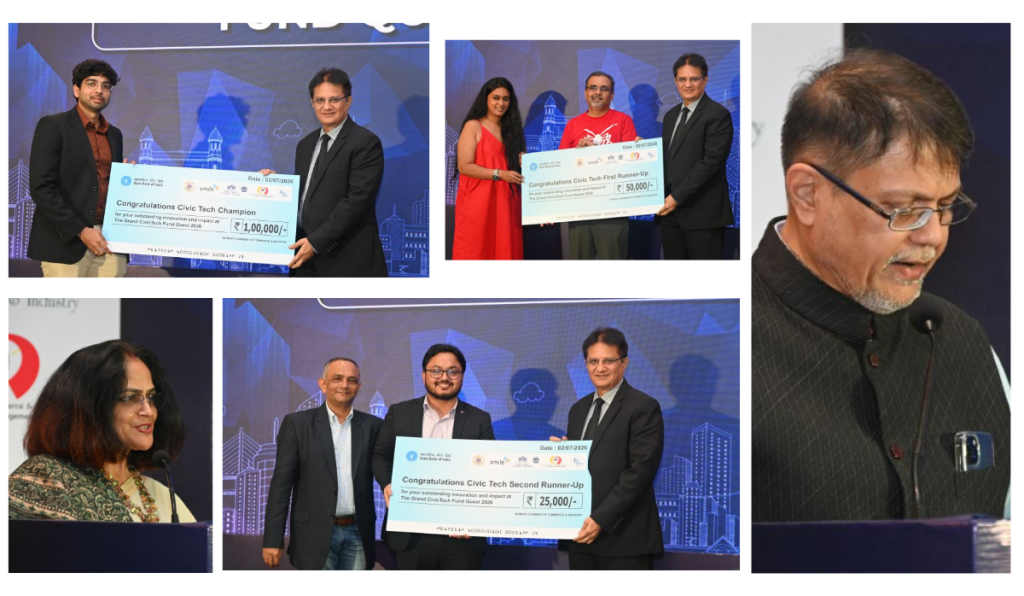
The afternoon session transitioned from dialogue to action with The Grand CivicTech Fund Quest, organised jointly by the Bombay Chamber and the BMC. Designed as a platform to connect promising CivicTech startups with investors and civic leaders, the initiative showcased innovative, technology-driven solutions to address Mumbai’s urban challenges.
Representing the BMC, Shashi Bala, Chief – Business Development and Director, SMILE Council – CivicTech Incubator of BMC, outlined the vision of the Society for Mumbai Incubation Lab to Entrepreneurship (SMILE) Council, which was created to nurture entrepreneurs, transform innovative ideas into sustainable businesses and contribute to Mumbai’s growth as an international business and innovation hub. She shared that SMILE focuses on developing solutions that strengthen civic infrastructure and public services and currently supports 24 startups, with another 17–18 startups in the pipeline.
Highlighting what makes the incubator unique, she said, “Our vision is to nurture entrepreneurs, transform innovative ideas into sustainable businesses and contribute to Mumbai’s growth as an international business and innovation hub. What makes SMILE different is that startups don’t just receive mentoring—they get the opportunity to test and refine their technologies in real-life civic situations by working closely with BMC departments, enabling solutions that can create a meaningful impact for the city.”
Ashith Kampani, Chair, PE & VC Committee, Bombay Chamber and Chairman, CosmicMandala 15 Securities Pvt. Ltd., welcomed the finalists and jury members, noting that the Fund Quest was conceived to bridge the gap between innovative CivicTech startups, investors and government, enabling promising solutions to move from ideas to implementation.
Ten shortlisted startups presented their innovations before an eminent jury of investors and industry leaders and were evaluated on four parameters—Opportunity, Scalability, Capability and Monetisability. Niramai Health Analytix Pvt. Ltd., led by Dr. Geetha Manjunath, emerged as the CivicTech Champion, while EcoBio Consulting Pvt. Ltd. and Saltech Design Labs Pvt. Ltd. were declared the First and Second Runners-up, respectively. In addition to cash prizes, the top three startups will receive structured mentorship from industry leaders to support their growth and market adoption.
The Namaste Mumbai Conclave 2026 and The Grand CivicTech Fund Quest together showcased a unified vision for Mumbai’s future—one where creativity, culture, innovation and entrepreneurship work hand in hand to shape the city’s next chapter.