
Saturday, October 17, 2026
Blog

 Login
Login
Bombay Chamber Sustainability Conclave focuses on Circular Economy and product innovations needed to achieve material efficiency
Bombay Chamber’s annual Sustainability Conclave 2025 held yesterday at the St Regis Hotel Mumbai, focused on Closing the Loop: Circular Pathways to Business.
With a line-up of eminent leaders in the field, the Conclave touched upon the current scenario in circularity and the challenges within. Panelists were in agreement that policy interventions were the need of the hour to incentivise players who have entered the field.
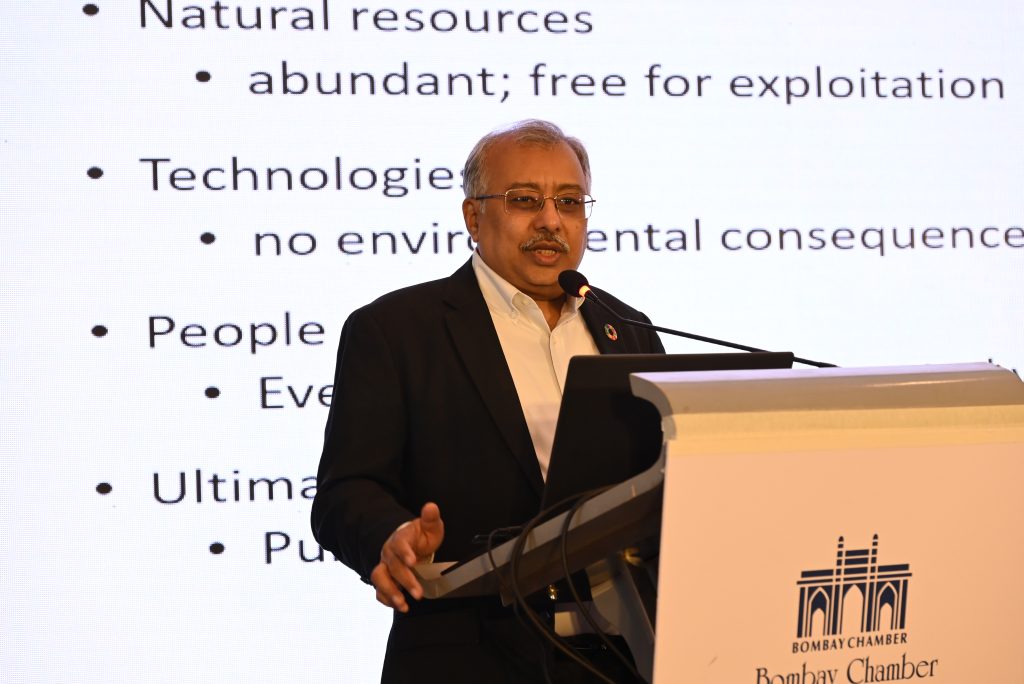
In his theme setting address, Anirban Ghosh, Head – Centre for Sustainability, Mahindra University and chairperson Sustainability Committee, Bombay Chamber said, “Our societal norms often encourage uncontrolled consumption and waste, which harms the environment. This is where the concept of a circular economy comes in – a system that promotes sustainability and efficient use of resources. The need for a circular economy is urgent, as there’s no Planet B to fall back on.
To achieve this, we need to adopt pathways like reducing the use of virgin materials and increasing the lifespan of materials in use. Research in circular economy is gaining momentum, focusing on: Circular materials and bio-based polymers and urban mining and e-waste recovery.”
He observed that the potential value from waste management is substantial. “Just a few years ago, the value was negligible, but now it’s over ₹100 crores. This shift highlights the importance of embracing a circular economy and rethinking our relationship with resources, “he said.
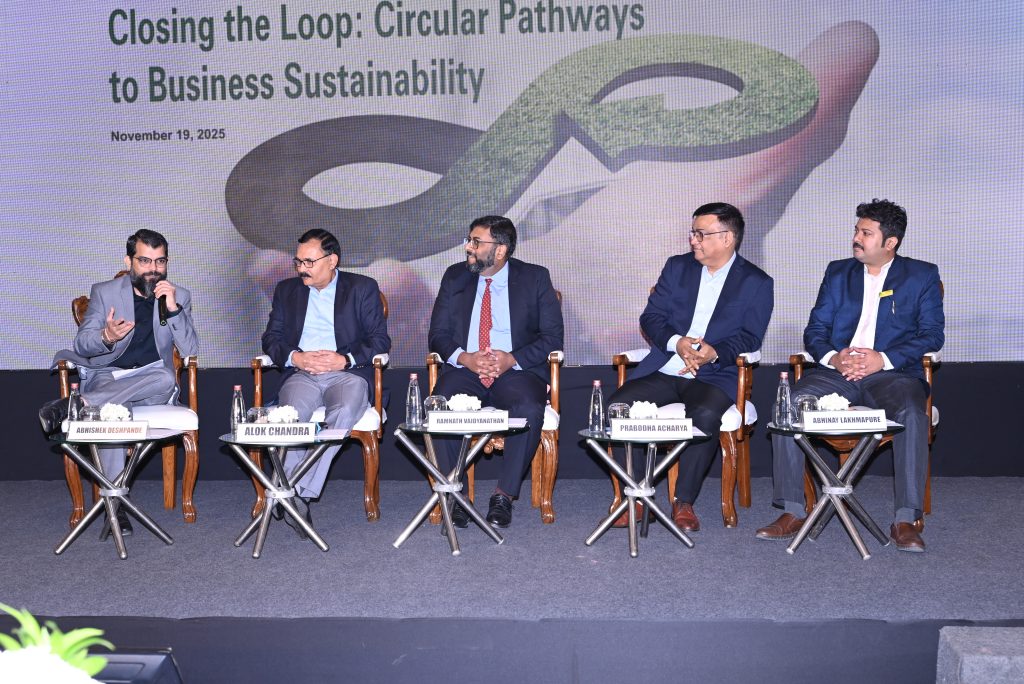
This was followed by a panel discussion on Beyond Compliance: Leveraging EPR for Business Sustainability. The panel was moderated by Abhishek Deshpande – Co-Founder & COO, Recykal and the panelists included Alok Chandra – Chief HSE & Sustainability Officer, Tata Chemicals; Ramnath Vaidyanathan – Head – Environmental Sustainability Godrej Industries Group; Prabodha Acharya – Chief Sustainability Officer, JSW Group and Abhinay Lakhmapure, Chief Business Officer – Sustainability, The Shakti Plastic Industries.
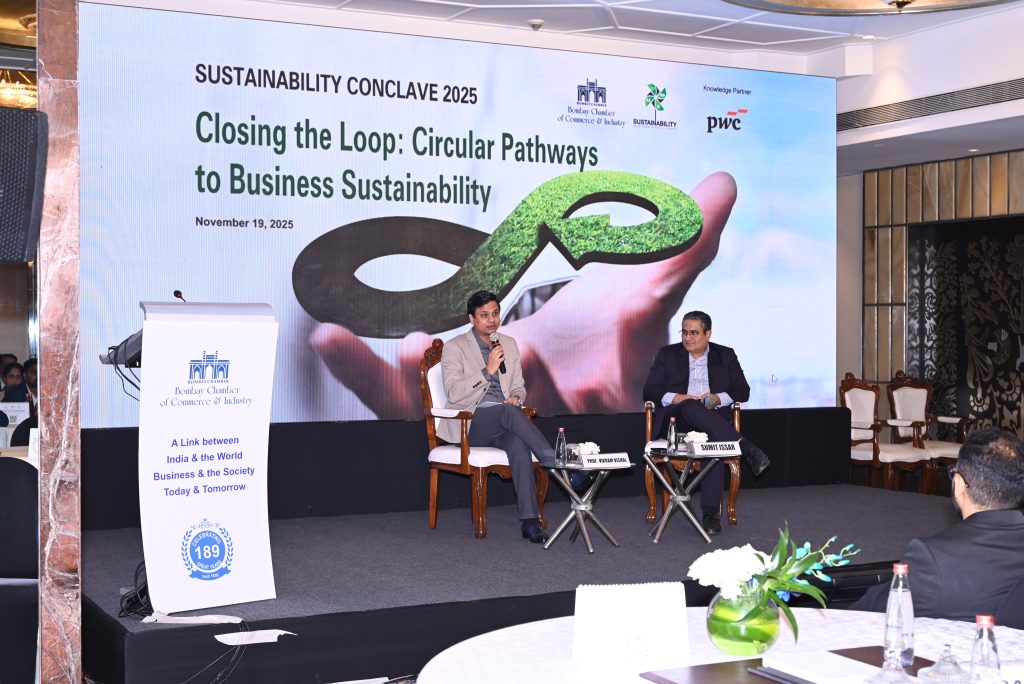
This was followed by a Fireside Chat on Collaboration Across Value Chains: Building Ecosystems for Circular Growth between Prof. Vikram Vishal, Professor and Convener, National Centre of Excellence in CCUS, IIT Bombay, Co-founder and CEO, UrjanovaC and Sumit Issar, MD & CEO, Mahindra Accelo Ltd. and Mahindra Steel Service Centre Ltd.; Director, CERO (Mahindra MSTC Recycling Pvt. Ltd.); Board Member, Mahindra Auto Steel Pvt. Ltd., Mahindra Middle East, and PT Mahindra Auto Steel Indonesia. Issar outlined the purpose of setting up CERO – to bring the hassle-free vehicle recycling experience to every doorstep and help everyone contribute towards a greener future. Prof Vishal spoke about the initiatives IIT Bombay is doing in the field of circularity.
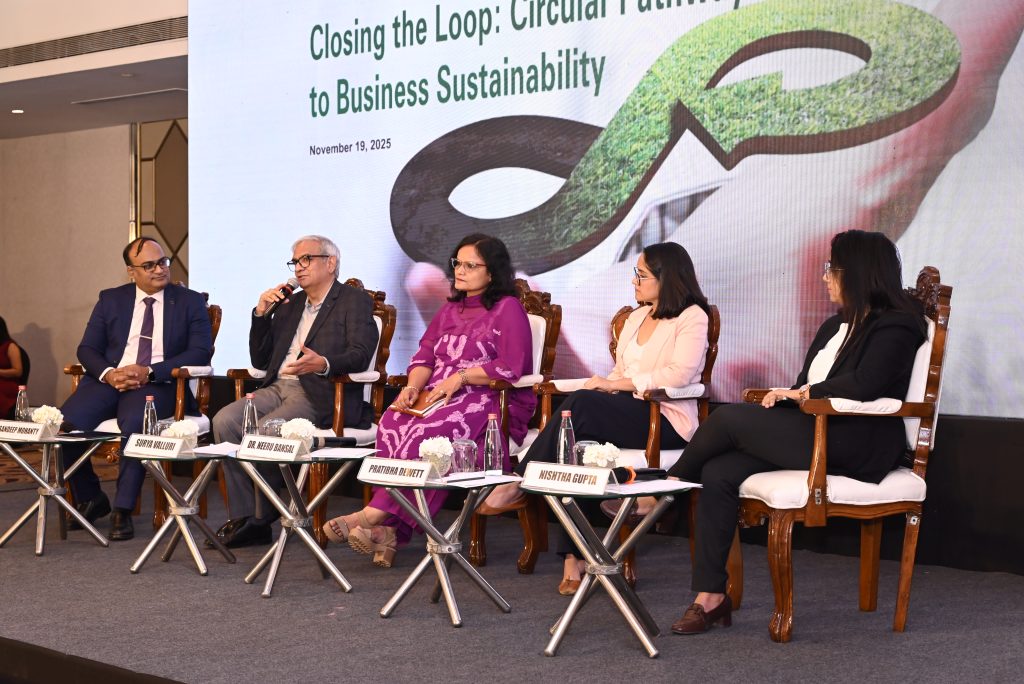
The second panel discussion was on Design to Disposal: Product Innovation, Data and Material Efficiency. The session was moderated by Sandeep Kumar Mohanty, PwC, Partner – Sustainability Transformation, iBT, One Consulting and the panel members were Surya Valluri – Chief Sustainability Officer, Grasim Industries; Dr. Neeru Bansal – Chief Sustainability Officer, Cement Business, Adani Group; Pratibha Dewett – Chief Sustainability Officer, Lucro Plastecycle and Nishtha Gupta– Group Head – Sustainability & ESG, Suzlon Energy. The panel deliberated on how it is necessary for organisations to move from compliance to competitiveness and design products sustainable by nature. They agreed that scalability brings competitiveness and this will come only when consumers are aware of it. Brands and value chains need to brand around circularity which is not the scenario at the moment. They also discussed how digitalization can help move the needle on circularity.
EPFO’s 18 January 2025 circular restricting higher pension to retirees struck down by Calcutta High Court
EPFO’s 18 January 2025 circular restricting higher pension to retirees struck down by Calcutta High Court
Judgement attached.
Digital Personal Data Protection (DPDPA) Rules, 2025 published for public comments
Digital Personal Data Protection (DPDPA) Rules, 2025 published for public comments
Notification attached.
Credit guarantee scheme aims to boost India’s export competitiveness.
Credit guarantee scheme aims to boost India’s export competitiveness

Mumbai: The Union Cabinet’s approval of the Credit Guarantee Scheme for Exporters (CGSE) is expected to provide a significant boost to India’s export-oriented industries, particularly micro, small and medium enterprises (MSMEs). The scheme, to be implemented by the Department of Financial Services (DFS) through the National Credit Guarantee Trustee Company Limited (NCGTCL), will extend collateral-free credit support of up to ₹20,000 crore to eligible exporters. Member Lending Institutions (MLIs) will receive 100 per cent guarantee coverage, reducing risk and enabling them to provide additional credit facilities to businesses engaged in international trade. A management committee chaired by the secretary of the DFS will oversee implementation, ensuring accountability and monitoring progress.
Exports remain a critical pillar of the Indian economy, accounting for nearly 21 per cent of gross domestic product (GDP) in FY2024-25 and contributing substantially to foreign exchange reserves. Export-oriented industries directly and indirectly employ more than 45 million people, with MSMEs responsible for nearly 45 per cent of total exports. The CGSE is therefore positioned to strengthen liquidity across a wide base of enterprises, ensuring smoother operations and supporting employment in sectors that are highly sensitive to global demand fluctuations.
The scheme is expected to enhance the global competitiveness of Indian exporters by enabling them to diversify into new and emerging markets. Access to collateral-free credit will allow businesses to invest in product development, expand production capacity and meet compliance requirements in overseas markets. For MSMEs, which often face difficulties in securing affordable finance, the guarantee mechanism offers a pathway to scale operations and participate more effectively in global supply chains.
India has set an ambitious target of achieving $1 trillion in exports, and sustained growth in this area is vital for maintaining macroeconomic stability. By addressing liquidity constraints, the CGSE provides exporters with the financial flexibility needed to navigate tariff barriers, rising costs and slowing demand in traditional markets. The scheme also reinforces the government’s broader objective of building resilience in the economy and advancing the vision of Aatmanirbhar Bharat.
Export-oriented industries such as textiles, engineering goods, pharmaceuticals and handicrafts stand to benefit from the initiative. These sectors have consistently contributed to India’s trade performance but face challenges in accessing timely credit. The CGSE offers a structured solution by reducing risk for lenders and ensuring that exporters, particularly smaller firms, are not excluded from financial support due to lack of collateral.
To make this scheme a success, effective execution will be essential, along with exporters’ ability to use the additional liquidity for expanding markets and strengthening competitiveness. If carried out efficiently, the CGSE has the potential to play a pivotal role in sustaining export growth while supporting millions of jobs connected to the sector.
(Write to us at editorial@bombaychamber.com)
Government targets startups, industrial players with ₹100 crore biomass hydrogen fund
Government targets startups, industrial players with ₹100 crore biomass hydrogen fund
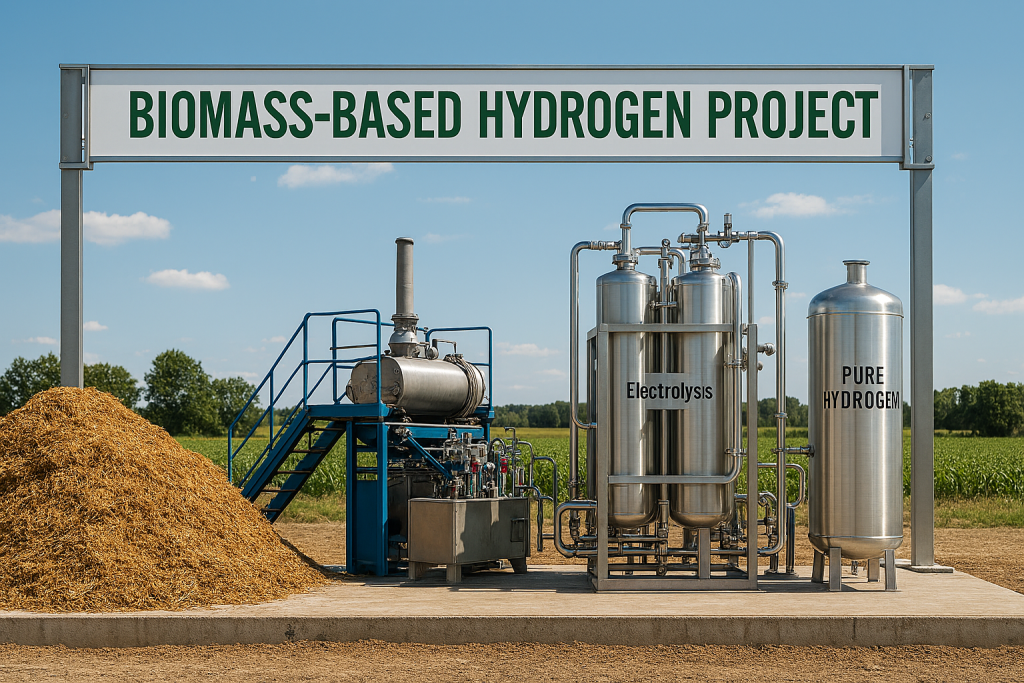
Mumbai: The Indian government has unveiled a ₹100 crore funding initiative aimed squarely at startups, industrial players and research institutions developing biomass-based green hydrogen technologies. The initiative invites proposals for pilot projects that convert biomass and waste materials into green hydrogen, with the Biotechnology Industry Research Assistance Council (BIRAC) designated to oversee its implementation. Union Minister for New & Renewable Energy Pralhad Joshi unveiled the scheme at the 3rd International Conference on Green Hydrogen in New Delhi, highlighting the importance of diversifying hydrogen production pathways beyond conventional electrolysis.
The initiative falls under the National Green Hydrogen Mission (NGHM), launched in 2023 with a budget of ₹19,744 crore. The mission aims to decarbonise hard-to-abate sectors and position India as a global hub for green hydrogen. According to the Ministry of New and Renewable Energy, the scheme is intended to catalyse innovation in thermochemical and biochemical conversion processes, as well as in hydrogen storage, transport and end-use applications. Each selected project could receive up to ₹5 crore, with the goal of demonstrating scalable and cost-effective solutions.
The move comes amid growing interest in alternative hydrogen pathways that can leverage India’s agricultural and organic waste streams. By supporting decentralised production models, the government hopes to reduce reliance on water-intensive electrolysis and promote rural innovation.
The NGHM has already made headway through its Strategic Interventions for Green Hydrogen Transition (SIGHT) programme. Incentives have been awarded for 3,000 MW per annum of domestic electrolyser manufacturing and 8.62 lakh metric tonnes per annum of green hydrogen production. India currently records the world’s lowest green ammonia price at ₹49.75 per kg for 7.24 lakh metric tonnes per annum of output.
Additional investments include ₹132 crore in green steel pilots, ₹208 crore for hydrogen-fuelled vehicles and refuelling stations, and ₹35 crore for the country’s first hydrogen bunkering facility at V.O. Chidambaranar Port. The government has also approved 43 hydrogen-related skill qualifications and certified over 6,300 trainees to support workforce development.
Speaking at the conference, Principal Scientific Adviser Prof. Ajay K. Sood noted that India enjoys a cost advantage in green hydrogen production compared to several other nations, which could enable it to become a major exporter to markets such as the European Union, Japan and South Korea.
The biomass pilot scheme is expected to attract early-stage innovators and contribute to the broader goal of building a resilient and inclusive hydrogen ecosystem. As India moves towards its target of 500 GW of renewable capacity by 2030, the success of such initiatives will be critical in shaping the country’s energy transition.
(Write to us at editorial@bombaychamber.com
Bids-5
Ref.: MCM/ADM/11
The Director General
Bombay Chamber of Commerce and Industry
Mackinnon Mackenzie Building
3rd floor, 4, Shoorji Vallabhdas Road
Ballard Estate, Mumbai – 400 001
Dear Sir/Madam,
Invitation for Bids
Please see enclosed notices for invitation for bids from organizations in Mauritius.
Prospective bidders may be requested to regularly visit the website to take cognizance of any addendum and/or clarification(s) issued.
The Consulate would highly appreciate if you could kindly circulate the Notices among the members of your Organization.
Thank you for your understanding and cooperation.
Yours sincerely,
D. K. Bucktowar
Consul General
Consulate of the Republic of Mauritius
1107, Regent Chambers
11th Floor, Jamnalal Bajaj Marg
208, Nariman Point
Mumbai – 400 021
Tel. : 022 22825421 /22
Fax No. 022 22845468
Invitations for Bids (IFB) –Ceylon Petroleum Storage Terminals Limited Bid No. – KPR/54/2025
My No. MUM/TRD/TENDERS
Mr. Sandeep Khosla
Director General
Bombay Chamber of Commerce & Industry
Dear Mr. Sandeep Khosla,
Invitations for Bids (IFB) –Ceylon Petroleum Storage Terminals Limited
Bid No. – KPR/54/2025 – Integrity Assessment of 02 Nos. 18” DIA. Product Pipelines from SPBM to Muthurajawela Terminal, Sri Lanka – by Inline Inspection
I wish to inform you that, the Chairman, Ministry Procurement Committee (MPC), on behalf of the Ceylon Petroleum Storage Terminals Limited (CPSTL) has invited sealed bids from eligible and qualified bidders, for Integrity Assessment of 02 Nos. 18” DIA. Product Pipelines from SPBM to Muthurajawela Terminal, Sri Lanka – by Inline Inspection.
Clarifications (if any) shall be sought from the Manager Procurement on Tel: +94-11- 2572156/ +94-11-2547238, Fax: +94-11-2074299, Email: procure@cpstl.lk.
Closing date for the submission of above IFB is on 12th December 2025 at 1400 hrs (IST).
Please find attached herewith a copy of the procurement notice of the above.
It would be appreciated, if you could kindly make necessary arrangements to disseminate the same among your membership.
With warm regards,
Shirani Ariyarathne
Consul
Consulate General of Sri Lanka
34, Homi Modi Street, Fort
Mumbai 400001
Tel: (+ 91 22 )22045861/22048303
Fax: (+ 91 22) 22876132
E -mail: slcg.mumbai@mfa.gov.lk
Invitations for Bids – SriLankan Catering Ltd. Ref. Nos. SLC/DPC/GOODS/2025/094 & SLC/DPC/GOODS/2025/095
My No. MUM/TRD/TENDERS
Mr. Sandeep Khosla
Director General
Bombay Chamber of Commerce & Industry
Dear Mr. Sandeep Khosla,
Invitations for Bids – SriLankan Catering Ltd.
Ref. Nos. SLC/DPC/GOODS/2025/094 & SLC/DPC/GOODS/2025/095
I wish to inform you that, SriLankan Catering Ltd. has invited bids for the following;
| No. | Ref. No | Item Description | Closing Date & Time |
| 1. | SLC/DPC/GOODS/2025/094 | Supply of Frozen Meat for one year (01st January 2026 to 31st December 2026) |
02nd December 2025 at 11.00 am (Sri Lanka local time GMT+5:30). |
| 2. | SLC/DPC/GOODS/2025/095 | Supply of Frozen Vegetables for one year (01st January 2026 to 31st December 2026) |
Please find attached herewith a copy of the bid document of the above.
It would be appreciated, if you could kindly make necessary arrangements to disseminate the same among your membership.
With warm regards,
Shirani Ariyarathne
Consul
Consulate General of Sri Lanka
34, Homi Modi Street, Fort
Mumbai 400001
Tel: (+ 91 22 )22045861/22048303
Fax: (+ 91 22) 22876132
E -mail: slcg.mumbai@mfa.gov.lk
Invitations for Bids – SriLankan Catering Ltd. Ref. Nos. SLC/MIPC/GOODS/2025/041 & SLC/MIPC/GOODS/2025/042
My No. MUM/TRD/TENDERS
Mr. Sandeep Khosla
Director General
Bombay Chamber of Commerce & Industry
Dear Mr. Sandeep Khosla,
Invitations for Bids – SriLankan Catering Ltd.
Ref. Nos. SLC/MIPC/GOODS/2025/041 & SLC/MIPC/GOODS/2025/042
I wish to inform you that, SriLankan Catering Ltd. has invited bids for the following;
| No. | Ref. No | Item Description | Closing Date & Time |
| 1. | SLC/MIPC/GOODS/2025/041 | Supply of Rice Basmathi long grain for one year (01st January 2026 to 31st December 2026) |
02nd December 2025 at 11.00 am (Sri Lanka local time GMT+5:30). |
| 2. | SLC/MIPC/GOODS/2025/042 | Supply of Fish Salmon fillet skin on frozen for one year (01st January 2026 to 31st December 2026) |
Please find attached herewith a copy of the bid document of the above.
It would be appreciated, if you could kindly make necessary arrangements to disseminate the same among your membership.
With warm regards,
Shirani Ariyarathne
Consul
Consulate General of Sri Lanka
34, Homi Modi Street, Fort
Mumbai 400001
Tel: (+ 91 22 )22045861/22048303
Fax: (+ 91 22) 22876132
E -mail: slcg.mumbai@mfa.gov.lk