
Saturday, October 10, 2026
Blog

 Login
Login
India’s manufacturing momentum signals deeper economic resilience
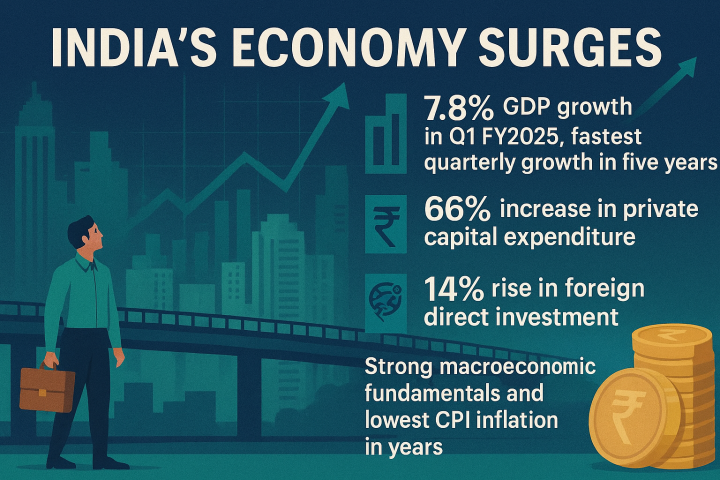
Mumbai: India’s manufacturing sector has reached a significant milestone, with the Purchasing Managers’ Index (PMI) hitting a 17.5-year high. This development, highlighted by Commerce and Industry Minister Piyush Goyal at the 21st Annual Global Investor Conference, reflects a broader economic resurgence underpinned by robust infrastructure investment and policy reforms.
The PMI, a key indicator of industrial activity, suggests strong expansion in manufacturing output, new orders and employment. While the precise PMI figure was not disclosed, its historical peak underscores renewed confidence among producers and investors. This momentum coincides with India’s first-quarter gross domestic product (GDP) growth of 7.8% in the financial year (FY) 2025, the fastest quarterly growth in five years, and a 66% rise in private capital expenditure, signalling a broad-based recovery across sectors.
Infrastructure has played a pivotal role in this resurgence. Referred as a ‘force multiplier’, infrastructure investment has stimulated consumption and catalysed economic activity. The government’s emphasis on transport, logistics and digital connectivity has improved supply chain efficiency and market access, particularly for small and medium enterprises (SMEs). These improvements have helped manufacturers scale operations and respond more effectively to domestic and global demand.
The Make in India initiative, now entering a more mature phase, continues to attract investment in high-value sectors such as semiconductors, drones and electrical steel. The government’s push for domestic sourcing and resilient supply chains, without disengaging from global trade, reflects a pragmatic approach to industrial policy. This is further supported by ongoing trade negotiations with key partners including the European Union (EU), EFTA bloc and the United States, aimed at expanding market access and diversifying export destinations.
Macroeconomic indicators reinforce the narrative of stability. Consumer price inflation is at its lowest in years, and foreign direct investment has risen by 14%. The banking sector has shown strong performance, contributing to financial stability and credit availability. India’s sovereign rating upgrade from BBB– to BBB with a stable outlook reflects international recognition of its economic fundamentals.
Policy reforms have also contributed to the improved business climate. The government’s efforts to deregulate, simplify procedures and decriminalise business laws have reduced compliance burdens. Anticipated GST 2.0 reforms are expected to further streamline taxation and enhance consumer sentiment. Tax rate reductions and accommodative monetary policy, including lower repo and cash reserve rates, have supported investment and spending without compromising inflation control.
While these developments are encouraging, sustaining manufacturing growth will require continued investment in infrastructure and industrial capacity. The government’s call for industry participation in shaping Viksit Bharat 2047 – a long-term vision for a developed India – underscores the need for collaborative effort. The emphasis on quality manufacturing, energy efficiency and ethical business practices reflects a broader commitment to sustainable and inclusive growth.
India’s ability to convert adversity into opportunity has been tested and proven in past crises, from the 1991 reforms to the post-pandemic recovery. The current manufacturing upswing, supported by infrastructure and policy alignment, suggests that the country is once again poised to leverage its strengths for long-term economic transformation.
(Write to us at editorial@bombaychamber.com)
Government’s export obligation extension offers relief to chemical exporters
Government’s export obligation extension offers relief to chemical exporters
Mumbai: India’s chemical sector has received a significant policy reprieve with the extension of the export obligation period under the Advance Authorisation scheme from 6 months to 18 months for products covered by Quality Control Orders (QCOs). The change, formalised through Notification No. 28 dated May 28, 2025, by the Directorate General of Foreign Trade (DGFT), follows recommendations from the Department of Chemicals and Petrochemicals (DCPC) and mirrors similar adjustments made for other sectors such as textiles.
The timing of this decision is notable. In the financial year 2024–25, chemical exports reached $46.4 billion, accounting for 10.6% of India’s total export value. The sector’s scale and complexity make it particularly sensitive to regulatory timelines and input cost fluctuations. By extending the export obligation period, the government has effectively reduced pressure on exporters to meet tight deadlines, allowing greater flexibility in procurement, production and shipment planning.
Under the Advance Authorisation scheme, importers are permitted to bring in duty-free raw materials for export production. While these inputs are exempt from QCO compliance, the finished products must adhere to the relevant standards. The extended timeline provides exporters with a wider operational window to meet these requirements without compromising on quality or delivery commitments.
Industry stakeholders have welcomed the move as a practical step that aligns regulatory compliance with commercial realities. The chemical sector, which includes a broad array of petrochemicals, industrial chemicals and specialty compounds, often faces logistical and supply chain challenges that are exacerbated by short export obligation periods. The new 18-month window is expected to ease working capital constraints and reduce the risk of penalties or lapses due to unforeseen delays.
This policy shift also has implications for India’s positioning in global markets. With more time to fulfil export obligations, companies may be better equipped to compete on quality and reliability – factors that are increasingly critical in international trade. While the government has framed the extension as part of its broader strategy to support the chemicals and petrochemicals industry, the measure stands out for its immediate operational impact rather than aspirational rhetoric.
(Write to us at editorial@bombaychamber.com)
Steep US tariffs to slash India’s shrimp exports by 15–18%; Domestic market and new export destinations in spotlight
Steep US tariffs to slash India’s shrimp exports by 15–18%; Domestic market and new export destinations in spotlight
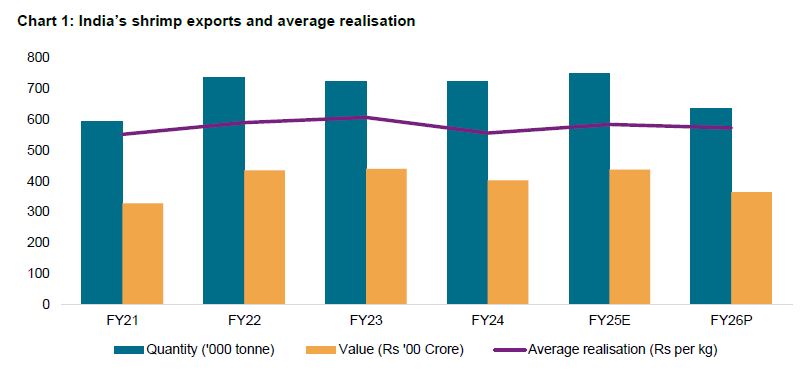
Mumbai: India’s shrimp export volume is expected to fall by 15–18% in the current fiscal year following a sharp increase in tariffs imposed by the United States, according to a report released by Crisil Ratings. The new tariff rate of 58.26%, which includes countervailing and anti-dumping duties, came into effect on August 27, 2025, and has rendered exports to the US market economically unviable for most Indian processors.
The US accounted for nearly 48% of India’s $5 billion shrimp exports in fiscal 2025, making it the largest destination for Indian seafood. Crisil Ratings noted that while exporters had anticipated the tariff hike and front-loaded shipments in the first quarter, overall revenues are still projected to decline by 18–20% year-on-year. The inability to pass on the increased costs to buyers has led to a projected erosion of operating profit margins by 150–200 basis points, pushing margins to a decade-low of 5.0–5.5%.
Rahul Guha, senior director, Crisil Ratings, said the tariff shock would have cascading effects across the value chain as the headwinds will impact processors and discourage farmers from continuing to invest in shrimp culture. “Farmers incur upfront costs for land lease, seed and feed. Additionally, investments in equipment for aeration, electricity and overall pond management and biosecurity have substantially raised the production cost. To boot, the risk of diseases, reduced harvests and unprofitable global prices have been forcing farmers to look at alternative cultures that entail lower investments and limited risks,” he said.
The report highlights that India’s competitive position has weakened significantly compared to other major shrimp-exporting countries such as Ecuador, Vietnam, Indonesia and Thailand, which face substantially lower tariffs in the US market. Despite India’s well-developed domestic infrastructure and strong distribution networks in the US, the steep tariff hike has tilted the playing field.
Crisil Ratings analysed 63 shrimp exporters, representing approximately 55% of industry revenues, and found that their credit profiles are likely to deteriorate. Interest coverage ratios are expected to moderate to around 3.3 times this fiscal from 4.8 times last year, reflecting the pressure on profitability. Himank Sharma, director, Crisil Ratings, noted that the credit profiles of shrimp exporters focused on the US market will face further challenges after two sluggish years.
The decline in export volume is also expected to reduce capacity utilisation and shrink sales of value-added and large-sized shrimp, which were primarily destined for the US and commanded higher margins. While working capital debt may ease due to lower business volumes, the overall debt protection metrics are set to weaken.
Indian shrimp processors are understood to be exploring alternative markets such as the United Kingdom – aided by the India–UK free trade agreement – as well as China and Russia. These efforts may provide partial relief in the second half of the fiscal year, but are unlikely to fully offset the loss of US-bound shipments.
Responding to the mounting trade challenges, the Indian government has launched a strategic initiative to bolster the domestic shrimp market. A dedicated committee has reportedly been formed under the National Fisheries Development Board (NFDB) to chart a roadmap for building a resilient local ecosystem for shrimp consumption. This multi-stakeholder body comprises representatives from farming communities, feed manufacturers, and the Marine Product Export Development Authority (MPEDA), which plays a key role in export market development.
As part of this initiative, efforts are underway to raise public awareness about the nutritional benefits of shrimp. Proposals include setting up promotional stalls across key urban centres to educate consumers and encourage greater uptake. With India’s per capita shrimp consumption currently lagging behind countries like Japan, there is considerable scope to expand domestic demand.
To bridge this gap and cushion the impact of recent export disruptions, shrimp producers have proposed a range of innovative solutions. These include pioneering methods for transporting live shrimp without water and establishing interactive experience centres to engage and inform consumers.
Developing a strong domestic market is increasingly seen as essential for ensuring fair returns to producers and reducing dependence on unpredictable global trade dynamics. Expanding internal demand would also give Indian consumers access to premium-quality shrimp, much of which has traditionally been reserved for export.
The long-term viability of shrimp farming will depend not only on diversifying export destinations but also on significantly boosting domestic consumption. With the sector at a critical juncture, both processors and farmers must adapt to a more uncertain global trade environment while tapping into the untapped potential of the Indian consumer base.
(Write to us at editorial@bombaychamber.com)
Micro food units gain traction under Government’s demand-led scheme
Micro food units gain traction under Government’s demand-led scheme
Mumbai: The food processing sector in India is seeing steady traction among micro enterprises, with over 1.44 lakh units approved for support under the PM Formalisation of Micro Food Processing Enterprises (PMFME) scheme as of 30 June 2025. The scheme, administered by the Ministry of Food Processing Industries, is centrally sponsored and demand-driven — allowing eligible applicants across states to seek financial, technical and business support without regional restrictions.
The PMFME scheme offers a credit-linked capital subsidy of 35% of the eligible project cost, capped at ₹10 lakh per unit. This support is targeted at individual micro enterprises seeking to upgrade or set up food processing operations. The scheme is part of a broader effort to accelerate micro, small and medium enterprises (MSME) growth in the sector, alongside the Pradhan Mantri Kisan SAMPADA Yojana (PMKSY) and the Production Linked Incentive Scheme for Food Processing Industry (PLISFPI), both of which also include MSME participation.
Training and capacity building form a significant component of the PMFME programme. As of the latest update, over 1.16 lakh beneficiaries have received skilling support under the scheme. This includes entrepreneurship development, product-specific training, and support for district-level resource persons and trainers. The aim is to equip micro operators with the skills required to meet industry standards and improve operational efficiency.
The scheme’s demand-led structure has enabled wide geographic coverage. In Bihar, for instance, 25,349 proposals have been approved under PMFME, in addition to 13 projects under PMKSY and seven under PLISFPI. The figures reflect the scheme’s reach across both high-growth and underserved regions, with approvals based on applicant readiness rather than location.
The government’s approach to food processing sector development appears to prioritise decentralised growth, with MSMEs positioned as key drivers of employment and value addition. By offering targeted incentives and skilling support, the PMFME scheme seeks to formalise and scale micro operations that have traditionally operated outside the organised sector.
(Write to us at editorial@bombaychamber.com)
Battery recycling clusters to reshape India’s informal trade
Battery recycling clusters to reshape India’s informal trade
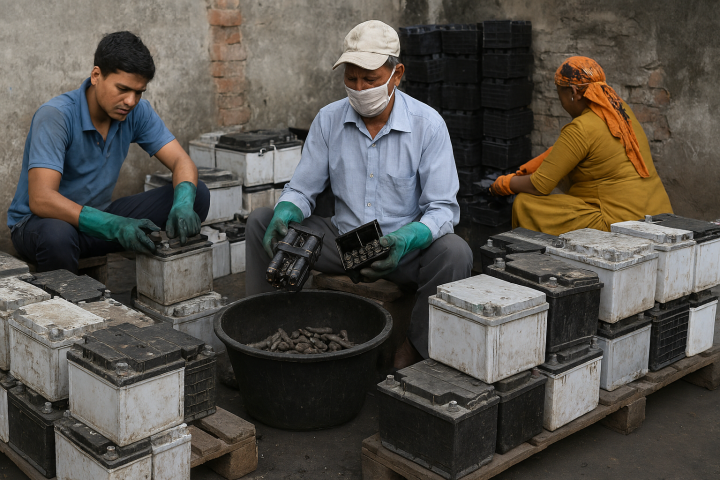
Mumbai: India’s battery recycling ecosystem is undergoing a structural shift, with the government initiating steps to integrate informal operators into the formal value chain. The Ministry of Environment, Forest and Climate Change (MoEF&CC) has stated that the Extended Producer Responsibility (EPR) framework under the Battery Waste Management Rules, 2022 is designed to incentivise formalisation by linking revenue generation to certified recycling activity. This includes the exchange of EPR certificates between producers and registered recyclers — a mechanism that excludes unregistered entities and encourages them to enter the formal system.
To support this transition, a dedicated project has been launched under the Micro & Small Enterprises Cluster Development Programme (MSE-CDP) of the Ministry of Micro, Small and Medium Enterprises. The initiative aims to build capacity and upgrade informal sector operations by forming recycling clusters, thereby enabling small-scale recyclers to access technology, infrastructure and formal market linkages. The programme is expected to reduce fragmentation in the sector and improve traceability of recycled materials, particularly in the context of lithium-ion batteries.
Technology transfer is a key component of the formalisation effort. The Centre for Materials for Electronics Technology (C-MET) has developed a cost-effective lithium-ion battery recycling process, which has been transferred to several recycling firms and start-ups. This move is aligned with the government’s broader circularity goals under Mission LiFE and is intended to improve domestic recovery of critical minerals while reducing dependence on imported raw materials.
The EPR portal developed by the ministry has registered over 3,600 producers and 442 recyclers to date. Producers have procured EPR certificates for 7.29 lakh metric tonnes of key battery metals, against a target of 10.96 lakh metric tonnes. Only certificates issued by registered recyclers are recognised under the rules, reinforcing the need for informal operators to formalise in order to participate in the regulated trade of recycled materials.
The formalisation push is also expected to complement the Production Linked Incentive (PLI) scheme for Advanced Chemistry Cell (ACC) battery storage, which has attracted significant investment in domestic cell manufacturing. With over 100-Gigawatt hour (GWh) of additional capacity announced beyond the PLI beneficiaries, the demand for recycled inputs is likely to rise — making the integration of informal recyclers into certified clusters both a commercial and regulatory imperative.
(Write to us at editorial@bombaychamber.com)
By: Raj Singh
No Comments
Customs duty waiver on raw cotton offers relief to textile sector
Customs duty waiver on raw cotton offers relief to textile sector

Mumbai: India’s textile industry is set to benefit from a temporary exemption of customs duties on raw cotton imports, effective from 19 August to 30 September 2025. The move, announced by the Central Board of Indirect Taxes and Customs, removes the 5% Basic Customs Duty, the 5% Agriculture Infrastructure and Development Cess, and the 10% Social Welfare Surcharge previously levied on cotton imports. In total, the waiver eliminates an 11% import duty, offering immediate cost relief to manufacturers across the textile value chain.
The exemption is expected to ease pressure on domestic cotton prices, which have remained elevated due to supply constraints and seasonal volatility. By allowing duty-free imports, the government aims to improve raw cotton availability, reduce input costs, and stabilise prices for downstream products such as yarn, fabric, garments, and made-ups. This is particularly significant for small and medium enterprises (SMEs), which form the backbone of India’s textile ecosystem and are more exposed to fluctuations in raw material costs.
The timing of the waiver is critical. With export competitiveness under strain and inflationary pressures affecting consumer demand, the cost reduction could help manufacturers maintain margins and pricing stability. Lower input costs may also support India’s textile exports, which face stiff competition from countries with more favourable sourcing and duty regimes.
Industry associations have long called for the removal of import duties on cotton, citing the need to align domestic policy with global trade realities. The current exemption responds directly to these concerns, albeit for a limited duration. While the measure is temporary, it signals a willingness to intervene in support of a sector that contributes significantly to employment and foreign exchange earnings. Beneficiaries of the move include spinning mills, fabric producers, garment exporters, and ancillary units that rely on cotton as a primary input. The relief is expected to be most pronounced for SMEs operating in high-volume, low-margin segments, where even modest cost reductions can have a meaningful impact on viability.
The exemption also has implications for price transmission across the supply chain. If cotton prices soften as expected, consumers may see more stable prices for finished textile products, particularly in the domestic market. However, the short duration of the waiver means that its long-term impact will depend on subsequent policy decisions and market responses. The government’s decision reflects a balancing act between protecting domestic producers and ensuring affordability and competitiveness. While cotton farmers may be concerned about the potential impact on domestic prices, the exemption is framed as a short-term measure to address immediate supply and cost challenges.
As the textile sector navigates global headwinds and domestic constraints, the customs duty waiver offers a window of relief. Whether it translates into sustained gains will depend on how quickly manufacturers can leverage the cost advantage and whether the government considers extending or institutionalising similar measures in future.
(Write to us at editorial@bombaychamber.com)
PLI schemes and trade hubs reshape India’s export landscape
PLI schemes and trade hubs reshape India’s export landscape
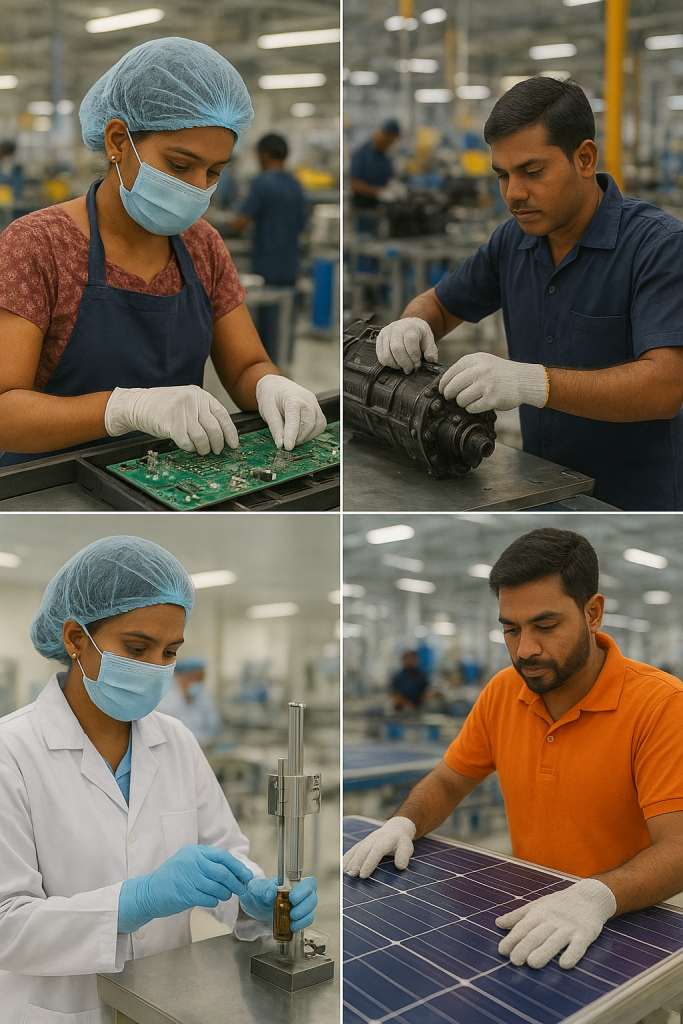
Mumbai: India has rolled out a series of targeted measures to boost exports and reinforce domestic manufacturing, with a clear focus on MSME participation and sectoral competitiveness. The initiatives span production-linked incentives, logistics reforms, trade agreements and grassroots export hubs — forming a multi-pronged strategy to position India as a global supply chain player.
A key highlight is the Production Linked Incentive (PLI) scheme, now extended across 14 sectors including electronics, pharmaceuticals, auto components and solar modules. These incentives have led to increased output, job creation and a marked rise in exports. In the medical devices segment alone, 21 projects have begun manufacturing 54 high-end products such as MRI machines, heart valves and CT scanners. In electronics, India has transitioned from being a net importer to a net exporter of mobile phones, with exports rising from ₹1,500 crore in 2014–15 to over ₹2 lakh crore in 2024–25. The country is now the world’s second-largest mobile phone manufacturer.
The pharmaceutical sector has also seen strong gains. Under the PLI scheme, cumulative sales have reached ₹2.66 lakh crore, including ₹1.70 lakh crore in exports over three years. India has reversed its trade position in bulk drugs, moving from a net importer status in FY 2021–22 to a net exporter, with a swing of over ₹4,000 crore.
To support these manufacturing gains, the government has launched the National Logistics Policy and PM Gati Shakti initiative. These aim to streamline the movement of goods, reduce costs and improve coordination across transport networks. The PM Gati Shakti National Master Plan is central to developing multimodal infrastructure, ensuring faster transit and better resource utilisation. Complementing this is the National Industrial Corridor Development Programme, which seeks to build globally competitive manufacturing hubs with strong connectivity to domestic and international markets.
Grassroots initiatives are also being scaled up. The Districts as Export Hubs (DEH) programme has identified export-ready products and services across 590 districts, with action plans addressing supply chain bottlenecks and proposing targeted interventions. Institutional mechanisms such as State Export Promotion Committees and District Export Promotion Committees have been set up to drive implementation.
In parallel, the E-Commerce Export Hubs (ECEH) initiative is being piloted to support SMEs and artisans in cross-border trade. These hubs will offer integrated services including customs clearance, packaging, quality certification and warehousing — all at a single location. Five pilot projects have been proposed, with the Directorate General of Foreign Trade inviting detailed submissions.
On the trade diplomacy front, India signed the Comprehensive Economic and Trade Agreement (CETA) with the United Kingdom on 24 July 2025, marking a significant step in expanding market access. Talks with the European Union are ongoing, with a deal expected by year-end. These agreements are expected to open new avenues for Indian exporters, particularly MSMEs, in sectors such as textiles, pharmaceuticals, and electronics.
Together, these measures reflect a strategic shift in India’s trade and industrial policy — one that blends top-down infrastructure planning with bottom-up export enablement. The emphasis on manufacturing depth, logistics efficiency and market diversification is designed to reduce import dependency and build long-term resilience in India’s export ecosystem.
(Write to us at editorial@bombaychamber.com)
Bombay Chamber Hosts Insurance Summit 2025: Catalysing Insurance for a Resilient Future
Bombay Chamber Hosts Insurance Summit 2025: Catalysing Insurance for a Resilient Future
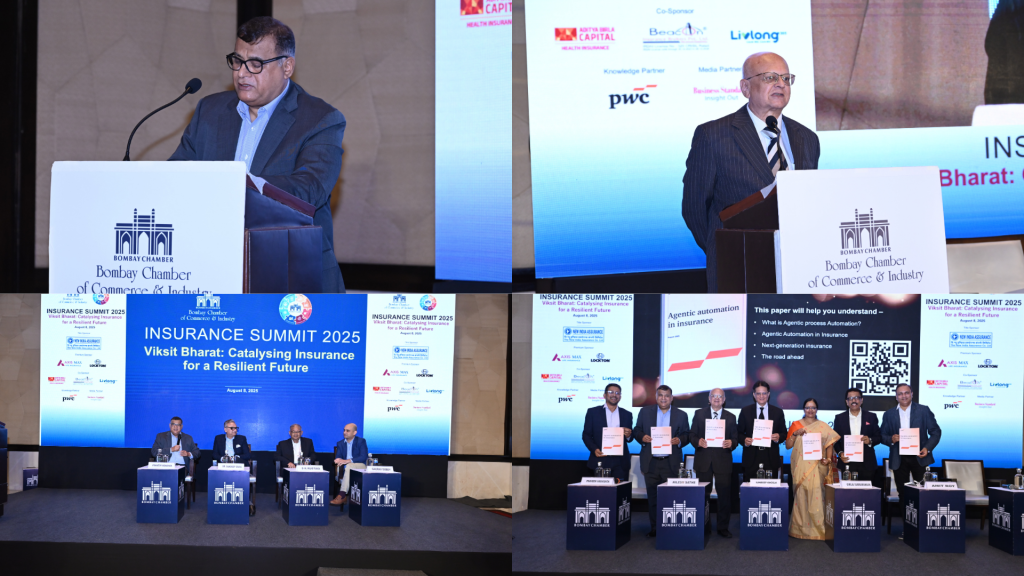
Mumbai, 8 August 2025 – The Bombay Chamber of Commerce and Industry hosted the Insurance Summit 2025 at the Taj Santacruz, Mumbai, under the theme “Viksit Bharat – Catalysing Insurance for a Resilient Future”. The summit brought together prominent figures from the insurance and reinsurance sectors, policymakers, technology leaders, and financial services experts to explore how insurance can drive inclusive growth and contribute to national development.
Delivering the welcome address, Sandeep Khosla, Director General of the Bombay Chamber, reflected on the Chamber’s 189-year legacy as one of India’s oldest industry bodies. He spoke about its role as a trusted bridge between industry and the government, facilitating dialogue, influencing policy, and supporting sectors in navigating emerging opportunities and challenges.
Setting the context, Praveen Vashishta, Member of the BFSI Committee, Bombay Chamber, Former Co-founder of Howden Insurance Brokers India, and Chairman of Howden Asia, set the tone with a Theme Setting Address that examined the evolving dynamics of the sector and the opportunities on the horizon. His remarks provided a compelling context for the discussions that would follow. He emphasised that achieving Viksit Bharat requires insurance penetration to grow at a pace matching the country’s economic ambitions, highlighting the urgency of closing the protection gap across health, agriculture, climate risk, and infrastructure. He spoke about the twin challenge of under-insurance and low awareness, urging a shift from product-centric to customer-centric models, supported by technology and data-led innovation. Stressing that resilience must be built into the very fabric of India’s development, he called for collaborative action among insurers, regulators, technology providers, and government to create scalable, inclusive, and affordable insurance solutions that reach every citizen.
In his Keynote Address, Nilesh Sathe, Former Whole-time Member of IRDAI, reflected on the transformative potential of technology, artificial intelligence, and micro-insurance, and urged the sector to strengthen public-private partnerships in flagship schemes such as PM Jan Arogya Yojana and PM Fasal Bima Yojana. He underscored the need to embrace insurance as a national mission on the path to Viksit Bharat, stressing that climate risk is also a financial risk.
Girija Subramanian, CMD of New India Assurance, shared her vision in a Special Guest Address on Bridging the Protection Gap: Pathways to Inclusion. She emphasised the pressing need to widen access to insurance, noting that nearly half the vehicles on Indian roads remain uninsured, and called for innovative approaches to expand coverage and strengthen resilience.
Gayathri Parthasarathy, India Financial Services Sector Leader and Global Financial Services Technology Leader, PwC India, spoke about the ongoing digital transformation in financial services, highlighting its critical role in building resilience and driving growth.
The event also featured the launch of the PwC Position Paper on Agentic Automation in Insurance, presented by Amit Roy, Partner and Leader – Insurance & Allied Businesses, PwC India, and Mahesh Parab, Partner – Agentic Automation, PwC India. They outlined how autonomous AI agents are transforming operational efficiency, customer engagement, and risk management.
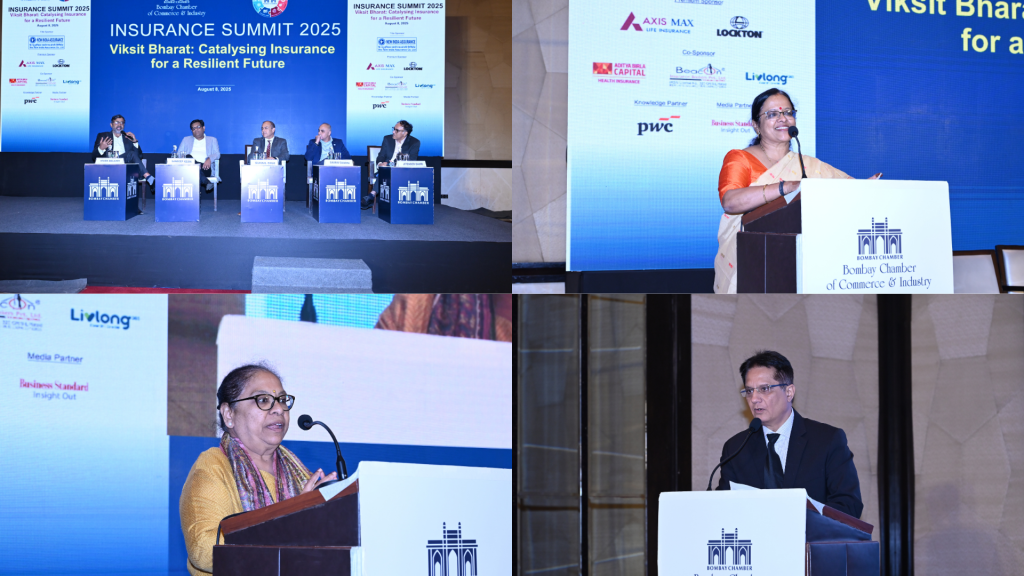
The day progressed with three engaging panel discussions. The first, moderated by Amit Roy, explored the opportunities and implications of the proposed amendments to the Insurance Bill 2025, with contributions from Girija Subramanian, Alok Rungta, MD & CEO of Generali Central Life Insurance and Shanai Ghosh, MD & CEO of Zuno General Insurance. The second panel, led by Praveen Vashishta, examined how the industry can become more customer-centric, featuring insights from Dr. Sandeep Dadia, CEO & Country Head, Asia Board Member, Lockton, India; S. K. Rustagi, CEO of Beacon Insurance Brokers Pvt. Ltd.; and Gaurav Dubey, Founder & CEO of Livlong 365. The third discussion, chaired by Vivek Belgavi, Partner – Financial Services Advisory Leader, PwC India, focused on tech-driven innovation, inclusion, and trust, with perspectives from Sandeep Kedia, CFO of Aditya Birla Health Insurance; Suhail Ghai, Chief Digital Officer & Head of Customer Operations, Axis Max Life; Gaurav Sharma, Deputy General Manager at New India Assurance; and Jitender Bahri, Head of P&C Solutions Operations at Swiss Re.
The summit was supported by Knowledge Partner PwC, Media Partner Business Standard, and sponsors including New India Assurance as Title Sponsor, Premium Sponsors Lockton and Axis Max Life Insurance, and Co-Sponsors Livlong 365, Beacon Insurance Brokers, and Aditya Birla Health Insurance.
The event concluded with a Vote of Thanks by Sandeep Khosla.
Bombay Chamber Hosts Infrastructure Conclave 2025: ‘Uddishta – Pathway to a $1 Trillion Sustainable Maharashtra’
Bombay Chamber Hosts Infrastructure Conclave 2025: ‘Uddishta – Pathway to a $1 Trillion Sustainable Maharashtra’
Industry leaders and policymakers outline strategies for sustainable, inclusive growth
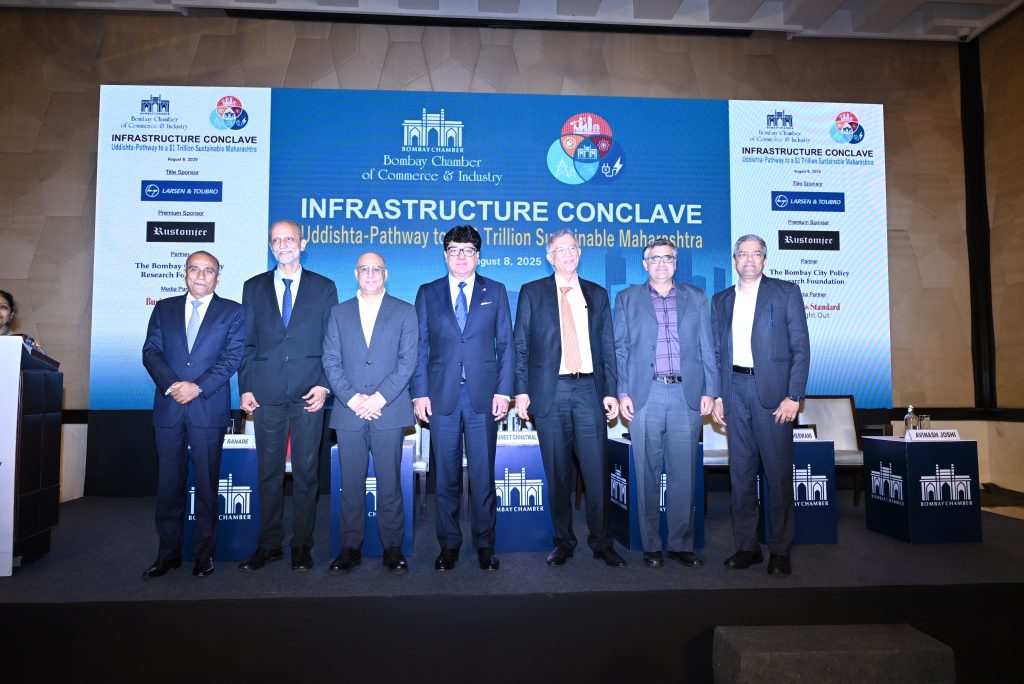
Mumbai, August 8, 2025: The Bombay Chamber of Commerce & Industry hosted its flagship Infrastructure Conclave, “Uddishta Pathway to a $1 Trillion Sustainable Maharashtra”, convening a distinguished line-up of leaders from business, policy, and academia to discuss the state’s roadmap to a $1 trillion economy.
Delivering the welcome address, Sudhanshu Vats, Sr. Vice President, Bombay Chamber, set the tone by underlining the Chamber’s commitment to fostering dialogue between industry leaders, policymakers, and stakeholders. “Maharashtra has always been a frontrunner in India’s growth story,” he remarked, “and it is through platforms like this that we can align visions and actions for sustained progress.”
The opening session, “Powerhouses Behind Maharashtra’s Growth”, was moderated by Dr. Ajit Ranade, Senior Fellow at the Pune International Centre, Economist, and member of the Maharashtra Economic Advisory Council. Dr. Ranade stressed that “Mumbai carries the economic burden of the entire state, and skilling and education will be key to inclusive, sustainable and fast economic growth.”
Dhiraj Relli, Managing Director & Chief Executive Officer, HDFC Securities Ltd., observed that “part ownership is now viable, and alternative asset classes are becoming increasingly attractive for investors with instincts for capital appreciation and safety.” He underscored that the $1 trillion target is not a question of if but when, adding, “Implementation is key—we need to unleash the animal spirit through innovation across all sectors.”
From the tourism and hospitality perspective, Puneet Chhatwal, Managing Director & Chief Executive Officer, The Indian Hotels Company Limited, called tourism “one of the brightest opportunities India has been sitting on for a very long time.” He advocated for mission-mode development of destinations such as Sindhudurg as an alternative to Goa and stressed the need to target both business and leisure travellers. “International tourists are as important as domestic,” he said.
Real estate veteran Dr. Niranjan Hiranandani, Managing Director, Hiranandani Group, said that the One trillion goal will happen, while highlighting the need to redevelop all of Mumbai’s slums into affordable housing, address a shortage of two million skilled workers in the sector, and grant infrastructure status to real estate. “We must address small problems like last-mile connectivity when we talk about the big picture,” he added.
Ashish Pherwani, Partner – Media & Entertainment, EY India, pointed out that “India hosts just 1,000 events a year, but we should be doing 1,000 a month,” emphasising the growth potential of the events and entertainment ecosystem.
Avinash Joshi, Chief Executive Officer – India, NTT DATA, called for a shift in perspective, stating, “IT must lead business, not just enable it.”
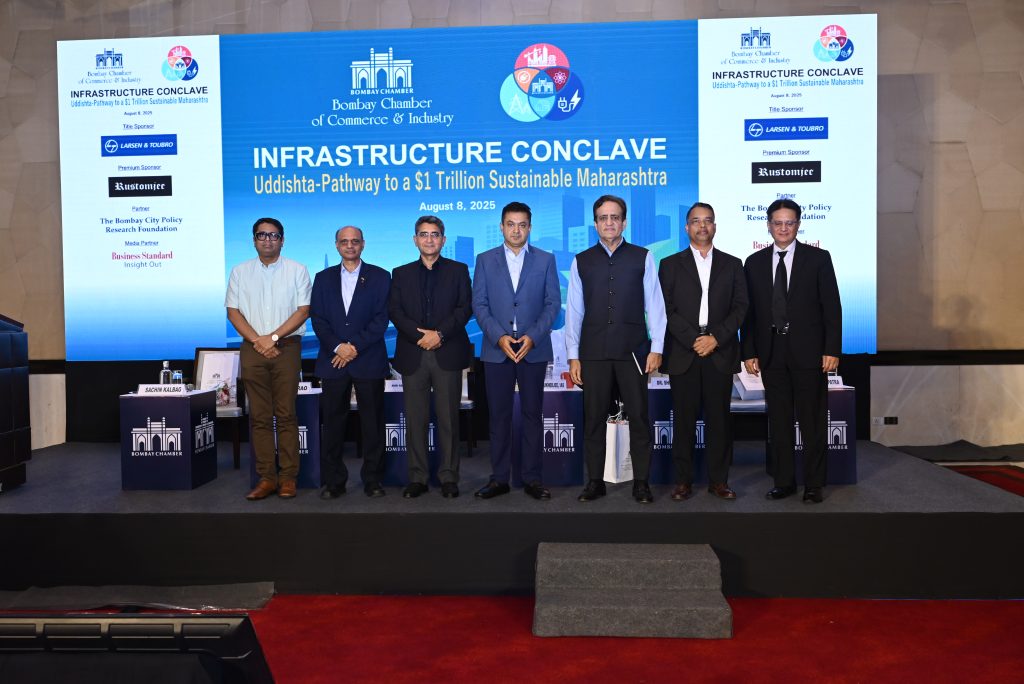
The second session, “Driving MMR’s Growth Through Strategic Infrastructure Development”, was moderated by Sachin Kalbag, Editor-in-Chief, Mid-Day. Dr. Sanjay Mukherjee, IAS, Metropolitan Commissioner, Mumbai Metropolitan Region Development Authority (MMRDA), outlined MMRDA’s partnership with NITI Aayog, identifying eight policy shifts and seven growth drivers, and securing $40 billion in FDI commitments at Davos. “The key to success is making it simple—breaking down big plans into small, actionable steps. The path towards the trillion-dollar economy has already begun,” he said.
Shri. Rajiv Jalota, Retd. IAS, Former Chairperson, Mumbai Port Authority (MbPA), urged rapid utilisation of Maharashtra’s 300 km coastline and busy inland waterways. He proposed the development of multiple coastal hubs for tourism, logistics, and sector-specific industries such as textiles and automobiles, along with a dedicated state cell for cruise tourism.
Dr. Shirish Sankhe, Director and Founding Partner, ISEG Foundation, stressed that for India to get into the growth trajectory, the GDP growth will have to be raised from 6% to 9–10%, would require “doing things differently.” He also advocated for circular economy models, a climate action plan, and increasing green cover.
Shrinath Rao, Co-Chairman, Power and Infrastructure Committee, Bombay Chamber; Senior Vice President and Head – Special Assignments, L&T Transportation Infrastructure Business, Larsen & Toubro Limited, identified challenges such as lengthy approvals, land acquisition, and utility relocation. He recommended “a single-window clearance system and all due clearances before launch,” along with strong accountability and timely financing to ensure quality, sustainable project delivery.
Prabhat Mahapatra, Chief Operating Officer, Navi Mumbai International Airport, said the new facility would become “the region’s growth engine,” with a projected capacity of 90 million passengers—up from the original plan for 60 million. “Earlier, Mumbai’s limited capacity cost us the No. 1 spot to Delhi. Navi Mumbai will help us reclaim it,” he said.
Amit Kekare, Chairman of the Power and Infrastructure Committee at the Bombay Chamber and Vice President – Head of eMobility at Siemens, concluded the session by highlighting how Maharashtra’s key growth drivers contribute to this milestone, with particular emphasis on strategic infrastructure development, robust financial regulation, and the effective implementation of government initiatives.
India pushes for trade agreements that are MSME-friendly
Centre’s new initiative to connect MSMEs with global market
Mumbai: India is looking to replicate the pro-MSME provisions seen in its recent trade agreement with the United Kingdom across upcoming deals with countries including the United States and the European Union. The aim is to create more favourable terms for Indian micro, small, and medium enterprises (MSMEs) and ensure these businesses are better positioned to compete globally.
The recent India-UK Comprehensive Economic and Trade Agreement marked a significant milestone with its dedicated chapter for MSMEs, featuring several support mechanisms. Among these are mutual contact points for MSME-related queries, simplified sharing of regulatory and certification information, and coordinated efforts to promote trade activities such as exhibitions and business networking events.
Under public procurement terms, UK suppliers bidding for Indian contracts will be classified as ‘Class-II local suppliers’ above set thresholds, whereas Indian firms, including MSMEs, retain ‘Class-I’ status, preserving their competitive edge in domestic tenders. Additionally, a technical framework has been established to help MSMEs overcome non-tariff barriers that often hinder access to international markets.
This structured support is viewed as critical for labour-intensive sectors such as textiles, footwear, leather, marine products, toys, sports goods, and jewellery – all of which depend heavily on MSME contribution. These industries have experienced a decline in export share in recent years, reinforcing the need for enhanced access to global markets. Efforts to boost these sectors are also expected to generate positive spillover effects in terms of employment and rural development.
Looking ahead, India is actively trying to incorporate similar MSME carve-outs in ongoing trade negotiations. This approach reflects a broader policy goal of ensuring trade agreements do not disproportionately benefit large firms at the expense of smaller businesses. With talks underway with key partners, there is a concerted push to include practical tools such as training modules, export readiness workshops, and joint promotion of women-led and rural MSMEs.
The Indian government is also pursuing greater collaboration in areas such as sustainability standards and technical skills development, hoping to improve the international competitiveness of domestic MSMEs. By standardising such provisions across multiple trade deals, India is attempting to build a consistent and supportive global framework for its small business sector.
As global trade dynamics evolve, India’s strategic emphasis on MSMEs signals an intent to shape agreements that not only expand market access but also strengthen the foundations of its manufacturing and export ecosystems. While challenges remain, especially with ongoing negotiations, the recent UK agreement is seen as a blueprint for future deals.
(Write to us at editorial@bombaychamber.com)